Abstract
1. When rhizoid is differentiated from the protonema of some ferns, Dryopteris varia, Diplazium japonicum, and Blechnum niponicum a special cytoplasm which has a high affinity for metallic ions, called the “metallophilic cytoplasm”, appears at the presumptive part prior to the actual differentiation as a prepattern to the rhizoid formation.2. In the rhizoid under active elongation, the metallophilic cytoplasm appears in the basal region while in a fullgrown rhizoid it is restricted to the basal end.3. The metallophilic cytoplasm could not be verified in rhizoids of the sporeling of a moss, Pogonatum inflexum, in root hairs of the seedling of some Angiosperm, Glycine Max, Raphanus sativus, and Triticum vulgare. 4. The metallophilic property appears regardless of the acidity level of the cytoplasm whether it is on the lower or on the higher side of its IEP. Therefore, it seems that it cannot be attributed to the attraction by the cytoplasm of metallic ions caused by difference in electric charge between the two.
Abstract from the paper’s OpenAlex record, shown for indexing and research. Copyright remains with the authors or the publisher. Read at the source ↗
The text the model read, with the source record’s inline markup (italics, sub- and superscripts) rendered and its character entities decoded; quote offsets refer to the raw text.
Claims 5
Claim · model-written summary
Metallophilic cytoplasm appears at the presumptive rhizoid site of Dryopteris varia protonema before the rhizoid differentiates.
- Taxon
- Dryopteris varia
 Dryopteris variae1
- Organ / stage
- protonemae1
- Outcome
- metallophilic cytoplasme1
- Qualifier
- prior to the actual differentiatione1
Organisms pictured · Representative pictures of the matched species, not figures from the paper.

Verbatim
e1“When rhizoid is differentiated from the protonema of some ferns, Dryopteris varia, Diplazium japonicum, and Blechnum niponicum a special cytoplasm which has a high affinity for metallic ions, called the “metallophilic cytoplasm”, appears at the presumptive part prior to the actual differentiation as a prepattern to the rhizoid formation”
Claim · model-written summary
In growing rhizoids of Dryopteris varia, metallophilic cytoplasm occurs in the basal region and in full-grown rhizoids is restricted to the basal end.
- Taxon
- Dryopteris variaDryopteris variae1
- Organ / stage
- rhizoid under active elongatione2
- Outcome
- metallophilic cytoplasme2
- Qualifier
- restricted to the basal ende2
Organisms pictured · Representative pictures of the matched species, not figures from the paper.
Verbatim
e1“When rhizoid is differentiated from the protonema of some ferns, Dryopteris varia, Diplazium japonicum, and Blechnum niponicum a special cytoplasm which has a high affinity for metallic ions, called the “metallophilic cytoplasm”, appears at the presumptive part prior to the actual differentiation as a prepattern to the rhizoid formation”
e2“In the rhizoid under active elongation, the metallophilic cytoplasm appears in the basal region while in a fullgrown rhizoid it is restricted to the basal end”
Claim · model-written summary
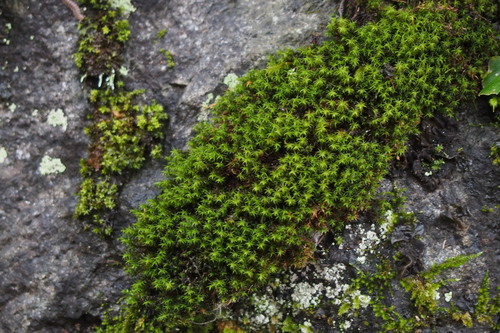
Metallophilic cytoplasm could not be verified in rhizoids of the moss Pogonatum inflexum sporeling.
- Taxon
- Pogonatum inflexum
 Pogonatum inflexume3
- Organ / stage
- rhizoids of the sporelinge3
- Outcome
- metallophilic cytoplasme3
- Qualifier
- could not be verifiede3
Organisms pictured · Representative pictures of the matched species, not figures from the paper.
Verbatim
e3“The metallophilic cytoplasm could not be verified in rhizoids of the sporeling of a moss, Pogonatum inflexum, in root hairs of the seedling of some Angiosperm, Glycine Max, Raphanus sativus, and Triticum vulgare”
Claim · model-written summary
Metallophilic cytoplasm could not be verified in root hairs of Glycine Max seedlings.
- Taxon
- Glycine Max
 Glycine maxe3
- Organ / stage
- root hairs of the seedlinge3
- Outcome
- metallophilic cytoplasme3
- Qualifier
- could not be verifiede3
Organisms pictured · Representative pictures of the matched species, not figures from the paper.

Verbatim
e3“The metallophilic cytoplasm could not be verified in rhizoids of the sporeling of a moss, Pogonatum inflexum, in root hairs of the seedling of some Angiosperm, Glycine Max, Raphanus sativus, and Triticum vulgare”
Claim · model-written summary
The metallophilic property of Dryopteris varia cytoplasm appears regardless of the acidity level of the cytoplasm.
- Taxon
- Dryopteris variaDryopteris variae1
- Outcome
- metallophilic propertye4
- Qualifier
- regardless of the acidity level of the cytoplasme4
Organisms pictured · Representative pictures of the matched species, not figures from the paper.
Verbatim
e1“When rhizoid is differentiated from the protonema of some ferns, Dryopteris varia, Diplazium japonicum, and Blechnum niponicum a special cytoplasm which has a high affinity for metallic ions, called the “metallophilic cytoplasm”, appears at the presumptive part prior to the actual differentiation as a prepattern to the rhizoid formation”
e4“The metallophilic property appears regardless of the acidity level of the cytoplasm whether it is on the lower or on the higher side of its IEP”