Abstract
A study was made of the distribution of Puccinia glumarum (Schm.) Erikss. and Henn. in Canada, its specialization, host range, and reaction to environmental conditions. Unlike Puccinia graminis Pers., this rust has a limited distribution, being confined to British Columbia, Alberta, and the western half of Saskatchewan. The natural hosts include a number of native grasses, particularly Hordeum jubatum L. and certain species of Agropyron, Elymus, and Bromus. Wheat and barley also become infected although to a rather limited extent: Stripe rust collected on the above-mentioned hosts has been studied in the greenhouse and has in all cases shown ability to attack wheat varieties. In all instances where identification of physiologic forms was carried out the rust strains were classified as either form 8 or form 13 of wheat stripe rust, the latter form being the more common. The fact that the present authors have collected known physiologic forms of wheat stripe rust on species of Hordeum, Elymus and Agropyron, and have shown that forms 4, 6, 8 and 13 can attack seedling plants of Hordeum, Agropyron, and Elymus species throw a doubt on the existence of the Hordei, Elymi, and Agropyri varieties created by Eriksson.Greenhouse studies showed that P glumarum is extremely sensitive to environmental conditions, particularly temperature. The optimum for uredospore germination is 10° to 12 °C., and for rust development 13° to 16 °C. Varieties susceptible at from 10° to 16 °C. developed resistance at higher temperatures, becoming extremely resistant at 25 °C. On account of the sensitiveness of this rust to high temperatures it seems improbable that it will ever become thoroughly established in Manitoba and Saskatchewan, as in these two provinces the summer temperature is probably too high to permit its development.
Abstract from the paper’s OpenAlex record, shown for indexing and research. Copyright remains with the authors or the publisher. Read at the source ↗
The text the model read, with the source record’s inline markup (italics, sub- and superscripts) rendered and its character entities decoded; quote offsets refer to the raw text.
Claims 14
Claim · model-written summary
Puccinia glumarum has a limited distribution in Canada, confined to British Columbia, Alberta and the western half of Saskatchewan.
Verbatim
e0“A study was made of the distribution of Puccinia glumarum”
e1“has a limited distribution, being confined to British Columbia, Alberta, and the western half of Saskatchewan”
Claim · model-written summary
The natural hosts of the rust include native grasses, particularly Hordeum jubatum and certain Agropyron, Elymus and Bromus species.
Verbatim
e0“The natural hosts include a number of native grasses, particularly Hordeum jubatum L. and certain species of Agropyron, Elymus, and Bromus”
Claim · model-written summary
Wheat becomes infected by the rust, although only to a rather limited extent.
- Taxon
- Wheat
 Triticum aestivume0
- Outcome
- infectede0
- Qualifier
- to a rather limited extente0
Organisms pictured · Representative pictures of the matched species, not figures from the paper.

Verbatim
e0“Wheat and barley also become infected although to a rather limited extent”
Claim · model-written summary
Barley becomes infected by the rust, although only to a rather limited extent.
- Taxon
- barley
 Hordeum vulgaree0
- Outcome
- infectede0
- Qualifier
- to a rather limited extente0
Organisms pictured · Representative pictures of the matched species, not figures from the paper.

Verbatim
e0“Wheat and barley also become infected although to a rather limited extent”
Claim · model-written summary
In greenhouse studies, stripe rust collected on the native hosts attacked wheat varieties in all cases.
- Taxon
- wheatTriticum aestivume0
- Interactor
- Stripe ruste0pathogen
- Outcome
- ability to attack wheat varietiese0
- Setting
- greenhousee0
Organisms pictured · Representative pictures of the matched species, not figures from the paper.
Verbatim
e0“Stripe rust collected on the above-mentioned hosts has been studied in the greenhouse and has in all cases shown ability to attack wheat varieties”
Claim · model-written summary
Rust strains identified to physiologic form were classified as form 8 or form 13 of wheat stripe rust, form 13 being the more common.
Verbatim
e0“the rust strains were classified as either form 8 or form 13 of wheat stripe rust, the latter form being the more common”
Claim · model-written summary
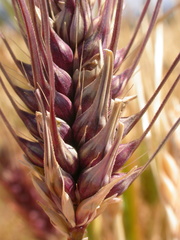
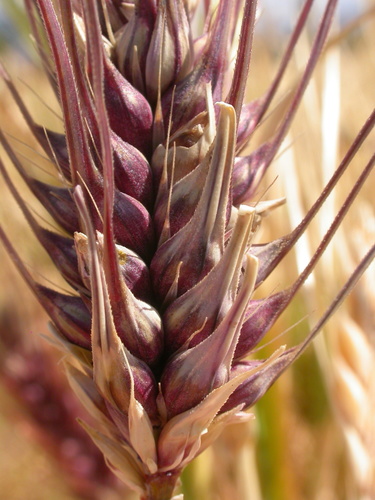
Physiologic forms 4, 6, 8 and 13 of wheat stripe rust can attack seedlings of Hordeum, Agropyron and Elymus species.
 Hordeum
 Agropyron
 Elymus
Organisms pictured · Representative pictures of the matched species, not figures from the paper.


Verbatim
e0“forms 4, 6, 8 and 13 can attack seedling plants of Hordeum, Agropyron, and Elymus species”
Claim · model-written summary
Known physiologic forms of wheat stripe rust were collected on species of Hordeum, Elymus and Agropyron.
- Outcome
- known physiologic forms of wheat stripe ruste0
Organisms pictured · Representative pictures of the matched species, not figures from the paper.
Verbatim
e0“collected known physiologic forms of wheat stripe rust on species of Hordeum, Elymus and Agropyron”
Claim · model-written summary
The authors consider that these findings cast doubt on the existence of the Hordei, Elymi and Agropyri varieties created by Eriksson.
Verbatim
t0“PUCCINIA GLUMARUM”
e0“throw a doubt on the existence of the Hordei, Elymi, and Agropyri varieties created by Eriksson”
Claim · model-written summary
Puccinia glumarum was extremely sensitive to environmental conditions, particularly temperature, in greenhouse studies.
Verbatim
e0“P glumarum is extremely sensitive to environmental conditions, particularly temperature”
Claim · model-written summary
The optimum temperature for uredospore germination of the rust is 10 to 12 degrees C.
Verbatim
t0“PUCCINIA GLUMARUM”
e0“The optimum for uredospore germination is 10° to 12 °C”
Claim · model-written summary
The optimum temperature for rust development is 13 to 16 degrees C.
Verbatim
t0“PUCCINIA GLUMARUM”
e0“for rust development 13° to 16 °C”
Claim · model-written summary
Varieties susceptible at 10 to 16 degrees C developed resistance at higher temperatures and became extremely resistant at 25 degrees C.
- Treatment
- higher temperaturese0
- Outcome
- resistancee0
- Direction
- developede0
- Qualifier
- extremely resistant at 25 °Ce0
- Comparator
- 10° to 16 °Ce0
Not reportedTaxon
Verbatim
e0“Varieties susceptible at from 10° to 16 °C. developed resistance at higher temperatures, becoming extremely resistant at 25 °C”
Claim · model-written summary
Because the rust is sensitive to high temperature, the authors judge it improbable that it will become thoroughly established in Manitoba and Saskatchewan.
Verbatim
t0“PUCCINIA GLUMARUM”
e0“it seems improbable that it will ever become thoroughly established in Manitoba and Saskatchewan”