Abstract
Nodulation and subsequent nitrogen fixation by soybean [ Glycine max (L.) Merr.] plants are inhibited by low root zone temperatures (RZTs). Plant growth promoting bacteria can help overcome these deleterious effects. Three Bacillus strains, B. subtilis NEB4 and NEB5 and B. thuringiensis NEB17, were isolated from inside the nodules of vigorous field‐grown soybean plants in 1998, and were shown to have plant growth promoting activity on pouch‐grown soybean plants under greenhouse conditions. To test their ability to improve soybean nodulation and growth under low RZTs, these strains were coinoculated onto soybean plants, with Bradyrhizobium japonicum , under greenhouse conditions at RZTs of 25, 17, and 15°C, and under field conditions in a short growing season area. In all cases, the experiments were conducted with soybean cultivar OAC Bayfield. All the three Bacillus strains enhanced soybean nodulation and growth in greenhouse and field experiments. Coinoculation with NEB17 provided the largest and most consistent increases in nodule number, nodule weight, shoot weight, root weight, total biomass, total nitrogen, and grain yield. The other two strains provided positive responses in only 1 of the 2 yr of field‐testing. Thus, B. thuringiensis NEB17 would be suitable for use as a plant growth promoting bacterial strain in soybean production systems in short growing season regions.
Abstract from the paper’s OpenAlex record, shown for indexing and research. Copyright remains with the authors or the publisher. Read at the source ↗
The text the model read, with the source record’s inline markup (italics, sub- and superscripts) rendered and its character entities decoded; quote offsets refer to the raw text.
Claims 4
Claim · model-written summary
All three Bacillus strains enhanced soybean nodulation and growth in greenhouse and field experiments.
- Taxon
- Soybean
 Glycine maxt0
- Treatment
- three Bacillus strainse0
- Interactor
- Bacillus strainse0symbiont
- Outcome
- soybean nodulation and growthe0
- Direction
- enhancede0
- Setting
- greenhouse and field experimentse0
Not reportedComparator
Organisms pictured · Representative pictures of the matched species, not figures from the paper.

Verbatim
e0“All the three Bacillus strains enhanced soybean nodulation and growth in greenhouse and field experiments.”
e1“Three Bacillus strains, B. subtilis NEB4 and NEB5 and B. thuringiensis NEB17”
t0“Soybean Plant Growth”
Claim · model-written summary
NEB17 coinoculation produced the largest and most consistent increases in nodules, biomass, nitrogen, and yield.
- Taxon
- SoybeanGlycine maxt0
- Treatment
- Coinoculation with NEB17e0
- Interactor
- NEB17e0symbiont
- Outcome
- nodule number, nodule weight, shoot weighte0
- Direction
- increasese0
Not reportedComparator
Organisms pictured · Representative pictures of the matched species, not figures from the paper.
Verbatim
e0“Coinoculation with NEB17 provided the largest and most consistent increases in nodule number, nodule weight, shoot weight, root weight, total biomass, total nitrogen, and grain yield.”
t0“Soybean Plant Growth”
Claim · model-written summary
The other two Bacillus strains gave positive field responses in only one of two years.
- Taxon
- SoybeanGlycine maxt0
- Treatment
- other two strainse0
- Outcome
- positive responsese0
- Direction
- positivee0
- Value
- 1 of the 2 yre0
- Setting
- field‐testinge0
Not reportedComparator
Organisms pictured · Representative pictures of the matched species, not figures from the paper.
Verbatim
e0“The other two strains provided positive responses in only 1 of the 2 yr of field‐testing.”
t0“Soybean Plant Growth”
Claim · model-written summary
The authors recommend B. thuringiensis NEB17 for soybean production in short growing season regions.
- Taxon
- soybeanGlycine maxe0
- Interactor
- B. thuringiensis NEB17
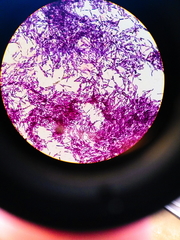 Bacillus thuringiensise0symbiont
- Outcome
- suitable for use as a plant growth promoting bacterial straine0
- Setting
- short growing season regionse0
Organisms pictured · Representative pictures of the matched species, not figures from the paper.
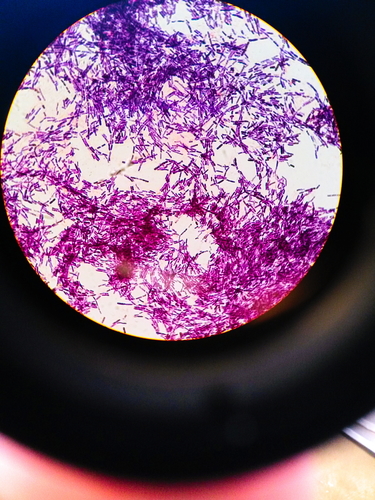
Verbatim
e0“B. thuringiensis NEB17 would be suitable for use as a plant growth promoting bacterial strain in soybean production systems in short growing season regions.”
The same questions in other papers
inoculation · symbiosis · Glycine max (soybean)Positive and negative results
264 papers in the same direction as this paper · 43 in the opposite direction · 2 reporting no difference from an alternative
- positive
- positive
- positive
306 papers more in this group
See all 310 papers →Claims are grouped by organism, treatment and what was measured or targeted. A paper counts as positive when any of its claims in the group is positive.