Abstract
Abstract The karyological and morphological variability of species from the genus Dysphania were studied. The results demonstrated that genus Dysphania is represented in Bulgaria by five species: Dysphania ambrosioides, D. multifida, D. botrys, D. schraderiana and D. pumilio. The first two species are tetraploids with chromosome number 2n = 32 for D. ambrosioides and 2n = 36 for D. multifida. The remaining three species are diploids with 2n = 18. The results from statistical analysis demonstrated that the main source of phenotype variation in the species is the interpopulation variation. The specific characters which allowed their recognition are themorphological characteristics of the perianth lobes, the upper leaves and the seeds. The distinction between D. multifida, D. ambrosioides and D. schraderiana is based on differences in the quantitative traits, while in D. botrys and D. pumilio qualitative traits are also important. The basic evolutionary mechanisms are polyploidy and diploidy.Atendency towards reduction in the size of generative organs and the number of perianth lobes was found.
Abstract from the paper’s OpenAlex record; open copy licensed cc-by. Read at the source ↗
The text the model read, with the source record’s inline markup (italics, sub- and superscripts) rendered and its character entities decoded; quote offsets refer to the raw text.
Claims 10
Claim · model-written summary
Five Dysphania species occur in Bulgaria.
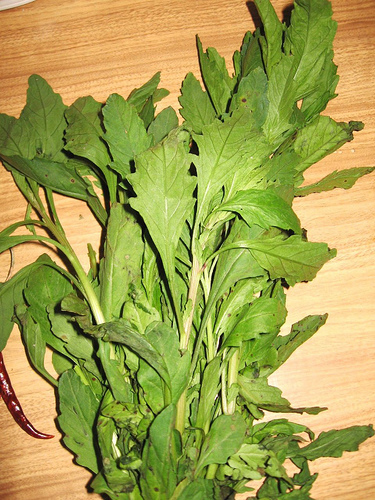
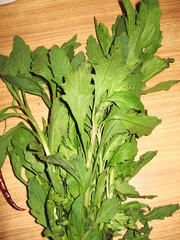 Dysphania
Organisms pictured · Representative pictures of the matched species, not figures from the paper.
Verbatim
e0“genus Dysphania is represented in Bulgaria by five species: Dysphania ambrosioides, D. multifida, D. botrys, D. schraderiana and D. pumilio”
Claim · model-written summary
D. ambrosioides is tetraploid with 2n = 32.
- Taxon
- D. ambrosioides
 Dysphania ambrosioidese0
- Outcome
- tetraploids with chromosome numbere0
- Value
- 2n = 32e0
Organisms pictured · Representative pictures of the matched species, not figures from the paper.

Verbatim
e0“The first two species are tetraploids with chromosome number 2n = 32 for D. ambrosioides”
Claim · model-written summary
D. multifida is tetraploid with 2n = 36.
- Taxon
- D. multifida
 Dysphania multifidae0
- Outcome
- 2n = 36e0
- Value
- 2n = 36e0
Organisms pictured · Representative pictures of the matched species, not figures from the paper.

Verbatim
e0“2n = 36 for D. multifida”
Claim · model-written summary
D. botrys, D. schraderiana, and D. pumilio are diploids with 2n = 18.
- Taxon
- D. botrys
 Dysphania botryse0
- Outcome
- diploidse0
- Value
- 2n = 18e0
Organisms pictured · Representative pictures of the matched species, not figures from the paper.

Verbatim
e0“D. botrys, D. schraderiana and D. pumilio. The first two species are tetraploids with chromosome number 2n = 32 for D. ambrosioides and 2n = 36 for D. multifida. The remaining three species are diploids with 2n = 18”
Claim · model-written summary
Interpopulation variation was the main source of phenotype variation.
Organisms pictured · Representative pictures of the matched species, not figures from the paper.
Verbatim
e0“the main source of phenotype variation in the species is the interpopulation variation”
t0“Dysphania”
Claim · model-written summary
Perianth lobes, upper leaves and seeds distinguished Dysphania species.
- Organ / stage
- perianth lobes, the upper leaves and the seedse0
- Outcome
- themor phological characteristicse0
Organisms pictured · Representative pictures of the matched species, not figures from the paper.
Verbatim
e0“The specific characters which allowed their recognition are themorphological characteristics of the perianth lobes, the upper leaves and the seeds”
t0“Dysphania”
Claim · model-written summary
Quantitative traits distinguished D. multifida, D. ambrosioides and D. schraderiana.
- Taxon
- D. multifidaDysphania multifidae0
- Outcome
- differences in the quantitative traitse0
Organisms pictured · Representative pictures of the matched species, not figures from the paper.
Verbatim
e0“The distinction between D. multifida, D. ambrosioides and D. schraderiana is based on differences in the quantitative traits”
Claim · model-written summary
Qualitative traits were also important for distinguishing D. botrys and D. pumilio.
- Taxon
- D. botrysDysphania botryse0
- Outcome
- qualitative traits are also importante0
Organisms pictured · Representative pictures of the matched species, not figures from the paper.
Verbatim
e0“in D. botrys and D. pumilio qualitative traits are also important”
Claim · model-written summary
The authors identify polyploidy and diploidy as basic evolutionary mechanisms.
Organisms pictured · Representative pictures of the matched species, not figures from the paper.
Verbatim
e0“The basic evolutionary mechanisms are polyploidy and diploidy”
t0“Dysphania”
Claim · model-written summary
Generative organ size and perianth lobe number tended to decline.
Organisms pictured · Representative pictures of the matched species, not figures from the paper.
Verbatim
e0“Atendency towards reduction in the size of generative organs and the number of perianth lobes was found”
t0“Dysphania”