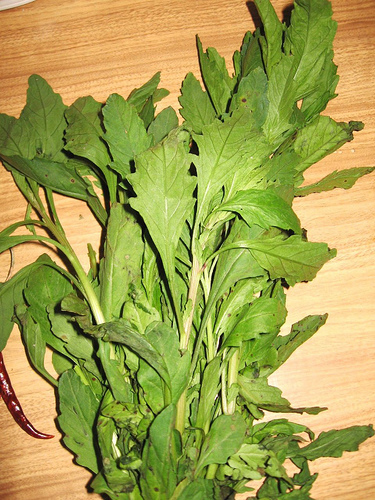
Dysphania 28 claims

genus · family Amaranthaceae · green plant · NCBI Taxonomy ↗

NCBI synonyms: Cycloloma

4 spellings

Dysphania
Dysphaniazerethv · CC BY 4.0 · iNaturalist ↗
Observationauthor interpretationoriginal resultsimulated

Claim · model-written summary

Dysphania likely originated in North America.
Taxon
DysphaniaDysphaniae5
Outcome
originatede5
Setting
North Americae5

Verbatim

t0

“Phylogeny, biogeography and systematics of Dysphanieae”

✓ located verbatim in the source · title, characters 0–54
e5

“Dysphania likely originated in North America”

✓ located verbatim in the source · abstract, characters 1417–1461

Title

Phylogeny, biogeography and systematics of Dysphanieae (Amaranthaceae)

Pertti Uotila; Alexander P. Sukhorukov; Nadine Bobon; et al. Taxon 2021. doi:10.1002/tax.12458

Other claims from this paper (7)
Observationauthor interpretationoriginal resultsimulated

Claim · model-written summary

Simultaneous diversification of Dysphania into three major clades indicates a widespread ancestor at the crown node.

Taxon
DysphaniaDysphaniae6
Outcome
diversification into three major cladese6
Qualifier
an Asian/African, an American and an Australian/African cladee6

Verbatim

t0

“Phylogeny, biogeography and systematics of Dysphanieae”

✓ located verbatim in the source · title, characters 0–54
e6

“the simultaneous diversification into three major clades, an Asian/African, an American and an Australian/African clade, indicates a widespread ancestor at the crown node of Dysphania”

✓ located verbatim in the source · abstract, characters 1472–1655

Title

Phylogeny, biogeography and systematics of Dysphanieae (Amaranthaceae)

Pertti Uotila; Alexander P. Sukhorukov; Nadine Bobon; et al. Taxon 2021. doi:10.1002/tax.12458

Other claims from this paper (7)
Observationobservedoriginal resultbasis n/a

Claim · model-written summary

The sectional subdivision of Dysphania is revised into five sections.

Taxon
DysphaniaDysphaniae1
Outcome
sectionse1
Value
fivee1

Verbatim

t0

“Phylogeny, biogeography and systematics of Dysphanieae”

✓ located verbatim in the source · title, characters 0–54
e1

“The sectional subdivision for Dysphania is revised. We subdivide the genus into five sections”

✓ located verbatim in the source · abstract, characters 1779–1872

Title

Phylogeny, biogeography and systematics of Dysphanieae (Amaranthaceae)

Pertti Uotila; Alexander P. Sukhorukov; Nadine Bobon; et al. Taxon 2021. doi:10.1002/tax.12458

Other claims from this paper (7)
Observationobservedoriginal resultbasis n/a

Claim · model-written summary

The Australian subclades are recognized as three subsections of Dysphania section Dysphania.

Taxon
DysphaniaDysphaniae0
Outcome
subsect. Orthospora (R.Br.) Mosyakin, comb. et stat. nov.; (2) subsect. Dysphania; and (3) subsect. Tetrasepalae (Aellen) Mosyakin, comb. et stat. nov.e0

Not reportedDirection

Verbatim

e0

“These subclades are recognized here as three subsections of sect. Dysphania: (1) subsect. Orthospora (R.Br.) Mosyakin, comb. et stat. nov.; (2) subsect. Dysphania; and (3) subsect. Tetrasepalae (Aellen) Mosyakin, comb. et stat. nov.”

✓ located verbatim in the source · abstract, characters 848–1080
e1

“These subclades are recognized here as three subsections of sect. Dysphania: (1) subsect. Orthospora (R.Br.) Mosyakin, comb. et stat. nov.; (2) subsect. Dysphania; and (3) subsect. Tetrasepalae (Aellen) Mosyakin, comb. et stat. nov.”

✓ located verbatim in the source · abstract, characters 848–1080

Title

Nomenclatural and taxonomic comments on some taxa of Dysphania (Chenopodiaceae s. str. / Amaranthaceae s. l.)

Sergei L. Mosyakin Ukrainian Botanical Journal 2021. doi:10.15407/ukrbotj78.04.266

Other claims from this paper (5)
Observationauthor interpretationoriginal resultmeasured

Claim · model-written summary

Historical uses suggest Dysphania was used more widely beyond the study region.

Taxon
Dysphania spp.Dysphaniae0
Outcome
used more widely in regions beyond the one studiede0
Setting
Poland and former Poland (now western Ukraine)e0

Not reportedDirection

Verbatim

e0

“Historical uses of Dysphania spp. in other areas of Poland and former Poland (now western Ukraine) suggest that the genus was used more widely in regions beyond the one studied”

✓ located verbatim in the source · abstract, characters 2145–2321

Title

Dysphania schraderiana (Schult.) Mosyakin & Clemants – An overlooked medicinal and ritual plant used in Poland

Łukasz Łuczaj; Mateusz Wolanin; Jacek Drobnik; et al. Journal of Ethnopharmacology 2021. doi:10.1016/j.jep.2021.114755

Other claims from this paper (5)
Observationobservedoriginal resultmeasured

Claim · model-written summary

Heterocarpy and heterospermy are found in Dysphania for the first time.

Taxon
DysphaniaDysphaniae7
Outcome
heterocarpy and heterospermye7
Qualifier
for the first timee7

Verbatim

e7

“Evident heterocarpy and heterospermy is found in Dysphania for the first time”

✓ located verbatim in the source · abstract, characters 984–1061

Title

Taxonomic revision of Chenopodiaceae in Himalaya and Tibet

Alexander P. Sukhorukov; Pei-Liang Liu; Maria Kushunina PhytoKeys 2019. doi:10.3897/phytokeys.116.27301

Other claims from this paper (13)
Observationobservedoriginal resultbasis n/a

Claim · model-written summary

Neobotrydium corniculatum and Neobotrydium longii are synonymised with Dysphania kitiae and Dysphania himalaica, respectively.

Taxon
DysphaniaDysphaniae5
Outcome
synonymisede5

Verbatim

e5

“Neobotrydiumcorniculatum is synonymised with Dysphaniakitiae , Neobotrydiumlongii with Dysphaniahimalaica and Neobotrydiumornithopodum seems to be conspecific with Dysphanianepalensis”

✓ located verbatim in the source · abstract, characters 1375–1558

Title

Taxonomic revision of Chenopodiaceae in Himalaya and Tibet

Alexander P. Sukhorukov; Pei-Liang Liu; Maria Kushunina PhytoKeys 2019. doi:10.3897/phytokeys.116.27301

Other claims from this paper (13)
Observationauthor interpretationoriginal resultbasis n/a

Claim · model-written summary

Neobotrydium ornithopodum seems to be conspecific with Dysphania nepalensis.

Taxon
DysphaniaDysphaniae5
Outcome
seems to be conspecifice5

Verbatim

e5

“Neobotrydiumcorniculatum is synonymised with Dysphaniakitiae , Neobotrydiumlongii with Dysphaniahimalaica and Neobotrydiumornithopodum seems to be conspecific with Dysphanianepalensis”

✓ located verbatim in the source · abstract, characters 1375–1558

Title

Taxonomic revision of Chenopodiaceae in Himalaya and Tibet

Alexander P. Sukhorukov; Pei-Liang Liu; Maria Kushunina PhytoKeys 2019. doi:10.3897/phytokeys.116.27301

Other claims from this paper (13)
Observationobservedoriginal resultmeasured

Claim · model-written summary

Simple sequence repeat distributions resembled those of two other Dysphania chloroplasts.

Taxon
DysphaniaDysphaniae0
Outcome
Distribution of simple sequence repeatse0
Direction
similare0
Comparator
other two Dysphania chloroplastse0

Verbatim

e0

“Distribution of simple sequence repeats are similar to those of the other two Dysphania chloroplasts”

✓ located verbatim in the source · abstract, characters 789–889

Title

Comparative Analysis of Chloroplast Genome of Dysphania ambrosioides (L.) Mosyakin & Clemants Understanding Phylogenetic Relationship in Genus Dysphania R. Br.

Yongsung Kim; Jongsun Park; Youngjae Chung Korean Journal of Plant Resources 2019. doi:10.7732/kjpr.2019.32.6.644

Other claims from this paper (16)
Method / resourceauthor interpretationoriginal resultmeasured

Claim · model-written summary

Different simple sequence repeat features may be useful for population genetics.

Taxon
DysphaniaDysphaniae1
Outcome
different features can be utilized for population geneticse0
Comparator
differente0

Verbatim

e0

“different features can be utilized for population genetics”

✓ located verbatim in the source · abstract, characters 900–958
e1

“Dysphania chloroplasts”

✓ located verbatim in the source · abstract, characters 867–889

Title

Comparative Analysis of Chloroplast Genome of Dysphania ambrosioides (L.) Mosyakin & Clemants Understanding Phylogenetic Relationship in Genus Dysphania R. Br.

Yongsung Kim; Jongsun Park; Youngjae Chung Korean Journal of Plant Resources 2019. doi:10.7732/kjpr.2019.32.6.644

Other claims from this paper (16)