Abstract
SUMMARY Sugar‐beet powdery mildew, Erysiphe betae appeared in East Anglia in late July 1976 and became wide‐spread in eastern England during August and September but was scarce in crops in the north and west of England. Fentinhydroxide, sulphur, benomyl and ethirimol controlled the disease but benomyl applied once only and ethirimol were less effective than the other materials. In heavily infected crops two sulphur sprays, the first applied at the onset of the mildew attack, increased sugar yield by 13%. A single early sulphur spray increased yield on average by 9% giving a return of six to seven times the cost of treatment. When the first spray was delayed, mildew control was less effective.
Abstract from the paper’s OpenAlex record, shown for indexing and research. Copyright remains with the authors or the publisher. Read at the source ↗
The text the model read, with the source record’s inline markup (italics, sub- and superscripts) rendered and its character entities decoded; quote offsets refer to the raw text.
Claims 8
Claim · model-written summary
Fentinhydroxide, sulphur, benomyl and ethirimol controlled sugar beet powdery mildew.
- Taxon
- beet
 Beta vulgarist0
- Treatment
- Fentinhydroxide, sulphur, benomyl and ethirimole1
- Interactor
- Erysiphe betae
 Erysiphe betaet1pathogen
- Outcome
- diseasee1
- Direction
- controllede1
Not reportedComparator
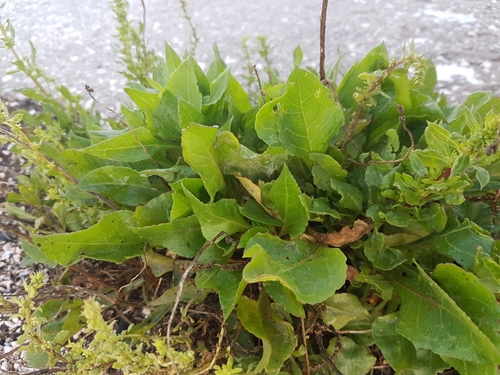
Organisms pictured · Representative pictures of the matched species, not figures from the paper.

Verbatim
t0“beet powdery mildew”
t1“powdery mildew, Erysiphe betae”
e1“Fentinhydroxide, sulphur, benomyl and ethirimol controlled the disease”
Claim · model-written summary
Benomyl applied once only and ethirimol were less effective than the other materials against sugar beet powdery mildew.
- Taxon
- beetBeta vulgarist0
- Treatment
- benomyl applied once only and ethirimole2
- Outcome
- effectivee2
- Direction
- lesse2
- Comparator
- the other materialse2
Organisms pictured · Representative pictures of the matched species, not figures from the paper.
Verbatim
t0“beet powdery mildew”
e2“benomyl applied once only and ethirimol were less effective than the other materials”
Claim · model-written summary
In heavily infected crops, two sulphur sprays increased sugar yield by 13%.
- Taxon
- beetBeta vulgarist0
- Treatment
- two sulphur sprayse3
- Outcome
- sugar yielde3
- Direction
- increasede3
- Value
- 13%e3
- Qualifier
- In heavily infected cropse3
Not reportedComparator
Organisms pictured · Representative pictures of the matched species, not figures from the paper.
Verbatim
t0“beet powdery mildew”
e3“In heavily infected crops two sulphur sprays, the first applied at the onset of the mildew attack, increased sugar yield by 13%”
Claim · model-written summary
A single early sulphur spray increased sugar beet yield on average by 9%.
- Taxon
- beetBeta vulgarist0
- Treatment
- A single early sulphur spraye4
- Outcome
- yielde4
- Direction
- increasede4
- Value
- 9%e4
- Qualifier
- on averagee4
Not reportedComparator
Organisms pictured · Representative pictures of the matched species, not figures from the paper.
Verbatim
t0“beet powdery mildew”
e4“A single early sulphur spray increased yield on average by 9% giving a return of six to seven times the cost of treatment”
Claim · model-written summary
A single early sulphur spray gave a return of six to seven times the cost of treatment.
- Taxon
- beetBeta vulgarist0
- Treatment
- A single early sulphur spraye4
- Outcome
- returne4
- Value
- six to seven timese4
Organisms pictured · Representative pictures of the matched species, not figures from the paper.
Verbatim
t0“beet powdery mildew”
e4“A single early sulphur spray increased yield on average by 9% giving a return of six to seven times the cost of treatment”
Claim · model-written summary
When the first spray was delayed, mildew control was less effective.
- Taxon
- beetBeta vulgarist0
- Treatment
- first spray was delayede5
- Outcome
- mildew controle5
- Direction
- less effectivee5
Not reportedComparator
Organisms pictured · Representative pictures of the matched species, not figures from the paper.
Verbatim
t0“beet powdery mildew”
e5“When the first spray was delayed, mildew control was less effective”
Claim · model-written summary
Erysiphe betae appeared in East Anglia in late July 1976.
- Taxon
- beetBeta vulgarist0
- Interactor
- Erysiphe betaeErysiphe betaet1pathogen
- Outcome
- appeared in East Angliae6
- Setting
- East Angliae6
Organisms pictured · Representative pictures of the matched species, not figures from the paper.
Verbatim
t0“beet powdery mildew”
t1“powdery mildew, Erysiphe betae”
e6“appeared in East Anglia in late July 1976”
Claim · model-written summary
Erysiphe betae was scarce in sugar beet crops in the north and west of England.
- Taxon
- beetBeta vulgarist0
- Outcome
- scarcee7
- Setting
- north and west of Englande7
Organisms pictured · Representative pictures of the matched species, not figures from the paper.
Verbatim
t0“beet powdery mildew”
e7“was scarce in crops in the north and west of England”
The same questions in other papers
sulfur atom · quality: sugar starch · Beta vulgaris (beet)Results differ
4 papers in the same direction as this paper
- positive
- positive
- positive
1 paper more in this group
See all 5 papers →sulfur atom · yield · Beta vulgaris (beet)Positive and negative results
5 papers in the same direction as this paper · 2 in the opposite direction
- negative
- negative
- positive
4 papers more in this group
See all 8 papers →sulfur atom · Erysiphe betae · Beta vulgaris (beet)Results agree
1 paper in the same direction as this paper
- positive
application · disease · Beta vulgaris (beet)Positive and negative results
1 paper in the same direction as this paper · 16 in the opposite direction
- positive
- positive
- positive
14 papers more in this group
See all 18 papers →application · quality: sugar starch · Beta vulgaris (beet)Positive and negative results
62 papers in the same direction as this paper · 4 in the opposite direction
- positive
- negative
- no effect
63 papers more in this group
See all 67 papers →application · yield · Beta vulgaris (beet)Positive and negative results
111 papers in the same direction as this paper · 7 in the opposite direction · 1 reporting no difference from an alternative
- positive
- positive
- no effect
116 papers more in this group
See all 120 papers →Claims are grouped by organism, treatment and what was measured or targeted. A paper counts as positive when any of its claims in the group is positive.