Abstract
Abstract The oil obtained by hydrodistillation of the aerial parts of Stachys pilifera Benth. and Stachys acerosa Boiss., which are endemic to Iran, was analyzed by GC/MS. Thirty compounds representing 88.9% of the oil of S. pilifera were identified, among them cis-chrysanthenyl acetate (25.2%) and trans-verbenol (19.7%) being the major ones. The oil of S. acerosa was characterized by higher amounts of cis-chrysanthenyl acetate (41.0%) and linalool (23.5%), which were among the 20 components comprising 92.1 % of the total oil detected. Both oils were richer in oxygenated monoterpenes than sesquiterpenes.
Abstract from the paper’s OpenAlex record, shown for indexing and research. Copyright remains with the authors or the publisher. Read at the source ↗
The text the model read, with the source record’s inline markup (italics, sub- and superscripts) rendered and its character entities decoded; quote offsets refer to the raw text.
Claims 7
Claim · model-written summary
Thirty identified compounds represented 88.9% of S. pilifera oil.
- Taxon
- S. piliferaStachys piliferae0
- Outcome
- compoundse0
- Value
- 88.9%e0
Not reportedDirection
Verbatim
t0“Stachys piliferaBenth. andStachys acerosaBoiss.”
e0“Thirty compounds representing 88.9% of the oil of S. pilifera were identified”
Claim · model-written summary
cis-chrysanthenyl acetate was a major S. pilifera oil constituent at 25.2%.
- Taxon
- S. piliferaStachys piliferae1
- Outcome
- cis-chrysanthenyl acetatee0
- Value
- 25.2%e0
Not reportedDirection
Verbatim
t0“Stachys piliferaBenth. andStachys acerosaBoiss.”
e0“cis-chrysanthenyl acetate (25.2%) and trans-verbenol (19.7%) being the major ones”
e1“Thirty compounds representing 88.9% of the oil of S. pilifera were identified”
Claim · model-written summary
trans-verbenol was a major S. pilifera oil constituent at 19.7%.
- Taxon
- S. piliferaStachys piliferae1
- Outcome
- trans-verbenole0
- Value
- 19.7%e0
Not reportedDirection
Verbatim
t0“Stachys piliferaBenth. andStachys acerosaBoiss.”
e0“cis-chrysanthenyl acetate (25.2%) and trans-verbenol (19.7%) being the major ones”
e1“Thirty compounds representing 88.9% of the oil of S. pilifera were identified”
Claim · model-written summary
cis-chrysanthenyl acetate comprised 41.0% of S. acerosa oil.
- Taxon
- S. acerosa
 Stachys acerosae0
- Outcome
- cis-chrysanthenyl acetatee0
- Direction
- highere0
- Value
- 41.0%e0
Organisms pictured · Representative pictures of the matched species, not figures from the paper.
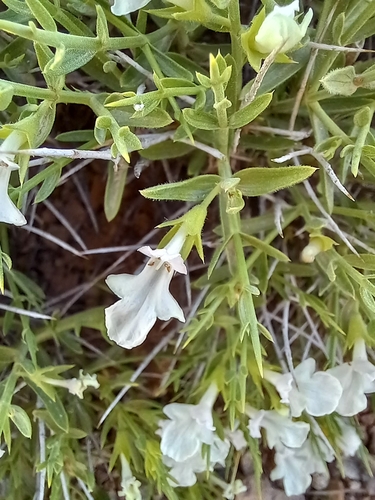
Verbatim
t0“Stachys piliferaBenth. andStachys acerosaBoiss.”
e0“The oil of S. acerosa was characterized by higher amounts of cis-chrysanthenyl acetate (41.0%) and linalool (23.5%)”
Claim · model-written summary
linalool comprised 23.5% of S. acerosa oil.
- Taxon
- S. acerosaStachys acerosae0
- Outcome
- linaloole0
- Direction
- highere0
- Value
- 23.5%e0
Organisms pictured · Representative pictures of the matched species, not figures from the paper.
Verbatim
t0“Stachys piliferaBenth. andStachys acerosaBoiss.”
e0“The oil of S. acerosa was characterized by higher amounts of cis-chrysanthenyl acetate (41.0%) and linalool (23.5%)”
Claim · model-written summary
Twenty constituents accounted for 92.1% of S. acerosa oil.
- Taxon
- S. acerosaStachys acerosae1
- Outcome
- componentse0
- Value
- 92.1 %e0
Not reportedDirection
Organisms pictured · Representative pictures of the matched species, not figures from the paper.
Verbatim
t0“Stachys piliferaBenth. andStachys acerosaBoiss.”
e0“among the 20 components comprising 92.1 % of the total oil detected”
e1“The oil of S. acerosa was characterized by higher amounts of cis-chrysanthenyl acetate (41.0%) and linalool (23.5%)”
Claim · model-written summary
Both Stachys oils had more oxygenated monoterpenes than sesquiterpenes.
- Taxon
- Stachys piliferaBenth. andStachys acerosaBoiss.Stachys piliferat0
- Outcome
- oxygenated monoterpenese0
- Direction
- richere0
- Comparator
- sesquiterpenese0
Verbatim
t0“Stachys piliferaBenth. andStachys acerosaBoiss.”
e0“Both oils were richer in oxygenated monoterpenes than sesquiterpenes.”