Abstract
Abstract The leaf oils of the Australian species of Xanthostemon have been examined by a combination of GC and GC/MS. Xanthostemon arenarius produced an oil dominated by sesquiterpenes, with the principal components being β-selinene (12–17%), α-selinene (6–10%), 7-epi-α-selinene (7–11%), α-humulene (0.3–10%, the majority > 6%) and spathulenol (3–19%). Xanthostemon chrysanthus produced a leaf oil in which the principal component was the β-triketone leptospermone (65–84%). The leaf oil of X. crenulatus was dominated by the sesquiterpene ketone, cyclocolorenone (65–80%) and the aromatic ketone apodophyllone (6–17%). The leaf oil of X. eucalyptoides was dominated by the aromatic ketones baeckeol methyl ether (34–41%), baeckeol (15–29%), isobaeckeol (5–8%) and apodophyllone (7–9%). The leaf oil of X. formosus was, once again, sesquiterpenoid in nature. The principal components were β-caryophyllene (10–24%), β-bisabolene (9–16%) and sesquiphellandrene (9–20%). Xanthostemon graniticus was unusual within the genus in that it produced a monoterpenic oil, the principal component being α-pinene (69.5%). Xanthostemon oppositifolius gave an oil which was dominated by β-triketones. The principal components were xanthostemone (1625%) and a compound considered a one carbon homologue, which is as yet unidentified (24–35%). Xanthostemon paradoxus produced a leaf oil that was sesquiterpenoid in nature. The principal components were β-caryophyllene (14%), spathulenol (14.9%) and globulol (8%). Xanthostemon psidioides was another species whose oil was dominated by β-triketones, the principal component being xanthostemone (73.1%). Xanthostemon umbrosus, the species with the widest distribution in this investigation, produced a variable oil. The various oils were dominated by the sesquiterpene ketone, cyclocolorenone (77–83%), or methyl farnesoate (3257%) and farnesoic acid (9–26%) or α-santalene (6–7%), isobaeckeol (30–40%) and an unknown, presumed aromatic, compound mw 252 (3–23%). The leaf oil from X. verticillatus was unusual amongst the other Australian species of Xanthostemon in that it contained 1,3-dimethoxy-5-isopropylbenzene as its major component (96–97%). Xanthostemon whitei gave a sesquiterpenic oil which was similar to that produced by X. arenarius. Xanthostemon youngii also gave a sesquiterpenic oil, the principal components being α-copaene (3–13%), β-caryophyllene (11–13%), aromadendrene (3–12%), and γ-cadinene (4–18%). Xanthostemon sp. (Bolt Head JRC +8805) gave a terpenoid oil in which the major components were the hydrocarbons, γ-cadinene (18%) and calamenene (29.3%). Oil yields over the range of species were 0.1–0.6%, w/w, based on fresh leaves.
Abstract from the paper’s OpenAlex record, shown for indexing and research. Copyright remains with the authors or the publisher. Read at the source ↗
The text the model read, with the source record’s inline markup (italics, sub- and superscripts) rendered and its character entities decoded; quote offsets refer to the raw text.
Claims 16
Claim · model-written summary
Xanthostemon arenarius leaf oil was dominated by sesquiterpenes, with beta-selinene as a principal component at 12-17%.
- Taxon
- Xanthostemon arenariusXanthostemon arenariuse0
- Outcome
- β-selinenee0
- Value
- 12–17%e0
Verbatim
e0“Xanthostemon arenarius produced an oil dominated by sesquiterpenes, with the principal components being β-selinene (12–17%)”
Claim · model-written summary
Xanthostemon chrysanthus leaf oil had the beta-triketone leptospermone as principal component at 65-84%.
- Taxon
- Xanthostemon chrysanthus
 Xanthostemon chrysanthuse0
- Outcome
- leptospermonee0
- Value
- 65–84%e0
Organisms pictured · Representative pictures of the matched species, not figures from the paper.

Verbatim
e0“Xanthostemon chrysanthus produced a leaf oil in which the principal component was the β-triketone leptospermone (65–84%)”
Claim · model-written summary
X. crenulatus leaf oil was dominated by the sesquiterpene ketone cyclocolorenone at 65-80%.
- Taxon
- X. crenulatusXanthostemon crenulatuse0
- Outcome
- cyclocolorenonee0
- Value
- 65–80%e0
Verbatim
e0“The leaf oil of X. crenulatus was dominated by the sesquiterpene ketone, cyclocolorenone (65–80%)”
Claim · model-written summary
X. eucalyptoides leaf oil was dominated by aromatic ketones, with baeckeol methyl ether at 34-41%.
- Taxon
- X. eucalyptoides
 Xanthostemon eucalyptoidese0
- Outcome
- baeckeol methyl ethere0
- Value
- 34–41%e0
Organisms pictured · Representative pictures of the matched species, not figures from the paper.
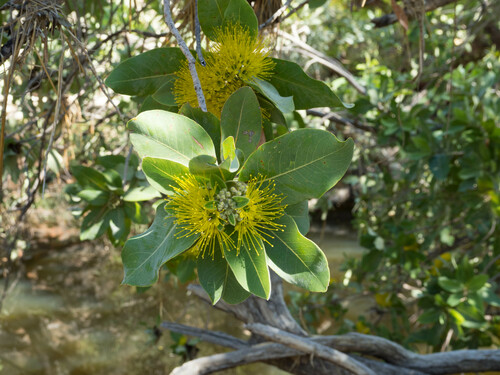
Verbatim
e0“The leaf oil of X. eucalyptoides was dominated by the aromatic ketones baeckeol methyl ether (34–41%)”
Claim · model-written summary
X. formosus leaf oil was sesquiterpenoid, with beta-caryophyllene as a principal component at 10-24%.
- Taxon
- X. formosusXanthostemon formosuse0
- Outcome
- β-caryophyllenee0
- Value
- 10–24%e0
Verbatim
e0“The leaf oil of X. formosus was, once again, sesquiterpenoid in nature. The principal components were β-caryophyllene (10–24%)”
Claim · model-written summary
Xanthostemon graniticus produced an unusual monoterpenic leaf oil whose principal component was alpha-pinene at 69.5%.
- Taxon
- Xanthostemon graniticus
 Xanthostemon graniticuse0
- Outcome
- α-pinenee0
- Value
- 69.5%e0
Organisms pictured · Representative pictures of the matched species, not figures from the paper.

Verbatim
e0“Xanthostemon graniticus was unusual within the genus in that it produced a monoterpenic oil, the principal component being α-pinene (69.5%)”
Claim · model-written summary
Xanthostemon oppositifolius oil was dominated by beta-triketones, with xanthostemone as a principal component at 1625% (as written).
- Taxon
- Xanthostemon oppositifolius
 Xanthostemon oppositifoliuse0
- Outcome
- xanthostemonee0
- Value
- 1625%e0
Organisms pictured · Representative pictures of the matched species, not figures from the paper.

Verbatim
e0“Xanthostemon oppositifolius gave an oil which was dominated by β-triketones. The principal components were xanthostemone (1625%)”
Claim · model-written summary
Xanthostemon paradoxus leaf oil was sesquiterpenoid, with beta-caryophyllene as a principal component at 14%.
- Taxon
- Xanthostemon paradoxus
 Xanthostemon paradoxuse0
- Outcome
- β-caryophyllenee0
- Value
- 14%e0
Organisms pictured · Representative pictures of the matched species, not figures from the paper.

Verbatim
e0“Xanthostemon paradoxus produced a leaf oil that was sesquiterpenoid in nature. The principal components were β-caryophyllene (14%)”
Claim · model-written summary
Xanthostemon psidioides oil was dominated by beta-triketones, the principal component being xanthostemone at 73.1%.
- Taxon
- Xanthostemon psidioidesXanthostemon psidioidese0
- Outcome
- xanthostemonee0
- Value
- 73.1%e0
Verbatim
e0“Xanthostemon psidioides was another species whose oil was dominated by β-triketones, the principal component being xanthostemone (73.1%)”
Claim · model-written summary
Xanthostemon umbrosus, the most widely distributed species investigated, produced a variable leaf oil.
- Taxon
- Xanthostemon umbrosusXanthostemon umbrosuse0
- Outcome
- variable oile0
Verbatim
e0“Xanthostemon umbrosus, the species with the widest distribution in this investigation, produced a variable oil”
Claim · model-written summary
Some X. umbrosus oils were dominated by the sesquiterpene ketone cyclocolorenone at 77-83%.
- Taxon
- Xanthostemon umbrosusXanthostemon umbrosuse0
- Outcome
- cyclocolorenonee1
- Value
- 77–83%e1
Verbatim
e0“Xanthostemon umbrosus”
e1“The various oils were dominated by the sesquiterpene ketone, cyclocolorenone (77–83%)”
Claim · model-written summary
X. verticillatus leaf oil was unusual, containing 1,3-dimethoxy-5-isopropylbenzene as its major component at 96-97%.
- Taxon
- X. verticillatus
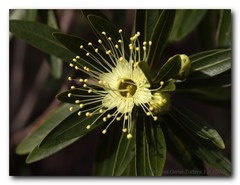 Xanthostemon verticillatuse0
- Outcome
- 1,3-dimethoxy-5-isopropylbenzenee0
- Value
- 96–97%e0
Organisms pictured · Representative pictures of the matched species, not figures from the paper.

Verbatim
e0“The leaf oil from X. verticillatus was unusual amongst the other Australian species of Xanthostemon in that it contained 1,3-dimethoxy-5-isopropylbenzene as its major component (96–97%)”
Claim · model-written summary
Xanthostemon whitei gave a sesquiterpenic leaf oil similar to that of X. arenarius.
- Taxon
- Xanthostemon whitei
 Xanthostemon whiteie0
- Outcome
- sesquiterpenic oile0
- Comparator
- X. arenariuse0
Organisms pictured · Representative pictures of the matched species, not figures from the paper.

Verbatim
e0“Xanthostemon whitei gave a sesquiterpenic oil which was similar to that produced by X. arenarius”
Claim · model-written summary
Xanthostemon youngii gave a sesquiterpenic oil with alpha-copaene as a principal component at 3-13%.
- Taxon
- Xanthostemon youngii
 Xanthostemon youngiie0
- Outcome
- α-copaenee0
- Value
- 3–13%e0
Organisms pictured · Representative pictures of the matched species, not figures from the paper.

Verbatim
e0“Xanthostemon youngii also gave a sesquiterpenic oil, the principal components being α-copaene (3–13%)”
Claim · model-written summary
Xanthostemon sp. (Bolt Head JRC +8805) gave a terpenoid oil whose major components were hydrocarbons, gamma-cadinene at 18%.
- Taxon
- Xanthostemon sp.
 Xanthostemone0
- Material
- Bolt Head JRC +8805e0
- Outcome
- γ-cadinenee0
- Value
- 18%e0
Organisms pictured · Representative pictures of the matched species, not figures from the paper.

Verbatim
e0“Xanthostemon sp. (Bolt Head JRC +8805) gave a terpenoid oil in which the major components were the hydrocarbons, γ-cadinene (18%)”
Claim · model-written summary
Leaf oil yields across the Xanthostemon species ranged 0.1-0.6% w/w on fresh leaves.
- Taxon
- XanthostemonXanthostemont0
- Organ / stage
- fresh leavese0
- Outcome
- Oil yieldse0
- Value
- 0.1–0.6%, w/we0
Organisms pictured · Representative pictures of the matched species, not figures from the paper.
Verbatim
t0“GenusXanthostemon(Myrtaceae)”
e0“Oil yields over the range of species were 0.1–0.6%, w/w, based on fresh leaves”