Abstract
The effect of vegetational diversity on ants and herbivores was studied in a maize-bean (Zea mays-Phaseolus vulgaris) biculture and a maize monoculture in Nicaragua. Three basic hypotheses were examined: (1) the abundance of herbivores on maize would be less in the biculture than in the monoculture, (2) ant foraging activity would be higher in the biculture, and (3)the effect of ants as natural enemies of maize pests would account for differences in the abundance of those pests in the bicultures. The effects of plant diversity on the abundance of Spodoptera frugiperda (J. E. Smith), the fall armyworm, and Dalbulus maidis (De Long & Wolcott), the corn leafhopper, were examined. Ant-foraging activity was estimated as the proportion of tunafish baits occupied by ants in monocultures and bicultures. The effect of ants on the maize herbivores was investigated by excluding ants through selective poisoning. Cropping patterns significantly influenced the numbers of fall armyworm and corn leafhopper, but in different ways. The corn leafhopper was more abundant in bicultures, and the fall armyworm was more abundant in monocultures. No significant difference was found in the proportion of baits occupied by ants in maize monocultures and maize- bean bicultures. Ants had a significant effect on the two main maize pests, S. frugiperda and D. maidis . There were significantly higher numbers of both pests in plots where ant foraging activity was reduced with insecticide. These results suggest the possibility of using ants as agents of biological control in the maize agroecosystem in Nicaragua.
Abstract from the paper’s OpenAlex record, shown for indexing and research. Copyright remains with the authors or the publisher. Read at the source ↗
The text the model read, with the source record’s inline markup (italics, sub- and superscripts) rendered and its character entities decoded; quote offsets refer to the raw text.
Claims 6
Claim · model-written summary
Corn leafhopper was more abundant in maize-bean bicultures than in monocultures.
- Treatment
- biculturese2
- Interactor
- corn leafhopper
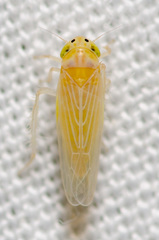 Dalbulus maidise2pest
- Outcome
- numberse1
- Direction
- more abundante2
- Comparator
- monoculturese2
- Setting
- Nicaraguae3
 Zea mays
Organisms pictured · Representative pictures of the matched species, not figures from the paper.


Verbatim
e1“Cropping patterns significantly influenced the numbers of fall armyworm and corn leafhopper, but in different ways”
e2“The corn leafhopper was more abundant in bicultures, and the fall armyworm was more abundant in monocultures”
e3“The effect of vegetational diversity on ants and herbivores was studied in a maize-bean (Zea mays-Phaseolus vulgaris) biculture and a maize monoculture in Nicaragua”
Claim · model-written summary
Fall armyworm was more abundant in maize monocultures than in bicultures.
- Treatment
- monoculturese2
- Interactor
- fall armyworm
 Spodoptera frugiperdae2pest
- Outcome
- numberse1
- Direction
- more abundante2
- Comparator
- biculturese2
- Setting
- Nicaraguae3
Organisms pictured · Representative pictures of the matched species, not figures from the paper.

Verbatim
e1“Cropping patterns significantly influenced the numbers of fall armyworm and corn leafhopper, but in different ways”
e2“The corn leafhopper was more abundant in bicultures, and the fall armyworm was more abundant in monocultures”
e3“The effect of vegetational diversity on ants and herbivores was studied in a maize-bean (Zea mays-Phaseolus vulgaris) biculture and a maize monoculture in Nicaragua”
Claim · model-written summary
The proportion of baits occupied by ants did not differ between maize monocultures and maize-bean bicultures.
- Treatment
- biculturese1
- Interactor
- antsFormicidaee1biocontrol_agent
- Outcome
- proportion of baits occupied by antse1
- Direction
- no_changeinferrede1
- Comparator
- monoculturese1
Organisms pictured · Representative pictures of the matched species, not figures from the paper.
Verbatim
e1“No significant difference was found in the proportion of baits occupied by ants in maize monocultures and maize- bean bicultures”
e2“The effect of vegetational diversity on ants and herbivores was studied in a maize-bean (Zea mays-Phaseolus vulgaris) biculture and a maize monoculture in Nicaragua”
Claim · model-written summary
Reducing ant foraging with insecticide significantly increased fall armyworm numbers in maize.
- Treatment
- ant foraging activity was reduced with insecticidee2
- Interactor
- S. frugiperdaSpodoptera frugiperdae1pest
- Second interactor
- antsFormicidaee1biocontrol_agent
- Outcome
- numberse2
- Direction
- highere2
Not reportedComparator
Organisms pictured · Representative pictures of the matched species, not figures from the paper.
Verbatim
e1“Ants had a significant effect on the two main maize pests, S. frugiperda and D. maidis”
e2“There were significantly higher numbers of both pests in plots where ant foraging activity was reduced with insecticide”
Claim · model-written summary
Reducing ant foraging with insecticide significantly increased corn leafhopper numbers in maize.
- Treatment
- ant foraging activity was reduced with insecticidee2
- Interactor
- D. maidisDalbulus maidise1pest
- Second interactor
- antsFormicidaee1biocontrol_agent
- Outcome
- numberse2
- Direction
- highere2
Not reportedComparator
Organisms pictured · Representative pictures of the matched species, not figures from the paper.
Verbatim
e1“Ants had a significant effect on the two main maize pests, S. frugiperda and D. maidis”
e2“There were significantly higher numbers of both pests in plots where ant foraging activity was reduced with insecticide”
Claim · model-written summary
Ants may be used as agents of biological control in the maize agroecosystem.
- Interactor
- antsFormicidaee1biocontrol_agent
- Outcome
- using ants as agents of biological controle1
- Setting
- Nicaraguae1
Organisms pictured · Representative pictures of the matched species, not figures from the paper.
Verbatim
e1“These results suggest the possibility of using ants as agents of biological control in the maize agroecosystem in Nicaragua”
The same questions in other papers
insecticide · Spodoptera frugiperda · Zea mays (maize)Positive and negative results
6 papers in the same direction as this paper · 30 in the opposite direction
- positive
- positive
- positive
33 papers more in this group
See all 37 papers →Claims are grouped by organism, treatment and what was measured or targeted. A paper counts as positive when any of its claims in the group is positive.