Abstract
Hydrostatic pressures in laticiferous phloem tissues of Hevea brasiliensis trees exhibit a diurnal fluctuation, with minimum values occurring during the day. Pressure decreases with increasing height up the trunk, the gradient becoming greater under conditions of rapid transpiration. Sieve-tube turgor must be controlled independently if pressure-flow is to occur in the expected direction.
Abstract from the paper’s OpenAlex record, shown for indexing and research. Copyright remains with the authors or the publisher. Read at the source ↗
The text the model read, with the source record’s inline markup (italics, sub- and superscripts) rendered and its character entities decoded; quote offsets refer to the raw text.
Claims 3
Claim · model-written summary
Hevea laticiferous phloem pressure fluctuated daily, with minima during the day.
- Taxon
- Hevea brasiliensis
 Hevea brasiliensise0
- Organ / stage
- laticiferous phloem tissuese0
- Outcome
- Hydrostatic pressurese0
- Direction
- minimum valuese0
- Qualifier
- during the daye0
Organisms pictured · Representative pictures of the matched species, not figures from the paper.
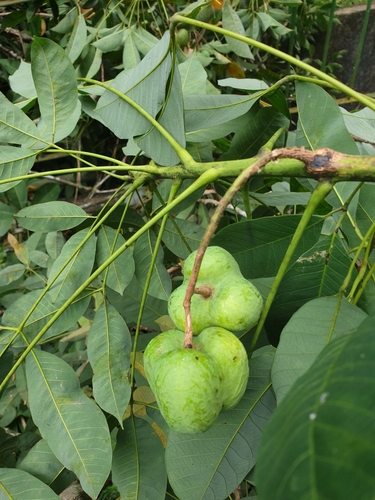
Verbatim
e0“Hydrostatic pressures in laticiferous phloem tissues of Hevea brasiliensis trees exhibit a diurnal fluctuation, with minimum values occurring during the day.”
Claim · model-written summary
Pressure declined higher up the Hevea trunk.
 Hevea
Organisms pictured · Representative pictures of the matched species, not figures from the paper.

Verbatim
e0“Pressure decreases with increasing height up the trunk”
t0“Hevea Latex”
Claim · model-written summary
The trunk pressure gradient grew under rapid transpiration.
Not reportedOrgan / stageSetting
Organisms pictured · Representative pictures of the matched species, not figures from the paper.
Verbatim
e0“the gradient becoming greater under conditions of rapid transpiration”
t0“Hevea Latex”