Abstract
Common root rot was assessed in wheat cultivars grown at field sites in Queensland having low, intermediate and high inoculum densities of Cochliobolus sativus. The densities at seeding time in the upper 10 cm of the profile, were 3, 77 and 132 viable propagules per g soil respectively. Both incidence and intensity of disease at tillering, flowering and firm dough stages of plant development appeared closely related to inoculum density. Additional inoculum applied with seed increased disease markedly at the low inoculum density site and slightly at the intermediate site, and had no effect at the high inoculum density site, indicating a threshold level for maximum disease in the test. Reduction in dry weight of plants at the low and high sites paralleled the disease levels at the tillering and flowering stages. The relative reactions of the cultivars were expressed consistently: Songlen and Timgalen invariably were more diseased than Kite and QT2338/9. The results suggest that cultivars may be evaluated for resistance in the field from tillering onward if disease levels are adequate. C. sativus was the dominant fungus isolated from the subcrown internodes of plants from non-inoculated subplots. Its frequency of isolation was much less from the low inoculum density site than the intermediate and high inoculum density sites, and lower from Kite and QT2338/9 than from Songlen and Timgalen. Fursariurn chlamydosporum was isolated from subcrown internodes with increasing frequency as the season progressed. However, it was considered to be a secondary invader of the plant material.
Abstract from the paper’s OpenAlex record, shown for indexing and research. Copyright remains with the authors or the publisher. Read at the source ↗
The text the model read, with the source record’s inline markup (italics, sub- and superscripts) rendered and its character entities decoded; quote offsets refer to the raw text.
Claims 9
Claim · model-written summary
Incidence and intensity of common root rot appeared closely related to soil inoculum density of Cochliobolus sativus.
- Taxon
- wheat
 Triticum aestivumt0
- Treatment
- inoculum densitye1
- Interactor
- Cochliobolus sativus
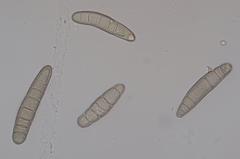 Bipolaris sorokinianat0pathogen
- Outcome
- incidence and intensity of diseasee1
- Setting
- field sites in Queenslande3
Not reportedDirection
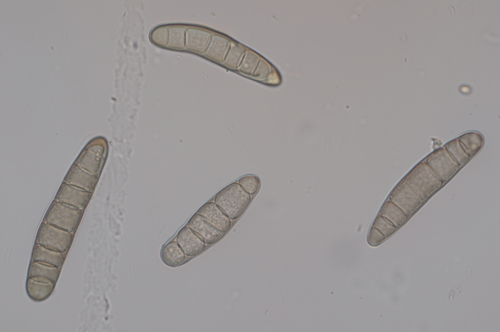
Organisms pictured · Representative pictures of the matched species, not figures from the paper.

Verbatim
t0“Inoculum density of Cochliobolus sativus in soil and common root rot of wheat cultivars in Queensland”
e1“Both incidence and intensity of disease at tillering, flowering and firm dough stages of plant development appeared closely related to inoculum density”
e3“Common root rot was assessed in wheat cultivars grown at field sites in Queensland”
Claim · model-written summary
Additional seed-applied inoculum markedly increased disease at the low inoculum density site.
- Taxon
- wheatTriticum aestivumt0
- Treatment
- Additional inoculum applied with seede2
- Interactor
- Cochliobolus sativusBipolaris sorokinianat0pathogen
- Outcome
- diseasee2
- Direction
- increasede2
- Qualifier
- markedlye2
- Setting
- low inoculum density sitee2
Not reportedComparator
Organisms pictured · Representative pictures of the matched species, not figures from the paper.
Verbatim
t0“Inoculum density of Cochliobolus sativus in soil and common root rot of wheat cultivars in Queensland”
e2“Additional inoculum applied with seed increased disease markedly at the low inoculum density site and slightly at the intermediate site, and had no effect at the high inoculum density site, indicating a threshold level for maximum disease in the test”
Claim · model-written summary
Seed-applied inoculum had no effect on disease at the high inoculum density site, indicating a threshold for maximum disease.
- Taxon
- wheatTriticum aestivumt0
- Treatment
- Additional inoculum applied with seede2
- Interactor
- Cochliobolus sativusBipolaris sorokinianat0pathogen
- Outcome
- diseasee2
- Direction
- no effecte2
- Qualifier
- threshold level for maximum diseasee2
- Setting
- high inoculum density sitee2
Not reportedComparator
Organisms pictured · Representative pictures of the matched species, not figures from the paper.
Verbatim
t0“Inoculum density of Cochliobolus sativus in soil and common root rot of wheat cultivars in Queensland”
e2“Additional inoculum applied with seed increased disease markedly at the low inoculum density site and slightly at the intermediate site, and had no effect at the high inoculum density site, indicating a threshold level for maximum disease in the test”
Claim · model-written summary
Reduction in dry weight of wheat plants at the low and high sites paralleled the disease levels at tillering and flowering.
- Taxon
- wheatTriticum aestivumt0
- Outcome
- dry weight of plantse4
- Direction
- Reductione4
- Setting
- low and high sitese4
Organisms pictured · Representative pictures of the matched species, not figures from the paper.
Verbatim
t0“Inoculum density of Cochliobolus sativus in soil and common root rot of wheat cultivars in Queensland”
e4“Reduction in dry weight of plants at the low and high sites paralleled the disease levels at the tillering and flowering stages”
Claim · model-written summary
Songlen and Timgalen were more diseased than Kite and QT2338/9.
- Taxon
- wheatTriticum aestivumt0
- Material
- Songlen and Timgalene5
- Outcome
- diseasee5
- Direction
- more diseasede5
- Comparator
- Kite and QT2338/9e5
Organisms pictured · Representative pictures of the matched species, not figures from the paper.
Verbatim
t0“Inoculum density of Cochliobolus sativus in soil and common root rot of wheat cultivars in Queensland”
e5“Songlen and Timgalen invariably were more diseased than Kite and QT2338/9”
Claim · model-written summary
Cultivars may be evaluated for field resistance from tillering onward if disease levels are adequate.
- Taxon
- wheatTriticum aestivumt0
- Outcome
- evaluated for resistance in the fielde6
- Qualifier
- if disease levels are adequatee6
Organisms pictured · Representative pictures of the matched species, not figures from the paper.
Verbatim
t0“Inoculum density of Cochliobolus sativus in soil and common root rot of wheat cultivars in Queensland”
e6“The results suggest that cultivars may be evaluated for resistance in the field from tillering onward if disease levels are adequate”
Claim · model-written summary
Cochliobolus sativus was the dominant fungus isolated from subcrown internodes of plants in non-inoculated subplots.
- Taxon
- wheatTriticum aestivumt0
- Organ / stage
- subcrown internodese7
- Interactor
- C. sativusBipolaris sorokinianae7pathogen
- Outcome
- dominant fungus isolated from the subcrown internodese7
- Setting
- non-inoculated subplotse7
Organisms pictured · Representative pictures of the matched species, not figures from the paper.
Verbatim
t0“Inoculum density of Cochliobolus sativus in soil and common root rot of wheat cultivars in Queensland”
e7“C. sativus was the dominant fungus isolated from the subcrown internodes of plants from non-inoculated subplots”
Claim · model-written summary
Isolation frequency of Cochliobolus sativus was much lower at the low inoculum density site than at the intermediate and high sites.
- Taxon
- wheatTriticum aestivumt0
- Interactor
- C. sativusBipolaris sorokinianae7pathogen
- Outcome
- frequency of isolatione2
- Direction
- much lesse2
- Comparator
- intermediate and high inoculum density sitese2
- Setting
- low inoculum density sitee2
Organisms pictured · Representative pictures of the matched species, not figures from the paper.
Verbatim
t0“Inoculum density of Cochliobolus sativus in soil and common root rot of wheat cultivars in Queensland”
e7“C. sativus was the dominant fungus isolated from the subcrown internodes of plants from non-inoculated subplots”
e2“Its frequency of isolation was much less from the low inoculum density site than the intermediate and high inoculum density sites”
Claim · model-written summary
Fursariurn chlamydosporum was isolated from subcrown internodes with increasing frequency as the season progressed.
- Taxon
- wheatTriticum aestivumt0
- Organ / stage
- subcrown internodese1
- Interactor
- Fursariurn chlamydosporume1other
- Outcome
- isolated from subcrown internodese1
- Direction
- increasing frequencye1
- Qualifier
- secondary invadere2
Organisms pictured · Representative pictures of the matched species, not figures from the paper.
Verbatim
t0“Inoculum density of Cochliobolus sativus in soil and common root rot of wheat cultivars in Queensland”
e1“Fursariurn chlamydosporum was isolated from subcrown internodes with increasing frequency as the season progressed”
e2“it was considered to be a secondary invader of the plant material”
The same questions in other papers
inoculation · Bipolaris sorokiniana · Triticum aestivum (wheat)Positive and negative results
3 papers in the same direction as this paper · 10 in the opposite direction
- positive
- positive
- positive
10 papers more in this group
See all 14 papers →Claims are grouped by organism, treatment and what was measured or targeted. A paper counts as positive when any of its claims in the group is positive.