Abstract
A time-course investigation was made of early events in leaves of four rice cultivars following inoculation with Pyricularia oryzae Cavara race 131. The pathogen conidia germinated and formed appressoria at a similar frequency in all four cultivars. A difference was found in fungal penetration frequency among the cultivars but it did not appear to be related to race-specific resistance. Growth inhibition of infection hyphae was pronounced in incompatible race–cultivar combinations relative to compatible ones, and a correlation between inhibition of infection hyphae and expression of race-specific resistance was found. The cultivars showed five types of cellular reactions to the pathogen. Light browning and aniline blue staining of the epidermal cell wall (type B reactions) were the first reactions observed in all cultivars and a decrease in their frequency was followed by an increase of other cellular reactions such as cytoplasmic granulation or cell necrosis. This result suggested that cytoplasmic granulation or cell necrosis might be generated from type B reactions. Compared with compatible cultivars, incompatible ones showed type B reactions much more rapidly. The study also revealed the temporal coincidence between inhibition of growth of infection hyphae and occurrence of type B reactions.
Abstract from the paper’s OpenAlex record, shown for indexing and research. Copyright remains with the authors or the publisher. Read at the source ↗
The text the model read, with the source record’s inline markup (italics, sub- and superscripts) rendered and its character entities decoded; quote offsets refer to the raw text.
Claims 11
Claim · model-written summary
Conidia of Pyricularia oryzae germinated and formed appressoria at a similar frequency in all four rice cultivars.
- Taxon
- rice
 Oryza sativat0
- Interactor
- Pyricularia oryzae
 Pyricularia oryzaee1pathogen
- Outcome
- germinated and formed appressoriae2
- Qualifier
- at a similar frequency in all four cultivarse2
Organisms pictured · Representative pictures of the matched species, not figures from the paper.

Verbatim
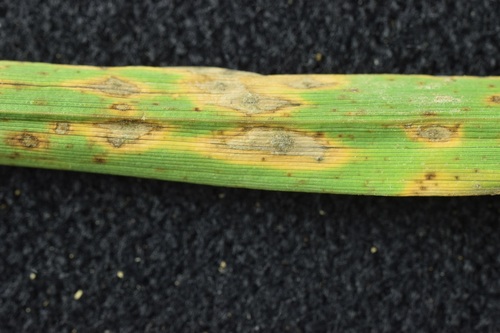
t0“rice leaves infected with Pyricularia oryzae”
e1“four rice cultivars following inoculation with Pyricularia oryzae Cavara race 131”
e2“The pathogen conidia germinated and formed appressoria at a similar frequency in all four cultivars”
Claim · model-written summary
Fungal penetration frequency differed among rice cultivars, not clearly related to race-specific resistance.
- Taxon
- riceOryza sativat0
- Outcome
- fungal penetration frequencye3
- Qualifier
- did not appear to be related to race-specific resistancee3
Organisms pictured · Representative pictures of the matched species, not figures from the paper.
Verbatim
t0“rice leaves infected with Pyricularia oryzae”
e3“A difference was found in fungal penetration frequency among the cultivars but it did not appear to be related to race-specific resistance”
Claim · model-written summary
Growth inhibition of infection hyphae was more pronounced in incompatible race-cultivar combinations than in compatible ones.
- Taxon
- riceOryza sativat0
- Treatment
- incompatible race–cultivar combinationse4
- Outcome
- Growth inhibition of infection hyphaee4
- Direction
- pronouncede4
- Comparator
- compatible onese4
Organisms pictured · Representative pictures of the matched species, not figures from the paper.
Verbatim
t0“rice leaves infected with Pyricularia oryzae”
e4“Growth inhibition of infection hyphae was pronounced in incompatible race–cultivar combinations relative to compatible ones”
Claim · model-written summary
Inhibition of infection hyphae was correlated with expression of race-specific resistance in rice.
- Taxon
- riceOryza sativat0
- Outcome
- expression of race-specific resistancee5
- Qualifier
- a correlation between inhibition of infection hyphae and expression of race-specific resistancee5
Organisms pictured · Representative pictures of the matched species, not figures from the paper.
Verbatim
t0“rice leaves infected with Pyricularia oryzae”
e5“a correlation between inhibition of infection hyphae and expression of race-specific resistance was found”
Claim · model-written summary
The rice cultivars showed five types of cellular reactions to the pathogen.
- Taxon
- riceOryza sativat0
- Outcome
- five types of cellular reactionse6
Organisms pictured · Representative pictures of the matched species, not figures from the paper.
Verbatim
t0“rice leaves infected with Pyricularia oryzae”
e6“The cultivars showed five types of cellular reactions to the pathogen”
Claim · model-written summary
Type B reactions (light browning and aniline blue staining of epidermal cell walls) were the first cellular reactions seen in all cultivars.
- Taxon
- riceOryza sativat0
- Organ / stage
- epidermal cell walle7
- Outcome
- first reactions observede7
- Qualifier
- type B reactionse7
Organisms pictured · Representative pictures of the matched species, not figures from the paper.
Verbatim
t0“rice leaves infected with Pyricularia oryzae”
e7“Light browning and aniline blue staining of the epidermal cell wall (type B reactions) were the first reactions observed in all cultivars”
Claim · model-written summary
The frequency of type B reactions decreased after their first appearance.
- Taxon
- riceOryza sativat0
- Outcome
- frequencye0
- Direction
- decreasee0
- Qualifier
- type B reactionse7
Organisms pictured · Representative pictures of the matched species, not figures from the paper.
Verbatim
t0“rice leaves infected with Pyricularia oryzae”
e7“Light browning and aniline blue staining of the epidermal cell wall (type B reactions) were the first reactions observed in all cultivars”
e0“a decrease in their frequency was followed by an increase of other cellular reactions such as cytoplasmic granulation or cell necrosis”
Claim · model-written summary
Other cellular reactions, such as cytoplasmic granulation or cell necrosis, increased after type B reactions declined.
- Taxon
- riceOryza sativat0
- Outcome
- other cellular reactions such as cytoplasmic granulation or cell necrosise0
- Direction
- increasee0
Organisms pictured · Representative pictures of the matched species, not figures from the paper.
Verbatim
t0“rice leaves infected with Pyricularia oryzae”
e0“a decrease in their frequency was followed by an increase of other cellular reactions such as cytoplasmic granulation or cell necrosis”
Claim · model-written summary
Cytoplasmic granulation or cell necrosis may be generated from type B reactions.
- Taxon
- riceOryza sativat0
- Outcome
- cytoplasmic granulation or cell necrosise0
- Qualifier
- might be generated from type B reactionse0
Organisms pictured · Representative pictures of the matched species, not figures from the paper.
Verbatim
t0“rice leaves infected with Pyricularia oryzae”
e0“This result suggested that cytoplasmic granulation or cell necrosis might be generated from type B reactions”
Claim · model-written summary
Incompatible race-cultivar combinations showed type B reactions much more rapidly than compatible cultivars.
- Taxon
- riceOryza sativat0
- Treatment
- incompatible onese0
- Outcome
- type B reactionse0
- Direction
- more rapidlye0
- Comparator
- compatible cultivarse0
Organisms pictured · Representative pictures of the matched species, not figures from the paper.
Verbatim
t0“rice leaves infected with Pyricularia oryzae”
e0“Compared with compatible cultivars, incompatible ones showed type B reactions much more rapidly”
Claim · model-written summary
Inhibition of infection hyphae coincided in time with the occurrence of type B reactions.
- Taxon
- riceOryza sativat0
- Outcome
- occurrence of type B reactionse0
- Qualifier
- temporal coincidence between inhibition of growth of infection hyphae and occurrence of type B reactionse0
Organisms pictured · Representative pictures of the matched species, not figures from the paper.
Verbatim
t0“rice leaves infected with Pyricularia oryzae”
e0“The study also revealed the temporal coincidence between inhibition of growth of infection hyphae and occurrence of type B reactions”