Abstract
Seed and forage yields of three barley cultivars (Hordeum vulgare L.) grown on the same land for 4 yr after fallow without fertilizer declined annually by 12–15%. Decline in yield occurred also with moderate to high rates of fertilization (335 and 670 kg/ha of 10-4-8) in high yielding years but not in low yielding years. Under continuous cropping, the osil NO 3 -N increased, the pH and NaHCO 3 -extractable P remained at the same general level, and exchangeable K decreased. The decrease in yields after the first barley crop on fallow land was accompanied generally by a decrease in foliage N and K concentration and some increase in the P concentration. Disease prevalence varied each year but, with the possible exception of leaf spot caused by Cochliobolus sativus (Ito & Kurib.) Drechsl. ex Dastur, did not increase with continuous cropping. Loose smut Ustilago nuda (Jens.) Rostr.) increased rapidly for 2 yr on the cultivar York and then decreased. It appeared to be affected more by weather conditions than by number of years in continuous barley.
Abstract from the paper’s OpenAlex record, shown for indexing and research. Copyright remains with the authors or the publisher. Read at the source ↗
The text the model read, with the source record’s inline markup (italics, sub- and superscripts) rendered and its character entities decoded; quote offsets refer to the raw text.
Claims 10
Claim · model-written summary
Seed and forage yields of three barley cultivars grown on the same land for 4 yr after fallow without fertilizer declined annually by 12-15%.
- Taxon
- barley
 Hordeum vulgaree0
- Treatment
- grown on the same land for 4 yr after fallow without fertilizere0
- Outcome
- Seed and forage yieldse0
- Direction
- declinede0
- Value
- 12–15%e0
Not reportedComparator
Organisms pictured · Representative pictures of the matched species, not figures from the paper.

Verbatim
e0“Seed and forage yields of three barley cultivars (Hordeum vulgare L.) grown on the same land for 4 yr after fallow without fertilizer declined annually by 12–15%”
Claim · model-written summary
Yield decline in continuous barley also occurred with moderate to high fertilization in high yielding years but not in low yielding years.
- Taxon
- BARLEYHordeum vulgaret0
- Treatment
- moderate to high rates of fertilization (335 and 670 kg/ha of 10-4-8)e0
- Outcome
- Decline in yielde0
- Qualifier
- in high yielding years but not in low yielding yearse0
Organisms pictured · Representative pictures of the matched species, not figures from the paper.
Verbatim
e0“Decline in yield occurred also with moderate to high rates of fertilization (335 and 670 kg/ha of 10-4-8) in high yielding years but not in low yielding years”
t0“BARLEY”
Claim · model-written summary
Under continuous cropping soil nitrate-N increased.
- Taxon
- BARLEYHordeum vulgaret0
- Treatment
- continuous croppinge0
- Outcome
- osil NO 3 -Ne0
- Direction
- increasede0
Organisms pictured · Representative pictures of the matched species, not figures from the paper.
Verbatim
e0“Under continuous cropping, the osil NO 3 -N increased”
t0“BARLEY”
Claim · model-written summary
Under continuous cropping soil pH and NaHCO3-extractable P remained at the same general level.
- Taxon
- BARLEYHordeum vulgaret0
- Outcome
- pH and NaHCO 3 -extractable Pe0
- Direction
- remained at the same general levele0
Organisms pictured · Representative pictures of the matched species, not figures from the paper.
Verbatim
e0“the pH and NaHCO 3 -extractable P remained at the same general level”
t0“BARLEY”
Claim · model-written summary
Under continuous cropping soil exchangeable K decreased.
- Taxon
- BARLEYHordeum vulgaret0
- Outcome
- exchangeable Ke0
- Direction
- decreasede0
Organisms pictured · Representative pictures of the matched species, not figures from the paper.
Verbatim
e0“exchangeable K decreased”
t0“BARLEY”
Claim · model-written summary
The yield decrease after the first barley crop on fallow land was generally accompanied by decreased foliage N and K concentration.
- Taxon
- barleyHordeum vulgaree0
- Outcome
- foliage N and K concentratione0
- Direction
- decreasee0
Organisms pictured · Representative pictures of the matched species, not figures from the paper.
Verbatim
e0“The decrease in yields after the first barley crop on fallow land was accompanied generally by a decrease in foliage N and K concentration”
Claim · model-written summary
The yield decrease after the first barley crop was accompanied by some increase in foliage P concentration.
- Taxon
- BARLEYHordeum vulgaret0
- Outcome
- the P concentratione0
- Direction
- increasee0
Organisms pictured · Representative pictures of the matched species, not figures from the paper.
Verbatim
e0“some increase in the P concentration”
t0“BARLEY”
Claim · model-written summary
Disease prevalence varied each year and, with the possible exception of leaf spot caused by Cochliobolus sativus, did not increase with continuous cropping.
- Taxon
- BARLEYHordeum vulgaret0
- Treatment
- continuous croppinge0
- Interactor
- Cochliobolus sativus
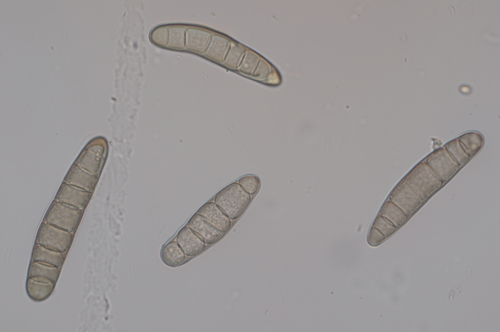
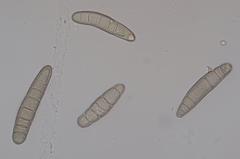 Bipolaris sorokinianae0pathogen
- Outcome
- Disease prevalencee0
- Direction
- did not increasee0
Organisms pictured · Representative pictures of the matched species, not figures from the paper.
Verbatim
e0“Disease prevalence varied each year but, with the possible exception of leaf spot caused by Cochliobolus sativus (Ito & Kurib.) Drechsl. ex Dastur, did not increase with continuous cropping”
t0“BARLEY”
Claim · model-written summary
Loose smut increased rapidly for 2 yr on the barley cultivar York and then decreased.
- Taxon
- BARLEYHordeum vulgaret0
- Material
- Yorke0
- Interactor
- Ustilago nuda
 Ustilago nudae0pathogen
- Outcome
- increased rapidly for 2 yre0
- Direction
- increasede0
Organisms pictured · Representative pictures of the matched species, not figures from the paper.

Verbatim
e0“Ustilago nuda (Jens.) Rostr.) increased rapidly for 2 yr on the cultivar York and then decreased”
t0“BARLEY”
Claim · model-written summary
Loose smut appeared to be affected more by weather conditions than by the number of years in continuous barley.
- Taxon
- barleyHordeum vulgaree0
- Treatment
- weather conditionse0
- Outcome
- affectede0
- Comparator
- number of years in continuous barleye0
Not reportedDirection
Organisms pictured · Representative pictures of the matched species, not figures from the paper.
Verbatim
e0“It appeared to be affected more by weather conditions than by number of years in continuous barley”
The same questions in other papers
rotation · yield · Hordeum vulgare (barley)Positive and negative results
16 papers in the same direction as this paper · 24 in the opposite direction
- positive
- positive
- positive
37 papers more in this group
See all 41 papers →fertilization · yield · Hordeum vulgare (barley)Positive and negative results
76 papers in the same direction as this paper · 473 in the opposite direction
- positive
- positive
- positive
546 papers more in this group
See all 550 papers →Claims are grouped by organism, treatment and what was measured or targeted. A paper counts as positive when any of its claims in the group is positive.