Abstract
In the work described in this thesis I studied how increases in nitrogen (N) inputs may affect plant community structure in boreal forest understorey vegetation. These phenomena were investigated in N fertilization experiments and along a national N deposition gradient. After five years of N additions, large changes in understorey vegetation composition were observed in the fertilization study. In plots that received 50 kg N ha'1 year"1 (N2), the abundance of the dominant species, Vaccinium myrtillus, decreased on average by 32 %. No decrease was observed in control plots during the same period. In contrast, the grass Deschampsia flexuosa responded positively to increased N input, being on average more than five times as abundant in the N2 treatments as in controls. Also an increase was seen in the incidence of disease caused by the parasitic fungus Valdensia heterodoxa on leaves of V. myrtillus following N additions. The parasite was on average nearly twice as abundant in N2 plots than in control plots. This could be explained by increased N concentrations in host plant tissue. Disease incidence also increased following experimental additions of glutamine to leaf surfaces of V. myrtillus, suggesting a causal connection between plant N concentration and performance of the fungus. The parasite also played a key role in the observed changes in understorey species composition. D. flexuosa was more abundant in patches in which V. myrtillus was severely affected by V heterodoxa. This suggests that V heterodoxa mediates the increased abundance of D. flexuosa following increased N additions. The fungus mediates changes in the composition of understorey vegetation mainly by increasing light availability via premature leaf loss of V. myrtillus. The incidence of disease due to the parasite was on average higher in large than in smaller N-treated plots, indicating that the response to N fertilization is spatially scale dependent. This shows that using small plot sizes in experiments that simulate changed environmental conditions may be problematic, as important interactions may be underestimated. Comparison of the occurrence of understorey species between regions with different rates of N deposition revealed that the occurrence of the two dwarf shrubs V. myrtillus and V. vitis- idaea was lower in regions with high N deposition compared to regions with low deposition. The opposite pattern was found for V heterodoxa. This is consistent with expectations from N fertilization experiments. For D. flexuosa no differences in occurrence were found between the different regions investigated. The effects on vegetation and mycorrhizal fungi observed following N additions were also found to be long lasting. Nine years after termination of the fertilization, no signs of recovery were detected, and nearly 50 years after termination characteristic signs of N fertilization were found among bryophytes and mycorrhizal fungi. This suggests that the time needed for re-establishment of the original biota following N-induced changes may be substantial.
Abstract from the paper’s OpenAlex record; open copy licensed other-oa. Read at the source ↗
The text the model read, with the source record’s inline markup (italics, sub- and superscripts) rendered and its character entities decoded; quote offsets refer to the raw text.
Claims 15
Claim · model-written summary
Nitrogen additions produced large changes in understory vegetation composition after five years.
- Taxon
- understorey vegetatione0
- Treatment
- N additionse0
- Outcome
- understorey vegetation compositione0
- Direction
- large changese0
Not reportedComparator
Verbatim
e0“After five years of N additions, large changes in understorey vegetation composition were observed in the fertilization study.”
Claim · model-written summary
Vaccinium myrtillus abundance declined by 32% in N2 plots versus no decrease in controls.
- Taxon
- Vaccinium myrtillus
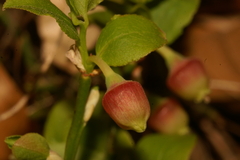 Vaccinium myrtilluse0
- Outcome
- abundancee0
- Direction
- decreasede0
- Value
- 32 %e0
- Comparator
- control plotse0
Not reportedTreatment
Organisms pictured · Representative pictures of the matched species, not figures from the paper.

Verbatim
e0“the abundance of the dominant species, Vaccinium myrtillus, decreased on average by 32 %. No decrease was observed in control plots during the same period.”
Claim · model-written summary
Deschampsia flexuosa was over fivefold more abundant in N2 than control plots.
- Taxon
- Deschampsia flexuosa
 Avenella flexuosae0
- Treatment
- N2 treatmentse0
- Outcome
- abundante0
- Direction
- more than five times as abundante0
- Value
- more than five timese0
- Comparator
- controlse0
Organisms pictured · Representative pictures of the matched species, not figures from the paper.

Verbatim
e0“Deschampsia flexuosa responded positively to increased N input, being on average more than five times as abundant in the N2 treatments as in controls.”
Claim · model-written summary
N additions increased Valdensia disease incidence on Vaccinium leaves.
- Taxon
- V. myrtillusVaccinium myrtilluse0
- Treatment
- N additionse0
- Interactor
- Valdensia heterodoxae0pathogen
- Outcome
- incidence of diseasee0
- Direction
- increasee0
Not reportedComparator
Organisms pictured · Representative pictures of the matched species, not figures from the paper.
Verbatim
e0“an increase was seen in the incidence of disease caused by the parasitic fungus Valdensia heterodoxa on leaves of V. myrtillus following N additions.”
Claim · model-written summary
Valdensia was nearly twice as abundant in N2 plots as controls.
- Treatment
- N2 plotse0
- Outcome
- parasitee0
- Direction
- nearly twice as abundante0
- Value
- nearly twicee0
- Comparator
- control plotse0
Not reportedTaxon
Verbatim
e0“The parasite was on average nearly twice as abundant in N2 plots than in control plots.”
Claim · model-written summary
Glutamine applied to Vaccinium leaves increased disease incidence.
- Taxon
- V. myrtillusVaccinium myrtilluse0
- Treatment
- experimental additions of glutaminee0
- Outcome
- Disease incidencee0
- Direction
- increasede0
Not reportedComparator
Organisms pictured · Representative pictures of the matched species, not figures from the paper.
Verbatim
e0“Disease incidence also increased following experimental additions of glutamine to leaf surfaces of V. myrtillus”
Claim · model-written summary
Deschampsia was more abundant in patches with severe Valdensia infection of Vaccinium.
- Taxon
- D. flexuosaAvenella flexuosae0
- Interactor
- V heterodoxae0pathogen
- Outcome
- abundante0
- Direction
- more abundante0
Organisms pictured · Representative pictures of the matched species, not figures from the paper.
Verbatim
e0“D. flexuosa was more abundant in patches in which V. myrtillus was severely affected by V heterodoxa.”
Claim · model-written summary
Valdensia was proposed to mediate increased Deschampsia abundance following nitrogen additions.
- Taxon
- D. flexuosaAvenella flexuosae0
- Interactor
- V heterodoxae0pathogen
- Outcome
- increased abundancee0
Organisms pictured · Representative pictures of the matched species, not figures from the paper.
Verbatim
e0“This suggests that V heterodoxa mediates the increased abundance of D. flexuosa following increased N additions.”
Claim · model-written summary
The fungus was proposed to change understory composition by increasing light availability through premature Vaccinium leaf loss.
- Taxon
- V. myrtillusVaccinium myrtilluse0
- Outcome
- changes in the composition of understorey vegetatione0
- Qualifier
- increasing light availability via premature leaf losse0
Organisms pictured · Representative pictures of the matched species, not figures from the paper.
Verbatim
e0“The fungus mediates changes in the composition of understorey vegetation mainly by increasing light availability via premature leaf loss of V. myrtillus.”
Claim · model-written summary
Parasite disease incidence was higher in large than small nitrogen-treated plots.
- Outcome
- incidence of disease due to the parasitee0
- Direction
- highere0
- Comparator
- large than in smaller N-treated plotse0
Not reportedTaxon
Verbatim
e0“The incidence of disease due to the parasite was on average higher in large than in smaller N-treated plots”
Claim · model-written summary
Vaccinium myrtillus and V. vitis-idaea occurred less often in high-nitrogen deposition regions.
Verbatim
e0“the occurrence of the two dwarf shrubs V. myrtillus and V. vitis- idaea was lower in regions with high N deposition compared to regions with low deposition.”
Claim · model-written summary
Valdensia showed the opposite regional occurrence pattern from Vaccinium shrubs across nitrogen deposition levels.
Not reportedTaxon
Verbatim
e0“The opposite pattern was found for V heterodoxa.”
Claim · model-written summary
Deschampsia occurrence did not differ among nitrogen deposition regions.
- Taxon
- D. flexuosaAvenella flexuosae0
- Outcome
- occurrencee0
- Direction
- no differencese0
- Setting
- different regions investigatede0
Organisms pictured · Representative pictures of the matched species, not figures from the paper.
Verbatim
e0“For D. flexuosa no differences in occurrence were found between the different regions investigated.”
Claim · model-written summary
Vegetation and mycorrhizal fungal effects of nitrogen additions persisted, with no recovery after nine years.
Verbatim
e0“The effects on vegetation and mycorrhizal fungi observed following N additions were also found to be long lasting. Nine years after termination of the fertilization, no signs of recovery were detected”
Claim · model-written summary
Bryophytes and mycorrhizal fungi retained characteristic nitrogen fertilization signs nearly 50 years after termination.
Verbatim
e0“nearly 50 years after termination characteristic signs of N fertilization were found among bryophytes and mycorrhizal fungi.”
The same questions in other papers
glutamine · disease · Vaccinium myrtillus (bilberry)Results agree
1 paper in the same direction as this paper
- negative
Claims are grouped by organism, treatment and what was measured or targeted. A paper counts as positive when any of its claims in the group is positive.