Abstract
Field studies of the blackmargined aphid, Monellia caryella (Fitch), were conducted on three cultivars, ‘Cheyenne’, ‘Kiowa’, and ‘Pawnee’, of pecan, Carya illinoinensis (Koch). Aphid density and natural enemy (lacewings, ladybird beetles, and spiders) densities were determined biweekly by direct inspection of 160 leaves per variety during the 2005 and 2006 growing seasons. Honeydew deposition was measured biweekly using water sensitive cards. Aphid phenologies were similar among cultivars; however, ‘Cheyenne’ supported higher densities of aphids than either ‘Kiowa’ or ‘Pawnee’. Honeydew production correlated positively with aphid density. Honeydew produced per aphid differed only between ‘Cheyenne’ and ‘Pawnee’ in 2006; natural enemies per aphid varied in significance during both seasons. Natural enemy densities increased during initial stages of outbreak on all cultivars in 2006. The asymptote reached on ‘Cheyenne’ had a lower natural enemy to aphid ratio than that on the other cultivars, indicating that the functional response of natural enemies to increased aphid densities was exhausted sooner on ‘Cheyenne than on other cultivars’. Honeydew appears to be an attractant for natural enemies and cost-benefit calculations were made to quantify the loss of photosynthates to aphids for each cultivar versus the gain in natural enemies that occurred. ‘Cheyenne’ was the least efficient of the three cultivars in the utilization of this defense mechanism. The energy drain per hectare attributable by adult aphid feeding was, 761,197 – 900,312kcal, 266,397 – 237,709kcal, and 138,790 – 134,223kcal for ‘Cheyenne’, ‘Kiowa’, and ‘Pawnee’, respectively. Calculated nut-loss equivalents were 14 – 16kg for ‘Cheyenne’, 4 – 5kg for ‘Kiowa’, and 2kg for ‘Pawnee’.
Abstract from the paper’s OpenAlex record, shown for indexing and research. Copyright remains with the authors or the publisher. Read at the source ↗
The text the model read, with the source record’s inline markup (italics, sub- and superscripts) rendered and its character entities decoded; quote offsets refer to the raw text.
Claims 15
Claim · model-written summary
Aphid phenology was similar among pecan cultivars.
- Taxon
- pecan
 Carya illinoinensise1
- Interactor
- Monellia caryella (Fitch)
 Monellia caryellae2pest
- Outcome
- Aphid phenologies were similare0
Organisms pictured · Representative pictures of the matched species, not figures from the paper.

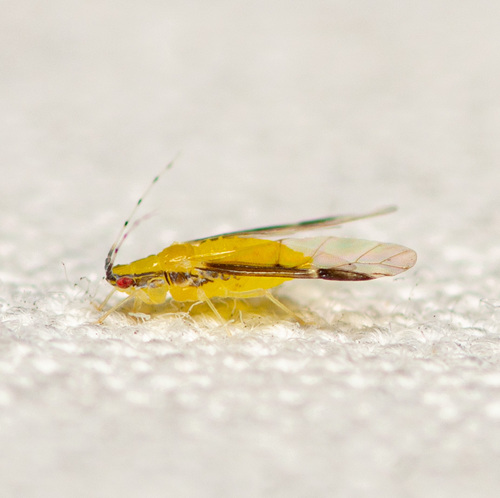
Verbatim
e0“Aphid phenologies were similar among cultivars”
e1“pecan, Carya illinoinensis (Koch)”
e2“blackmargined aphid, Monellia caryella (Fitch)”
Claim · model-written summary
Cheyenne supported more aphids than Kiowa or Pawnee.
- Taxon
- pecanCarya illinoinensise1
- Material
- ‘Cheyenne’e0
- Interactor
- Monellia caryella (Fitch)Monellia caryellae2pest
- Outcome
- densities of aphidse0
- Direction
- highere0
- Comparator
- ‘Kiowa’ or ‘Pawnee’e0
Organisms pictured · Representative pictures of the matched species, not figures from the paper.
Verbatim
e0“‘Cheyenne’ supported higher densities of aphids than either ‘Kiowa’ or ‘Pawnee’”
e1“pecan, Carya illinoinensis (Koch)”
e2“blackmargined aphid, Monellia caryella (Fitch)”
Claim · model-written summary
Honeydew production correlated positively with aphid density.
- Taxon
- pecanCarya illinoinensise1
- Interactor
- Monellia caryella (Fitch)Monellia caryellae2pest
- Outcome
- Honeydew productione0
- Direction
- positivelye0
- Qualifier
- aphid densitye0
Organisms pictured · Representative pictures of the matched species, not figures from the paper.
Verbatim
e0“Honeydew production correlated positively with aphid density.”
e1“pecan, Carya illinoinensis (Koch)”
e2“blackmargined aphid, Monellia caryella (Fitch)”
Claim · model-written summary
Honeydew per aphid differed only between Cheyenne and Pawnee in 2006.
- Taxon
- pecanCarya illinoinensise1
- Material
- ‘Cheyenne’e0
- Interactor
- Monellia caryella (Fitch)Monellia caryellae2pest
- Outcome
- Honeydew produced per aphide0
- Qualifier
- in 2006e0
- Comparator
- ‘Pawnee’e0
Not reportedDirection
Organisms pictured · Representative pictures of the matched species, not figures from the paper.
Verbatim
e0“Honeydew produced per aphid differed only between ‘Cheyenne’ and ‘Pawnee’ in 2006”
e1“pecan, Carya illinoinensis (Koch)”
e2“blackmargined aphid, Monellia caryella (Fitch)”
Claim · model-written summary
Natural enemies per aphid varied in statistical significance across both seasons.
- Taxon
- pecanCarya illinoinensise1
- Interactor
- Monellia caryella (Fitch)Monellia caryellae2pest
- Outcome
- natural enemies per aphid varied in significancee0
Not reportedDirection
Organisms pictured · Representative pictures of the matched species, not figures from the paper.
Verbatim
e0“natural enemies per aphid varied in significance during both seasons”
e1“pecan, Carya illinoinensis (Koch)”
e2“blackmargined aphid, Monellia caryella (Fitch)”
Claim · model-written summary
Natural enemy densities rose during initial outbreak stages on all cultivars in 2006.
- Taxon
- pecanCarya illinoinensise1
- Interactor
- Monellia caryella (Fitch)Monellia caryellae2pest
- Outcome
- Natural enemy densitiese0
- Direction
- increasede0
- Qualifier
- initial stages of outbreak on all cultivars in 2006e0
Organisms pictured · Representative pictures of the matched species, not figures from the paper.
Verbatim
e0“Natural enemy densities increased during initial stages of outbreak on all cultivars in 2006.”
e1“pecan, Carya illinoinensis (Koch)”
e2“blackmargined aphid, Monellia caryella (Fitch)”
Claim · model-written summary
Cheyenne had a lower asymptotic natural enemy to aphid ratio than the other cultivars.
- Taxon
- pecanCarya illinoinensise1
- Material
- ‘Cheyenne’e0
- Interactor
- Monellia caryella (Fitch)Monellia caryellae2pest
- Outcome
- natural enemy to aphid ratioe0
- Direction
- lowere0
- Comparator
- the other cultivarse0
Organisms pictured · Representative pictures of the matched species, not figures from the paper.
Verbatim
e0“The asymptote reached on ‘Cheyenne’ had a lower natural enemy to aphid ratio than that on the other cultivars”
e1“pecan, Carya illinoinensis (Koch)”
e2“blackmargined aphid, Monellia caryella (Fitch)”
Claim · model-written summary
Honeydew appears to attract natural enemies.
- Taxon
- pecanCarya illinoinensise1
- Interactor
- Monellia caryella (Fitch)Monellia caryellae2pest
- Outcome
- Honeydew appears to be an attractant for natural enemiese0
- Qualifier
- natural enemiese0
Organisms pictured · Representative pictures of the matched species, not figures from the paper.
Verbatim
e0“Honeydew appears to be an attractant for natural enemies”
e1“pecan, Carya illinoinensis (Koch)”
e2“blackmargined aphid, Monellia caryella (Fitch)”
Claim · model-written summary
Cheyenne was the least efficient cultivar in this defense mechanism.
- Taxon
- pecanCarya illinoinensise1
- Material
- ‘Cheyenne’e0
- Interactor
- Monellia caryella (Fitch)Monellia caryellae2pest
- Outcome
- least efficiente0
Organisms pictured · Representative pictures of the matched species, not figures from the paper.
Verbatim
e0“‘Cheyenne’ was the least efficient of the three cultivars in the utilization of this defense mechanism.”
e1“pecan, Carya illinoinensis (Koch)”
e2“blackmargined aphid, Monellia caryella (Fitch)”
Claim · model-written summary
Adult aphid feeding drained 761,197 – 900,312kcal per hectare on Cheyenne.
- Taxon
- pecanCarya illinoinensise1
- Material
- ‘Cheyenne’e0
- Interactor
- Monellia caryella (Fitch)Monellia caryellae2pest
- Outcome
- energy drain per hectare attributable by adult aphid feedinge0
- Value
- 761,197 – 900,312kcale0
Organisms pictured · Representative pictures of the matched species, not figures from the paper.
Verbatim
e0“The energy drain per hectare attributable by adult aphid feeding was, 761,197 – 900,312kcal, 266,397 – 237,709kcal, and 138,790 – 134,223kcal for ‘Cheyenne’, ‘Kiowa’, and ‘Pawnee’, respectively.”
e1“pecan, Carya illinoinensis (Koch)”
e2“blackmargined aphid, Monellia caryella (Fitch)”
Claim · model-written summary
Adult aphid feeding drained 266,397 – 237,709kcal per hectare on Kiowa.
- Taxon
- pecanCarya illinoinensise1
- Material
- ‘Kiowa’e0
- Interactor
- Monellia caryella (Fitch)Monellia caryellae2pest
- Outcome
- energy drain per hectare attributable by adult aphid feedinge0
- Value
- 266,397 – 237,709kcale0
Organisms pictured · Representative pictures of the matched species, not figures from the paper.
Verbatim
e0“The energy drain per hectare attributable by adult aphid feeding was, 761,197 – 900,312kcal, 266,397 – 237,709kcal, and 138,790 – 134,223kcal for ‘Cheyenne’, ‘Kiowa’, and ‘Pawnee’, respectively.”
e1“pecan, Carya illinoinensis (Koch)”
e2“blackmargined aphid, Monellia caryella (Fitch)”
Claim · model-written summary
Adult aphid feeding drained 138,790 – 134,223kcal per hectare on Pawnee.
- Taxon
- pecanCarya illinoinensise1
- Material
- ‘Pawnee’e0
- Interactor
- Monellia caryella (Fitch)Monellia caryellae2pest
- Outcome
- energy drain per hectare attributable by adult aphid feedinge0
- Value
- 138,790 – 134,223kcale0
Organisms pictured · Representative pictures of the matched species, not figures from the paper.
Verbatim
e0“The energy drain per hectare attributable by adult aphid feeding was, 761,197 – 900,312kcal, 266,397 – 237,709kcal, and 138,790 – 134,223kcal for ‘Cheyenne’, ‘Kiowa’, and ‘Pawnee’, respectively.”
e1“pecan, Carya illinoinensis (Koch)”
e2“blackmargined aphid, Monellia caryella (Fitch)”
Claim · model-written summary
Calculated nut loss was 14 – 16kg for Cheyenne.
- Taxon
- pecanCarya illinoinensise1
- Material
- ‘Cheyenne’e0
- Interactor
- Monellia caryella (Fitch)Monellia caryellae2pest
- Outcome
- nut-loss equivalentse0
- Value
- 14 – 16kge0
Organisms pictured · Representative pictures of the matched species, not figures from the paper.
Verbatim
e0“Calculated nut-loss equivalents were 14 – 16kg for ‘Cheyenne’, 4 – 5kg for ‘Kiowa’, and 2kg for ‘Pawnee’.”
e1“pecan, Carya illinoinensis (Koch)”
e2“blackmargined aphid, Monellia caryella (Fitch)”
Claim · model-written summary
Calculated nut loss was 4 – 5kg for Kiowa.
- Taxon
- pecanCarya illinoinensise1
- Material
- ‘Kiowa’e0
- Interactor
- Monellia caryella (Fitch)Monellia caryellae2pest
- Outcome
- nut-loss equivalentse0
- Value
- 4 – 5kge0
Organisms pictured · Representative pictures of the matched species, not figures from the paper.
Verbatim
e0“Calculated nut-loss equivalents were 14 – 16kg for ‘Cheyenne’, 4 – 5kg for ‘Kiowa’, and 2kg for ‘Pawnee’.”
e1“pecan, Carya illinoinensis (Koch)”
e2“blackmargined aphid, Monellia caryella (Fitch)”
Claim · model-written summary
Calculated nut loss was 2kg for Pawnee.
- Taxon
- pecanCarya illinoinensise1
- Material
- ‘Pawnee’e0
- Interactor
- Monellia caryella (Fitch)Monellia caryellae2pest
- Outcome
- nut-loss equivalentse0
- Value
- 2kge0
Organisms pictured · Representative pictures of the matched species, not figures from the paper.
Verbatim
e0“Calculated nut-loss equivalents were 14 – 16kg for ‘Cheyenne’, 4 – 5kg for ‘Kiowa’, and 2kg for ‘Pawnee’.”
e1“pecan, Carya illinoinensis (Koch)”
e2“blackmargined aphid, Monellia caryella (Fitch)”