Abstract
Atok, Benguet in Northern Philippines is highly susceptible to landslides. To mitigate the effects of landslides, revegetation, was recently introduced as a means of soil stabilization. The selection of revegetation species is crucial; they should be indigenous to the area, reproduce rapidly, and suitable for bioengineering. The choice of revegetation species is sometimes dependent on the local community. Hence, to encourage the community to use these plants, the researchers conducted this study to establish additional value, specifically for their phytochemical content and antimicrobial potential.The selected plants are Coffea arabica, Brugmansia suaveolens, Camellia sinensis, Sarcandra glabra and Coriaria intermedia, which are found in the adjacent areas of landslide scars. Results showed that Camellia sinensis have the most number of secondary metabolites. Further, the plant extracts were tested against five bacteria namely Salmonella typhimurium, Bacillus cereus, Escherichia coli, Staphylococcus aureus, and Pseudomonas aeruginosa using disc diffusion method. Leaf extract from C. intermedia was active against all the strains and is comparable to the results of the four antibiotics (Chloramphenicol, Vancomycin, Kanamycin and Streptomycin) used. The antibacterial potential and the presence of bioactive components of the different plants can increase the value of the plants both for economic and medicinal purposes.
Abstract from the paper’s OpenAlex record; open copy licensed cc-by-nc-nd. Read at the source ↗
The text the model read, with the source record’s inline markup (italics, sub- and superscripts) rendered and its character entities decoded; quote offsets refer to the raw text.
Claims 4
Claim · model-written summary
Camellia sinensis had the most number of secondary metabolites among the screened plants.
- Taxon
- Camellia sinensis
 Camellia sinensise1
- Outcome
- number of secondary metabolitese1
- Direction
- the moste1
Organisms pictured · Representative pictures of the matched species, not figures from the paper.

Verbatim
e1“Results showed that Camellia sinensis have the most number of secondary metabolites”
e4“The selected plants are Coffea arabica, Brugmansia suaveolens, Camellia sinensis, Sarcandra glabra and Coriaria intermedia”
Claim · model-written summary
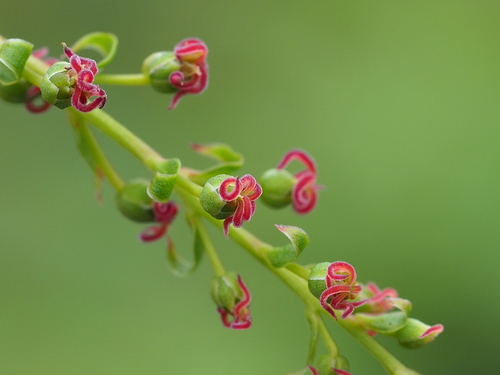
Leaf extract of Coriaria intermedia was active against all the tested bacterial strains.
- Taxon
- C. intermedia
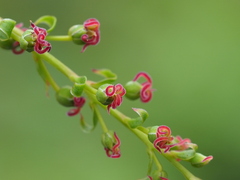 Coriaria intermediae2
- Organ / stage
- Leafe2
- Outcome
- active against all the strainse2
Organisms pictured · Representative pictures of the matched species, not figures from the paper.
Verbatim
e2“Leaf extract from C. intermedia was active against all the strains and is comparable to the results of the four antibiotics (Chloramphenicol, Vancomycin, Kanamycin and Streptomycin) used”
e4“The selected plants are Coffea arabica, Brugmansia suaveolens, Camellia sinensis, Sarcandra glabra and Coriaria intermedia”
Claim · model-written summary
Antibacterial results of Coriaria intermedia leaf extract were comparable to four antibiotics.
- Taxon
- C. intermediaCoriaria intermediae2
- Outcome
- resultse2
- Direction
- comparablee2
- Comparator
- the four antibiotics (Chloramphenicol, Vancomycin, Kanamycin and Streptomycin)e2
Organisms pictured · Representative pictures of the matched species, not figures from the paper.
Verbatim
e2“Leaf extract from C. intermedia was active against all the strains and is comparable to the results of the four antibiotics (Chloramphenicol, Vancomycin, Kanamycin and Streptomycin) used”
e4“The selected plants are Coffea arabica, Brugmansia suaveolens, Camellia sinensis, Sarcandra glabra and Coriaria intermedia”
Claim · model-written summary
The antibacterial potential and bioactive components can increase the value of the selected plants for economic and medicinal purposes.
- Taxon
- Coffea arabica, Brugmansia suaveolens, Camellia sinensis, Sarcandra glabra and Coriaria intermediaCamellia sinensis
 Coffea arabicaCoriaria intermedia
 Sarcandra glabra
 Brugmansia suaveolense4
- Outcome
- value of the plantse3
- Direction
- increasee3
- Qualifier
- both for economic and medicinal purposese3
Organisms pictured · Representative pictures of the matched species, not figures from the paper.


Verbatim
e3“The antibacterial potential and the presence of bioactive components of the different plants can increase the value of the plants both for economic and medicinal purposes”
e4“The selected plants are Coffea arabica, Brugmansia suaveolens, Camellia sinensis, Sarcandra glabra and Coriaria intermedia”