Abstract
Melotic anlaysis of 14 species in the genus Cuphea confirmed haploid chromosome numbers from 6 to 22. All accessions within a species were found to have the same number of chromosomes with the exception of C. leptopoda accession 264, which had n = 8, while the other three accessions were n = 10. The probability of chlasma formation between a pair of chromosome arms was calculated for each accession and values ranged from 0.565 to 0.905. An Interspecific hybrid between two diplold Cuphea species was formed and the melotic pairing data used to establish a protocol for estimating genomic affinity in Cuphea. Melotic analysis of another Interspecific hybrid between the autotetra-plold, C. caesarlata, and its diplold progenitor, C. llavea, showed that the genomes have differentiated very little and that diplodization in C. caesarlata must have occurred quite rapidly.
Abstract from the paper’s OpenAlex record, shown for indexing and research. Copyright remains with the authors or the publisher. Read at the source ↗
The text the model read, with the source record’s inline markup (italics, sub- and superscripts) rendered and its character entities decoded; quote offsets refer to the raw text.
Claims 5
Claim · model-written summary
Cuphea species had haploid chromosome numbers from 6 to 22.
 Cuphea
Organisms pictured · Representative pictures of the matched species, not figures from the paper.

Verbatim
e0“Melotic anlaysis of 14 species in the genus Cuphea confirmed haploid chromosome numbers from 6 to 22.”
Claim · model-written summary
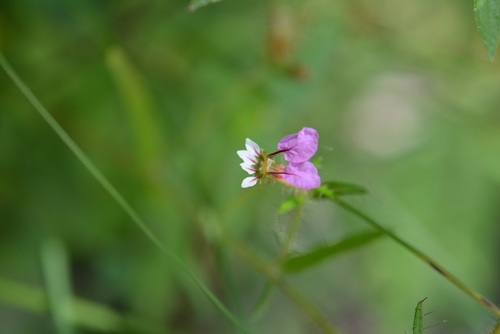
C. leptopoda accession 264 had n = 8 whereas the other three accessions had n = 10.
- Taxon
- C. leptopoda
 Cuphea leptopodae0
- Material
- accession 264e0
- Outcome
- number of chromosomese0
- Value
- n = 8e0
- Qualifier
- n = 10e0
- Comparator
- the other three accessionse0
Organisms pictured · Representative pictures of the matched species, not figures from the paper.
Verbatim
e0“All accessions within a species were found to have the same number of chromosomes with the exception of C. leptopoda accession 264, which had n = 8, while the other three accessions were n = 10.”
Claim · model-written summary
Calculated chiasma formation probabilities ranged from 0.565 to 0.905 across accessions.
Organisms pictured · Representative pictures of the matched species, not figures from the paper.
Verbatim
e0“The probability of chlasma formation between a pair of chromosome arms was calculated for each accession and values ranged from 0.565 to 0.905.”
t0“Cuphea species”
Claim · model-written summary
Meiotic pairing in a diploid interspecific Cuphea hybrid established a genomic affinity estimation protocol.
Not reportedValue
Organisms pictured · Representative pictures of the matched species, not figures from the paper.
Verbatim
e0“An Interspecific hybrid between two diplold Cuphea species was formed and the melotic pairing data used to establish a protocol for estimating genomic affinity in Cuphea.”
Claim · model-written summary
Meiotic pairing of C. caesarlata and C. llavea indicated little genomic differentiation and rapid diploidization in C. caesarlata.
Verbatim
e0“Melotic analysis of another Interspecific hybrid between the autotetra-plold, C. caesarlata, and its diplold progenitor, C. llavea, showed that the genomes have differentiated very little and that diplodization in C. caesarlata must have occurred quite rapidly.”