Abstract
Syzygium alternifolium is a semi-evergreen mass-flowering tree species of dry deciduous forest in the southern Eastern Ghats of India. It is a mass bloomer with flowering during dry season. The floral traits suggest a mixed pollination syndrome involving entomophily and anemophily together called as ambophily. Further, the floral traits suggest generalist pollination system adapted for a guild of pollinating insects. The plant is self-incompatible and obligate out-crosser. The flowers are many-ovuled but only a single ovule forms seed and hence, fruit and seed set rates are the same. Natural fruit set stands at 11%. Bud infestation by a moth, flower predation by the beetle, Popillia impressipyga and bud and flower mounds significantly limit fruit set rate. The ability of the plant to repopulate itself is limited by the collection of fruits by locals due to their edible nature, short viability of seeds, high seedling mortality due to water stress, nutrient deficiency and erratic rainfall or interval of drought within the rainy season. Therefore, S. alternifolium is struggling to populate itself under various intrinsic and extrinsic factors. Further studies should focus on how to assist the plant to increase its population size in its natural area taking into account the information provided in this paper.
Abstract from the paper’s OpenAlex record; open copy licensed cc-by. Read at the source ↗
The text the model read, with the source record’s inline markup (italics, sub- and superscripts) rendered and its character entities decoded; quote offsets refer to the raw text.
Claims 12
Claim · model-written summary
The tree mass flowers in the dry season.
- Taxon
- Syzygium alternifolium
 Syzygium alternifoliumt0
- Outcome
- mass bloomer with flowering during dry seasone1
Organisms pictured · Representative pictures of the matched species, not figures from the paper.
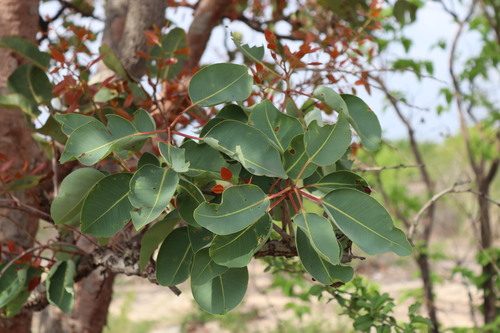
Verbatim
t0“Syzygium alternifolium”
e1“It is a mass bloomer with flowering during dry season.”
Claim · model-written summary
Floral traits suggest combined insect and wind pollination.
- Taxon
- Syzygium alternifoliumSyzygium alternifoliumt0
- Outcome
- mixed pollination syndrome involving entomophily and anemophilye1
- Qualifier
- floral traits suggeste1
Organisms pictured · Representative pictures of the matched species, not figures from the paper.
Verbatim
t0“Syzygium alternifolium”
e1“The floral traits suggest a mixed pollination syndrome involving entomophily and anemophily together called as ambophily.”
Claim · model-written summary
Floral traits suggest a generalist pollination system adapted to insect pollinators.
- Taxon
- Syzygium alternifoliumSyzygium alternifoliumt0
- Interactor
- pollinating insectse1pollinator
- Outcome
- generalist pollination systeme1
- Qualifier
- floral traits suggeste1
Organisms pictured · Representative pictures of the matched species, not figures from the paper.
Verbatim
t0“Syzygium alternifolium”
e1“Further, the floral traits suggest generalist pollination system adapted for a guild of pollinating insects.”
Claim · model-written summary
The plant is self-incompatible and obligately outcrossing.
- Taxon
- Syzygium alternifoliumSyzygium alternifoliumt0
- Outcome
- self-incompatible and obligate out-crossere1
Organisms pictured · Representative pictures of the matched species, not figures from the paper.
Verbatim
t0“Syzygium alternifolium”
e1“The plant is self-incompatible and obligate out-crosser.”
Claim · model-written summary
Only one ovule forms a seed per many-ovuled flower, making fruit and seed set rates equal.
- Taxon
- Syzygium alternifoliumSyzygium alternifoliumt0
- Organ / stage
- flowerse1
- Outcome
- only a single ovule forms seede1
- Qualifier
- fruit and seed set rates are the samee1
Organisms pictured · Representative pictures of the matched species, not figures from the paper.
Verbatim
t0“Syzygium alternifolium”
e1“The flowers are many-ovuled but only a single ovule forms seed and hence, fruit and seed set rates are the same.”
Claim · model-written summary
Natural fruit set was 11%.
- Taxon
- Syzygium alternifoliumSyzygium alternifoliumt0
- Outcome
- Natural fruit sete1
- Value
- 11%e1
Organisms pictured · Representative pictures of the matched species, not figures from the paper.
Verbatim
t0“Syzygium alternifolium”
e1“Natural fruit set stands at 11%.”
Claim · model-written summary
Moth infestation of buds significantly limits fruit set.
- Taxon
- Syzygium alternifoliumSyzygium alternifoliumt0
- Organ / stage
- Bude1
- Interactor
- a mothe1pest
- Outcome
- fruit set ratee1
- Direction
- limite1
Organisms pictured · Representative pictures of the matched species, not figures from the paper.
Verbatim
t0“Syzygium alternifolium”
e1“Bud infestation by a moth, flower predation by the beetle, Popillia impressipyga and bud and flower mounds significantly limit fruit set rate.”
Claim · model-written summary
Flower predation by Popillia impressipyga significantly limits fruit set.
- Taxon
- Syzygium alternifoliumSyzygium alternifoliumt0
- Organ / stage
- flowere1
- Interactor
- Popillia impressipygae1pest
- Outcome
- fruit set ratee1
- Direction
- limite1
Organisms pictured · Representative pictures of the matched species, not figures from the paper.
Verbatim
t0“Syzygium alternifolium”
e1“Bud infestation by a moth, flower predation by the beetle, Popillia impressipyga and bud and flower mounds significantly limit fruit set rate.”
Claim · model-written summary
Bud and flower mounds significantly limit fruit set.
- Taxon
- Syzygium alternifoliumSyzygium alternifoliumt0
- Organ / stage
- bud and flowere1
- Outcome
- fruit set ratee1
- Direction
- limite1
Organisms pictured · Representative pictures of the matched species, not figures from the paper.
Verbatim
t0“Syzygium alternifolium”
e1“bud and flower mounds significantly limit fruit set rate.”
Claim · model-written summary
Local fruit collection limits natural repopulation.
- Taxon
- Syzygium alternifoliumSyzygium alternifoliumt0
- Organ / stage
- fruitse1
- Outcome
- ability of the plant to repopulate itselfe1
- Direction
- limitede1
- Qualifier
- collection of fruits by localse1
Organisms pictured · Representative pictures of the matched species, not figures from the paper.
Verbatim
t0“Syzygium alternifolium”
e1“The ability of the plant to repopulate itself is limited by the collection of fruits by locals due to their edible nature”
Claim · model-written summary
Short seed viability limits natural repopulation.
- Taxon
- Syzygium alternifoliumSyzygium alternifoliumt0
- Organ / stage
- seedse1
- Outcome
- ability of the plant to repopulate itselfe1
- Direction
- limitede1
- Qualifier
- short viability of seedse1
Organisms pictured · Representative pictures of the matched species, not figures from the paper.
Verbatim
t0“Syzygium alternifolium”
e1“The ability of the plant to repopulate itself is limited by the collection of fruits by locals due to their edible nature, short viability of seeds”
Claim · model-written summary
High seedling mortality linked to water stress, nutrient deficiency and erratic rainfall limits repopulation.
- Taxon
- Syzygium alternifoliumSyzygium alternifoliumt0
- Organ / stage
- seedlinge1
- Outcome
- high seedling mortalitye1
- Direction
- highe1
- Qualifier
- water stress, nutrient deficiency and erratic rainfall or interval of drought within the rainy seasone1
Organisms pictured · Representative pictures of the matched species, not figures from the paper.
Verbatim
t0“Syzygium alternifolium”
e1“high seedling mortality due to water stress, nutrient deficiency and erratic rainfall or interval of drought within the rainy season.”