Abstract
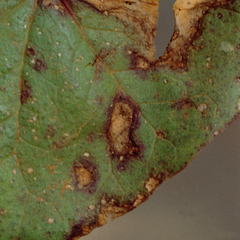
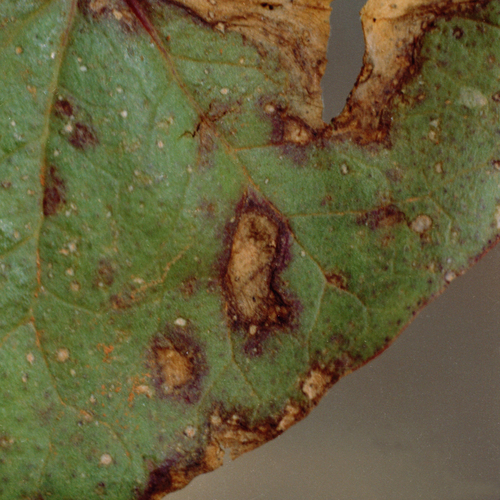
Adults of Apion occidentale Fall were shown to transmit the causal agent of the disease Phoma black stem, Phoma oleracea var. helianthi-tuberosi Saccardo, of the sunflower. Helianthus annuus L., under greenhouse conditions. Phoma spots formed around the feeding punctures on the leaves of sunflower plants in the Phoma-inoculated Apion treatments. After these spots enlarged to encompass either the lateral veins or the mid-vein of the leaf, the discoloration moved down the vein and petiole of the leaf to the axillary region. The characteristic Phoma lesion subsequently was formed on the stem. P. oleracea var. helianthi-tuberosi was reisolated from infected plants. The feeding of one A. occidentale adult was sufficient to induce severe expression of this disease by sunflower plants in the 1.2–2.7 stage of development under these conditions.
Abstract from the paper’s OpenAlex record, shown for indexing and research. Copyright remains with the authors or the publisher. Read at the source ↗
The text the model read, with the source record’s inline markup (italics, sub- and superscripts) rendered and its character entities decoded; quote offsets refer to the raw text.
Claims 6
Claim · model-written summary
Apion adults transmitted the Phoma black stem agent to sunflower.
- Taxon
- sunflower
 Helianthus annuuse0
- Interactor
- Phoma oleracea var. helianthi-tuberosie0pathogen
- Second interactor
- Apion occidentalee0pest
- Outcome
- transmit the causal agent of the disease Phoma black steme0
Organisms pictured · Representative pictures of the matched species, not figures from the paper.

Verbatim
e0“Adults of Apion occidentale Fall were shown to transmit the causal agent of the disease Phoma black stem, Phoma oleracea var. helianthi-tuberosi Saccardo, of the sunflower”
Claim · model-written summary
Phoma spots formed at feeding punctures on inoculated sunflower leaves.
- Taxon
- sunflowerHelianthus annuuse0
- Organ / stage
- leavese0
- Treatment
- Phoma-inoculated Apion treatmentse0
- Outcome
- Phoma spots formed around the feeding puncturese0
 Phoma
 Apion
Organisms pictured · Representative pictures of the matched species, not figures from the paper.

Verbatim
e0“Phoma spots formed around the feeding punctures on the leaves of sunflower plants in the Phoma-inoculated Apion treatments”
Claim · model-written summary
Discoloration spread from leaf veins through petioles to axillary regions.
- Outcome
- discoloration moved down the vein and petiole of the leaf to the axillary regione0
Not reportedTaxon
Verbatim
e0“the discoloration moved down the vein and petiole of the leaf to the axillary region”
t0“Apion occidentale12”
Claim · model-written summary
A characteristic Phoma lesion subsequently formed on the stem.
Not reportedTaxon
Organisms pictured · Representative pictures of the matched species, not figures from the paper.
Verbatim
e0“The characteristic Phoma lesion subsequently was formed on the stem”
t0“Apion occidentale12”
Claim · model-written summary
The pathogen was reisolated from infected plants.
Not reportedTaxon
Verbatim
e0“P. oleracea var. helianthi-tuberosi was reisolated from infected plants”
Claim · model-written summary
Feeding by one Apion adult sufficed for severe disease in young sunflowers.
- Taxon
- sunflowerHelianthus annuuse0
- Organ / stage
- 1.2–2.7 stage of developmente0
- Treatment
- The feeding of one A. occidentale adulte0
- Interactor
- A. occidentalee0pest
- Outcome
- severe expression of this diseasee0
Not reportedComparatorDirection
Organisms pictured · Representative pictures of the matched species, not figures from the paper.
Verbatim
e0“The feeding of one A. occidentale adult was sufficient to induce severe expression of this disease by sunflower plants in the 1.2–2.7 stage of development under these conditions”
The same questions in other papers
infection · molecular: expression · Helianthus annuus (common sunflower)Results agree
1 paper in the same direction as this paper
- negative
Claims are grouped by organism, treatment and what was measured or targeted. A paper counts as positive when any of its claims in the group is positive.