Abstract
Ginger soft rot complex disease incited by Pythium spp., Fusarium spp. and Ralstonia solanacearam survived extended periods in naturally infested ginger rhizosphere soil. In pieces of organic matter or dead roots application of Farm Yard Manure (FYM) along with different locally available organics like neem cake, FYM, leaves extract of Scima walllichi, garlic extract and mustard oil cake were investigated the effect on the population dynamics of the pathogens. The inoculum densities were decreased markedly due to amendments of the different organics in the plots in comparison to the check plots. Analysis of variance implicated that propagule density of two fungal pathogens viz. Fusarium spp. and Pythium spp., in the ginger rhizosphere soil steadily declined with the application of the organic extracts. The correlation matrix study on the propagule density of the pathogens at the different growth stages revealed that decreasing inoculum density of two fungal pathogens was highly significant with decreasing disease. The application of FYM with mustard cake and neem cake showed significant reduction of Fusarium spp. and Pythium spp. and population of Ralstonia solanacearam, respectively and increased the fresh rhizome
Abstract from the paper’s OpenAlex record, shown for indexing and research. Copyright remains with the authors or the publisher. Read at the source ↗
The text the model read, with the source record’s inline markup (italics, sub- and superscripts) rendered and its character entities decoded; quote offsets refer to the raw text.
Claims 6
Claim · model-written summary
Soft rot pathogens survived extended periods in infested ginger rhizosphere soil.
- Taxon
- Ginger
 Zingiber officinalee0
- Interactor
- Pythium spp., Fusarium spp. and Ralstonia solanacearame0pathogen
- Outcome
- survived extended periods in naturally infested ginger rhizosphere soile0
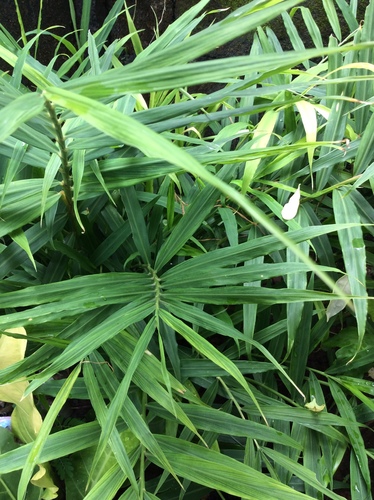
Organisms pictured · Representative pictures of the matched species, not figures from the paper.
Verbatim
e0“Ginger soft rot complex disease incited by Pythium spp., Fusarium spp. and Ralstonia solanacearam survived extended periods in naturally infested ginger rhizosphere soil.”
Claim · model-written summary
Organic amendments markedly reduced pathogen inoculum density versus check plots.
- Taxon
- gingerZingiber officinalet0
- Treatment
- amendments of the different organicse0
- Outcome
- inoculum densitiese0
- Direction
- decreasede0
- Comparator
- check plotse0
Organisms pictured · Representative pictures of the matched species, not figures from the paper.
Verbatim
t0“ginger”
e0“The inoculum densities were decreased markedly due to amendments of the different organics in the plots in comparison to the check plots.”
Claim · model-written summary
Organic extracts steadily reduced Fusarium and Pythium propagule densities in ginger rhizosphere soil.
- Taxon
- gingerZingiber officinalee0
- Treatment
- application of the organic extractse0
- Outcome
- propagule density of two fungal pathogense0
- Direction
- declinede0
 Pythium
 Fusarium
Not reportedComparator
Organisms pictured · Representative pictures of the matched species, not figures from the paper.


Verbatim
e0“propagule density of two fungal pathogens viz. Fusarium spp. and Pythium spp., in the ginger rhizosphere soil steadily declined with the application of the organic extracts.”
Claim · model-written summary
Declining fungal inoculum density was significantly correlated with declining disease.
- Taxon
- gingerZingiber officinalet0
- Interactor
- fungal pathogense0pathogen
- Outcome
- decreasing diseasee0
- Direction
- decreasinge0
Organisms pictured · Representative pictures of the matched species, not figures from the paper.
Verbatim
t0“ginger”
e0“decreasing inoculum density of two fungal pathogens was highly significant with decreasing disease.”
Claim · model-written summary
FYM with mustard cake significantly reduced Fusarium and Pythium populations.
- Taxon
- gingerZingiber officinalet0
- Treatment
- FYM with mustard cakee0
- Outcome
- Fusarium spp. and Pythium spp.e0
- Direction
- reductione0
Not reportedComparator
Organisms pictured · Representative pictures of the matched species, not figures from the paper.
Verbatim
t0“ginger”
e0“The application of FYM with mustard cake and neem cake showed significant reduction of Fusarium spp. and Pythium spp. and population of Ralstonia solanacearam, respectively”
Claim · model-written summary
FYM with neem cake significantly reduced Ralstonia populations.
- Taxon
- gingerZingiber officinalet0
- Treatment
- neem cakee0
- Interactor
- Ralstonia solanacearame0pathogen
- Outcome
- population of Ralstonia solanacearame0
- Direction
- reductione0
Not reportedComparator
Organisms pictured · Representative pictures of the matched species, not figures from the paper.
Verbatim
t0“ginger”
e0“The application of FYM with mustard cake and neem cake showed significant reduction of Fusarium spp. and Pythium spp. and population of Ralstonia solanacearam, respectively”
The same questions in other papers
botanical · pest · Zingiber officinale (ginger)Results agree
1 paper in the same direction as this paper
- positive
botanical · Pythium · Zingiber officinale (ginger)Results agree
1 paper in the same direction as this paper
- positive
botanical · Fusarium · Zingiber officinale (ginger)Results agree
1 paper in the same direction as this paper
- positive
Claims are grouped by organism, treatment and what was measured or targeted. A paper counts as positive when any of its claims in the group is positive.