Abstract
A variety of enzymatic responses of ginger plants to Pythium infection after induction of SAR (systemic acquired resistance) have been investigated. Results of pathogenicity test of P. aphanidermatum on a susceptible ginger cultivar showed that disease intensity increased with time up to 28 days but Polyphenol oxidase (PPO), Lipoxygenase (LOX) and Phenyl alanine ammonia lyase (PAL) activities increased up to 14 days following inoculation and then declined whereas Peroxidase (PO) activity reached their peaks on 21 st day after inoculation and then decreased sharply. To induce SAR, rhizome seeds were soaked separately in salicylic acid (SA-5 mM) and Acalypha leaf extract (ALE -10%) for 1 hour prior to sowing. Significant disease reduction was observed in both SA and ALE treated plants. SA and ALE treatment enhanced activities of all four defence related enzymes in ginger leaves but the rate of increase was higher in untreated inoculated and treated non-inoculated plants in relation to their respective controls. Treated inoculated plants exhibited maximum activity for all four enzymes. SA stimulated PO and PAL more than that of ALE. Results suggest that a correlation exists between reduction of disease intensity due to SAR induction and greater stimulation of specific enzymatic activities in ginger plants although not all four enzymes are equally responsive to a defence activator.
Abstract from the paper’s OpenAlex record; open copy licensed other-oa. Read at the source ↗
The text the model read, with the source record’s inline markup (italics, sub- and superscripts) rendered and its character entities decoded; quote offsets refer to the raw text.
Claims 10
Claim · model-written summary
Disease intensity after Pythium inoculation increased up to day 28.
- Taxon
- Ginger
 Zingiber officinalet0
- Outcome
- disease intensitye0
- Direction
- increasede0
 Pythium
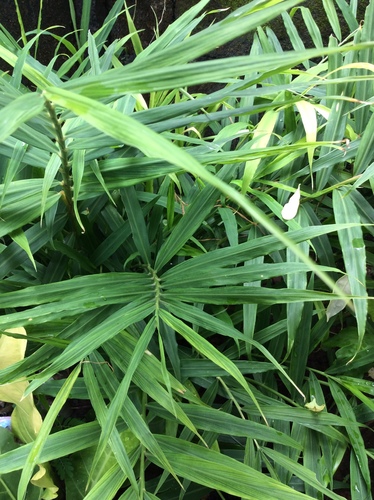
Organisms pictured · Representative pictures of the matched species, not figures from the paper.

Verbatim
e0“disease intensity increased with time up to 28 days”
t0“Ginger Plants to Pythium Infection”
Claim · model-written summary
PPO, LOX and PAL activities rose through day 14 after inoculation and then fell.
- Taxon
- GingerZingiber officinalet0
- Gene
- Polyphenol oxidase (PPO), Lipoxygenase (LOX) and Phenyl alanine ammonia lyase (PAL)e0
- Outcome
- activitiese0
- Direction
- increased up to 14 days following inoculation and then declinede0
Organisms pictured · Representative pictures of the matched species, not figures from the paper.
Verbatim
e0“Polyphenol oxidase (PPO), Lipoxygenase (LOX) and Phenyl alanine ammonia lyase (PAL) activities increased up to 14 days following inoculation and then declined”
t0“Ginger Plants to Pythium Infection”
Claim · model-written summary
Peroxidase activity peaked on day 21 after inoculation and then decreased sharply.
- Taxon
- GingerZingiber officinalet0
- Gene
- Peroxidase (PO)e0
- Outcome
- activitye0
- Direction
- decreased sharplye0
Organisms pictured · Representative pictures of the matched species, not figures from the paper.
Verbatim
e0“Peroxidase (PO) activity reached their peaks on 21 st day after inoculation and then decreased sharply”
t0“Ginger Plants to Pythium Infection”
Claim · model-written summary
Salicylic acid treatment significantly reduced disease.
- Taxon
- GingerZingiber officinalet0
- Treatment
- salicylic acid (SA-5 mM)e0
- Outcome
- diseasee0
- Direction
- reductione0
Not reportedComparator
Organisms pictured · Representative pictures of the matched species, not figures from the paper.
Verbatim
e0“rhizome seeds were soaked separately in salicylic acid (SA-5 mM) and Acalypha leaf extract (ALE -10%) for 1 hour prior to sowing. Significant disease reduction was observed in both SA and ALE treated plants”
t0“Ginger Plants to Pythium Infection”
Claim · model-written summary
Acalypha leaf extract treatment significantly reduced disease.
- Taxon
- GingerZingiber officinalet0
- Treatment
- Acalypha leaf extract (ALE -10%)e0
- Outcome
- diseasee0
- Direction
- reductione0
Not reportedComparator
Organisms pictured · Representative pictures of the matched species, not figures from the paper.
Verbatim
e0“rhizome seeds were soaked separately in salicylic acid (SA-5 mM) and Acalypha leaf extract (ALE -10%) for 1 hour prior to sowing. Significant disease reduction was observed in both SA and ALE treated plants”
t0“Ginger Plants to Pythium Infection”
Claim · model-written summary
Salicylic acid treatment enhanced all four defense enzyme activities in ginger leaves.
- Taxon
- gingerZingiber officinalee0
- Organ / stage
- leavese0
- Treatment
- SAe0
- Outcome
- activities of all four defence related enzymese0
- Direction
- enhancede0
Not reportedComparator
Organisms pictured · Representative pictures of the matched species, not figures from the paper.
Verbatim
e0“SA and ALE treatment enhanced activities of all four defence related enzymes in ginger leaves”
Claim · model-written summary
Acalypha leaf extract treatment enhanced all four defense enzyme activities in ginger leaves.
- Taxon
- gingerZingiber officinalee0
- Organ / stage
- leavese0
- Treatment
- ALEe0
- Outcome
- activities of all four defence related enzymese0
- Direction
- enhancede0
Not reportedComparator
Organisms pictured · Representative pictures of the matched species, not figures from the paper.
Verbatim
e0“SA and ALE treatment enhanced activities of all four defence related enzymes in ginger leaves”
Claim · model-written summary
Treated inoculated ginger plants had maximum activity of all four defense enzymes.
- Taxon
- GingerZingiber officinalet0
- Outcome
- activity for all four enzymese0
- Direction
- maximume0
Organisms pictured · Representative pictures of the matched species, not figures from the paper.
Verbatim
e0“Treated inoculated plants exhibited maximum activity for all four enzymes”
t0“Ginger Plants”
Claim · model-written summary
Salicylic acid stimulated PO and PAL more than Acalypha leaf extract did.
Organisms pictured · Representative pictures of the matched species, not figures from the paper.
Verbatim
e0“SA stimulated PO and PAL more than that of ALE”
t0“Ginger Plants”
Claim · model-written summary
Disease reduction after SAR induction correlated with stimulation of defense enzymes in ginger.
- Taxon
- gingerZingiber officinalee0
- Treatment
- SAR inductione0
- Outcome
- reduction of disease intensitye0
- Direction
- greatere0
Organisms pictured · Representative pictures of the matched species, not figures from the paper.
Verbatim
e0“a correlation exists between reduction of disease intensity due to SAR induction and greater stimulation of specific enzymatic activities in ginger plants”
The same questions in other papers
salicylic acid · physiology: enzyme activity · Zingiber officinale (ginger)Results agree
1 paper in the same direction as this paper
- positive
salicylic acid · physiology: antioxidant enzymes · Zingiber officinale (ginger)Results agree
3 papers in the same direction as this paper
- positive
- positive
- positive
botanical · Pythium · Zingiber officinale (ginger)Results agree
1 paper in the same direction as this paper
- positive
Claims are grouped by organism, treatment and what was measured or targeted. A paper counts as positive when any of its claims in the group is positive.