Abstract
Groundnut (Arachis hypogaea cv. VRI II when intercropped with bajra (Pennisetum glaucum cv. Co 7) 4: 1 ratio harboured significantly less mean population of defoliators viz.Amsacta albistriga, Spodoptera litura and Helicoverpa armigera, recording 6.28, 6.72 and 5.44 larvae/10 plants, respectively, whereas intercropping with sorghum (Sorghum bicolor cv. Co 30) and maize (Zea mays cv. Co 6) moderate significantly less population of defoliators was recorded. Groundnut + sesame (Sesamum indicum cv. Co 1), Groundnut + onion (Allium cepa cv. Co 1), Groundnut + redgram (Cajanus cajan cv. VBN (Rg) 3) and Groundnut + marigold (Tagetes erecta cv. MDU 1) intercropping system recorded high mean population as compared to other cropping systems while groundnut as pure crop recorded the highest mean population of 11.17, 12.39 and 10.33 larvae/10 plants. Same trend could be noticed in turms leaflet damage by the defoliators.
Abstract from the paper’s OpenAlex record, shown for indexing and research. Copyright remains with the authors or the publisher. Read at the source ↗
The text the model read, with the source record’s inline markup (italics, sub- and superscripts) rendered and its character entities decoded; quote offsets refer to the raw text.
Claims 11
Claim · model-written summary
Groundnut intercropped with bajra had less Amsacta albistriga larval population than pure groundnut.
- Taxon
- Groundnut
 Arachis hypogaeat0
- Treatment
- intercropped with bajrae0
- Interactor
- Amsacta albistriga
 Amsacta albistrigae0pest
- Outcome
- mean population of defoliatorse0
- Direction
- lesse0
- Value
- 6.28e0
Not reportedComparator
Organisms pictured · Representative pictures of the matched species, not figures from the paper.

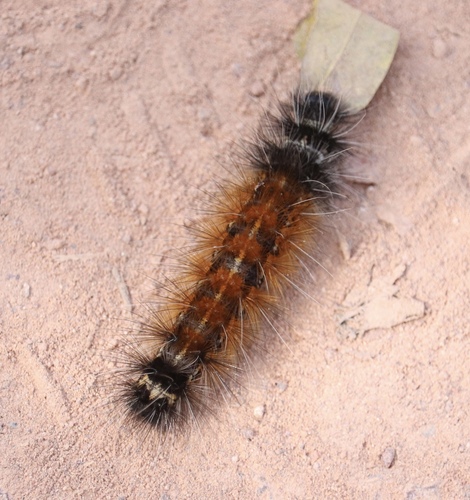
Verbatim
e0“Groundnut (Arachis hypogaea cv. VRI II when intercropped with bajra (Pennisetum glaucum cv. Co 7) 4: 1 ratio harboured significantly less mean population of defoliators viz.Amsacta albistriga, Spodoptera litura and Helicoverpa armigera, recording 6.28, 6.72 and 5.44 larvae/10 plants, respectively”
t0“defoliators incidence in Groundnut (Arachis hypogaea Linnaeus)”
Claim · model-written summary
Groundnut intercropped with bajra had less Spodoptera litura larval population than pure groundnut.
- Taxon
- GroundnutArachis hypogaeat0
- Treatment
- intercropped with bajrae0
- Interactor
- Spodoptera litura
 Spodoptera liturae0pest
- Outcome
- mean population of defoliatorse0
- Direction
- lesse0
- Value
- 6.72e0
Not reportedComparator
Organisms pictured · Representative pictures of the matched species, not figures from the paper.

Verbatim
e0“Groundnut (Arachis hypogaea cv. VRI II when intercropped with bajra (Pennisetum glaucum cv. Co 7) 4: 1 ratio harboured significantly less mean population of defoliators viz.Amsacta albistriga, Spodoptera litura and Helicoverpa armigera, recording 6.28, 6.72 and 5.44 larvae/10 plants, respectively”
t0“defoliators incidence in Groundnut (Arachis hypogaea Linnaeus)”
Claim · model-written summary
Groundnut intercropped with bajra had less Helicoverpa armigera larval population than pure groundnut.
- Taxon
- GroundnutArachis hypogaeat0
- Treatment
- intercropped with bajrae0
- Interactor
- Helicoverpa armigera
 Helicoverpa armigerae0pest
- Outcome
- mean population of defoliatorse0
- Direction
- lesse0
- Value
- 5.44e0
Not reportedComparator
Organisms pictured · Representative pictures of the matched species, not figures from the paper.

Verbatim
e0“Groundnut (Arachis hypogaea cv. VRI II when intercropped with bajra (Pennisetum glaucum cv. Co 7) 4: 1 ratio harboured significantly less mean population of defoliators viz.Amsacta albistriga, Spodoptera litura and Helicoverpa armigera, recording 6.28, 6.72 and 5.44 larvae/10 plants, respectively”
t0“defoliators incidence in Groundnut (Arachis hypogaea Linnaeus)”
Claim · model-written summary
Groundnut intercropped with sorghum had moderately lower defoliator populations.
- Taxon
- GroundnutArachis hypogaeat0
- Treatment
- intercropping with sorghum (Sorghum bicolor cv. Co 30)e1
- Outcome
- population of defoliatorse1
- Direction
- lesse1
Not reportedComparator
Organisms pictured · Representative pictures of the matched species, not figures from the paper.
Verbatim
e1“intercropping with sorghum (Sorghum bicolor cv. Co 30) and maize (Zea mays cv. Co 6) moderate significantly less population of defoliators was recorded”
t0“defoliators incidence in Groundnut (Arachis hypogaea Linnaeus)”
Claim · model-written summary
Groundnut intercropped with maize had moderately lower defoliator populations.
- Taxon
- GroundnutArachis hypogaeat0
- Treatment
- maize (Zea mays cv. Co 6)e1
- Outcome
- population of defoliatorse1
- Direction
- lesse1
Not reportedComparator
Organisms pictured · Representative pictures of the matched species, not figures from the paper.
Verbatim
e1“intercropping with sorghum (Sorghum bicolor cv. Co 30) and maize (Zea mays cv. Co 6) moderate significantly less population of defoliators was recorded”
t0“defoliators incidence in Groundnut (Arachis hypogaea Linnaeus)”
Claim · model-written summary
Groundnut intercropped with sesame had a high mean defoliator population compared with other cropping systems.
- Taxon
- GroundnutArachis hypogaeat0
- Treatment
- Groundnut + sesame (Sesamum indicum cv. Co 1)e2
- Outcome
- mean populatione2
- Direction
- highe2
- Comparator
- other cropping systemse2
Organisms pictured · Representative pictures of the matched species, not figures from the paper.
Verbatim
e2“Groundnut + sesame (Sesamum indicum cv. Co 1), Groundnut + onion (Allium cepa cv. Co 1), Groundnut + redgram (Cajanus cajan cv. VBN (Rg) 3) and Groundnut + marigold (Tagetes erecta cv. MDU 1) intercropping system recorded high mean population as compared to other cropping systems”
t0“defoliators incidence in Groundnut (Arachis hypogaea Linnaeus)”
Claim · model-written summary
Groundnut intercropped with onion had a high mean defoliator population compared with other cropping systems.
- Taxon
- GroundnutArachis hypogaeat0
- Treatment
- Groundnut + onion (Allium cepa cv. Co 1)e2
- Outcome
- mean populatione2
- Direction
- highe2
- Comparator
- other cropping systemse2
Organisms pictured · Representative pictures of the matched species, not figures from the paper.
Verbatim
e2“Groundnut + sesame (Sesamum indicum cv. Co 1), Groundnut + onion (Allium cepa cv. Co 1), Groundnut + redgram (Cajanus cajan cv. VBN (Rg) 3) and Groundnut + marigold (Tagetes erecta cv. MDU 1) intercropping system recorded high mean population as compared to other cropping systems”
t0“defoliators incidence in Groundnut (Arachis hypogaea Linnaeus)”
Claim · model-written summary
Groundnut intercropped with redgram had a high mean defoliator population compared with other cropping systems.
- Taxon
- GroundnutArachis hypogaeat0
- Treatment
- Groundnut + redgram (Cajanus cajan cv. VBN (Rg) 3)e2
- Outcome
- mean populatione2
- Direction
- highe2
- Comparator
- other cropping systemse2
Organisms pictured · Representative pictures of the matched species, not figures from the paper.
Verbatim
e2“Groundnut + sesame (Sesamum indicum cv. Co 1), Groundnut + onion (Allium cepa cv. Co 1), Groundnut + redgram (Cajanus cajan cv. VBN (Rg) 3) and Groundnut + marigold (Tagetes erecta cv. MDU 1) intercropping system recorded high mean population as compared to other cropping systems”
t0“defoliators incidence in Groundnut (Arachis hypogaea Linnaeus)”
Claim · model-written summary
Groundnut intercropped with marigold had a high mean defoliator population compared with other cropping systems.
- Taxon
- GroundnutArachis hypogaeat0
- Treatment
- Groundnut + marigold (Tagetes erecta cv. MDU 1)e2
- Outcome
- mean populatione2
- Direction
- highe2
- Comparator
- other cropping systemse2
Organisms pictured · Representative pictures of the matched species, not figures from the paper.
Verbatim
e2“Groundnut + sesame (Sesamum indicum cv. Co 1), Groundnut + onion (Allium cepa cv. Co 1), Groundnut + redgram (Cajanus cajan cv. VBN (Rg) 3) and Groundnut + marigold (Tagetes erecta cv. MDU 1) intercropping system recorded high mean population as compared to other cropping systems”
t0“defoliators incidence in Groundnut (Arachis hypogaea Linnaeus)”
Claim · model-written summary
Pure groundnut had the highest mean defoliator population, 11.17, 12.39 and 10.33 larvae/10 plants.
- Taxon
- GroundnutArachis hypogaeat0
- Treatment
- pure crope3
- Outcome
- mean populatione3
- Direction
- higheste3
- Value
- 11.17, 12.39 and 10.33e3
Not reportedComparator
Organisms pictured · Representative pictures of the matched species, not figures from the paper.
Verbatim
e3“while groundnut as pure crop recorded the highest mean population of 11.17, 12.39 and 10.33 larvae/10 plants”
t0“defoliators incidence in Groundnut (Arachis hypogaea Linnaeus)”
Claim · model-written summary
Leaf damage by defoliators in groundnut followed the same trend as defoliator population.
- Taxon
- GroundnutArachis hypogaeat0
- Outcome
- leaflet damage by the defoliatorse4
- Direction
- Same trende4
Organisms pictured · Representative pictures of the matched species, not figures from the paper.
Verbatim
e4“Same trend could be noticed in turms leaflet damage by the defoliators”
t0“defoliators incidence in Groundnut (Arachis hypogaea Linnaeus)”
The same questions in other papers
Cajanus cajan · pest · Arachis hypogaea (peanut)Positive and negative results
1 in the opposite direction
- positive
Sorghum · pest · Arachis hypogaea (peanut)Results agree
2 papers in the same direction as this paper
- positive
- positive
Zea mays · pest · Arachis hypogaea (peanut)Results agree
2 papers in the same direction as this paper
- positive
- positive
intercropping · pest · Arachis hypogaea (peanut)Positive and negative results
5 papers in the same direction as this paper · 1 in the opposite direction
- negative
- positive
- positive
3 papers more in this group
See all 7 papers →intercropping · Spodoptera litura · Arachis hypogaea (peanut)Results agree
1 paper in the same direction as this paper
- positive
Claims are grouped by organism, treatment and what was measured or targeted. A paper counts as positive when any of its claims in the group is positive.