Abstract
Fungicidal activity of entophytic fungus A10 isolated from Celastrus angulatus was studied.Result indicated that the extracts of mycelium with ethyl acetate and methanol was inhibitive to mycelial growth and spore germination of several plant pathogens.The inhibition rates of ethyl acetate extract at 1000 μg/ml against Alternaria longipes,Bipolaris sorokiniana,Exserohilum turcicum, Botrytis cintrea,Macorphoma kawatsukai were higher than 90%,and higher than that of methanol extract.Pot test indicated that ethyl acetate extract could protect wheat from powdery mildew at 2000 μg/ml with more than 70% of protective efficacy.Fraction QY01 separated from the ethyl acetate extract of mycelium was active in suppression of spore germination of Alternaria longipes at 50 μg/ml.
Abstract from the paper’s OpenAlex record, shown for indexing and research. Copyright remains with the authors or the publisher. Read at the source ↗
The text the model read, with the source record’s inline markup (italics, sub- and superscripts) rendered and its character entities decoded; quote offsets refer to the raw text.
Claims 5
Claim · model-written summary
Ethyl acetate and methanol extracts of endophytic fungus A10 mycelium inhibited mycelial growth and spore germination of several plant pathogens.
- Taxon
- Celastrus angulatusCelastrus angulatuse0
- Treatment
- extracts of mycelium with ethyl acetate and methanole1
- Interactor
- plant pathogense1pathogen
- Outcome
- mycelial growth and spore germinatione1
- Direction
- inhibitivee1
Not reportedComparator
Verbatim
e0“Fungicidal activity of entophytic fungus A10 isolated from Celastrus angulatus was studied”
e1“the extracts of mycelium with ethyl acetate and methanol was inhibitive to mycelial growth and spore germination of several plant pathogens”
Claim · model-written summary
Ethyl acetate extract at 1000 μg/ml gave inhibition rates higher than 90% against Alternaria longipes and Bipolaris sorokiniana, and also against Exserohilum turcicum, Botrytis cintrea and Macorphoma kawatsukai.
- Taxon
- Celastrus angulatusCelastrus angulatuse0
- Treatment
- ethyl acetate extract at 1000 μg/mle2
- Interactor
- Alternaria longipesAlternaria longipese2pathogen
- Second interactor
- Bipolaris sorokiniana
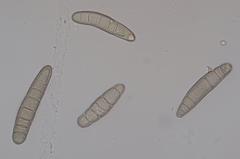 Bipolaris sorokinianae2pathogen
- Outcome
- inhibition ratese2
- Direction
- highere2
- Value
- 90%e2
- Qualifier
- Exserohilum turcicum, Botrytis cintrea,Macorphoma kawatsukaie2
Not reportedComparator
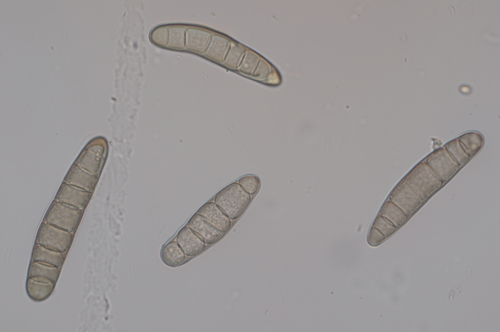
Organisms pictured · Representative pictures of the matched species, not figures from the paper.
Verbatim
e0“Fungicidal activity of entophytic fungus A10 isolated from Celastrus angulatus was studied”
e2“The inhibition rates of ethyl acetate extract at 1000 μg/ml against Alternaria longipes,Bipolaris sorokiniana,Exserohilum turcicum, Botrytis cintrea,Macorphoma kawatsukai were higher than 90%,and higher than that of methanol extract”
Claim · model-written summary
Ethyl acetate extract at 1000 μg/ml had higher inhibition rates than methanol extract against the tested plant pathogens.
Verbatim
e0“Fungicidal activity of entophytic fungus A10 isolated from Celastrus angulatus was studied”
e2“The inhibition rates of ethyl acetate extract at 1000 μg/ml against Alternaria longipes,Bipolaris sorokiniana,Exserohilum turcicum, Botrytis cintrea,Macorphoma kawatsukai were higher than 90%,and higher than that of methanol extract”
Claim · model-written summary
In a pot test, ethyl acetate extract protected wheat from powdery mildew with more than 70% protective efficacy at 2000 μg/ml.
- Taxon
- wheat
 Triticum aestivume3
- Treatment
- ethyl acetate extracte3
- Interactor
- powdery mildewe3pathogen
- Outcome
- protective efficacye3
- Direction
- protecte3
- Value
- more than 70%e3
- Qualifier
- at 2000 μg/mle3
- Setting
- Pot teste3
Not reportedComparator
Organisms pictured · Representative pictures of the matched species, not figures from the paper.

Verbatim
e3“Pot test indicated that ethyl acetate extract could protect wheat from powdery mildew at 2000 μg/ml with more than 70% of protective efficacy”
Claim · model-written summary
Fraction QY01 separated from the ethyl acetate extract of mycelium suppressed spore germination of Alternaria longipes at 50 μg/ml.
- Taxon
- Celastrus angulatusCelastrus angulatuse0
- Treatment
- Fraction QY01e4
- Interactor
- Alternaria longipesAlternaria longipese4pathogen
- Outcome
- spore germination of Alternaria longipese4
- Direction
- suppressione4
- Qualifier
- at 50 μg/mle4
Not reportedComparator
Verbatim
e0“Fungicidal activity of entophytic fungus A10 isolated from Celastrus angulatus was studied”
e4“Fraction QY01 separated from the ethyl acetate extract of mycelium was active in suppression of spore germination of Alternaria longipes at 50 μg/ml”
The same questions in other papers
ethyl acetate · control · Triticum aestivum (wheat)Results agree
1 paper in the same direction as this paper
- positive
botanical · control · Triticum aestivum (wheat)Positive and negative results
8 papers in the same direction as this paper · 3 in the opposite direction
- negative
- negative
- no effect
8 papers more in this group
See all 12 papers →Claims are grouped by organism, treatment and what was measured or targeted. A paper counts as positive when any of its claims in the group is positive.