Abstract
Twelve main typical steppe populations in Inner Mongolia were selected to investigate the effects of different cutting system on their aboveground standing biomass. The results showed that the test populations could be categorized into 3 groups, i.e., (1) group with decreasing biomass, which included Leynzus chinensis, Agropyron michnoi, Caragana microphylla and Carex korshinskyi, with L. chinensis and C. microphylla as the representatives. The average aboveground standing biomass of L . chinensis was decreased by 63.37%, 64.96%, 45.64% and 34.18% after 2 cuttings a year, 1 cutting a year, 1 year cutting and 1 year resting, and 2 years cutting and 1 year resting, while that of C. microphylla decreased by 81.79%, 63.33%, 40.29% and 26.30%, respectively, compared with the control; (2) group with increasing biomass, which included Koeleria cristata, Artemisia scoparia, A . frigida, and Salsola collina, and K. cristata and A . frigida were the representatives. The biomass of K. cristata was increased by 94.84%, 287.79%, 132.86% and 211.74%, while that of A. frigida was increased by 193.02%, 210.47%, 154.65% and 160.47%, respectively. The biomass increase of K. cristata and A. frigida was derived from their population changes, while that of A. scoparia and S. collina was come from the decrease of community densities and the more suitable conditions for seed germination; (3) group with fluctuated biomass, which included Stipa grandis, Achnatherum sibiricum, Artemisia commutata and Serratula centauroides, and the change patterns of their biomass were between those of the former 2 groups.
Abstract from the paper’s OpenAlex record, shown for indexing and research. Copyright remains with the authors or the publisher. Read at the source ↗
The text the model read, with the source record’s inline markup (italics, sub- and superscripts) rendered and its character entities decoded; quote offsets refer to the raw text.
Claims 7
Claim · model-written summary
L. chinensis biomass declined by 63.37%, 64.96%, 45.64%, and 34.18% under four cutting regimes.
Verbatim
e0“The average aboveground standing biomass of L . chinensis was decreased by 63.37%, 64.96%, 45.64% and 34.18% after 2 cuttings a year, 1 cutting a year, 1 year cutting and 1 year resting, and 2 years cutting and 1 year resting, while that of C. microphylla decreased by 81.79%, 63.33%, 40.29% and 26.30%, respectively, compared with the control;”
Claim · model-written summary
C. microphylla biomass declined by 81.79%, 63.33%, 40.29%, and 26.30% under four cutting regimes.
Verbatim
e0“The average aboveground standing biomass of L . chinensis was decreased by 63.37%, 64.96%, 45.64% and 34.18% after 2 cuttings a year, 1 cutting a year, 1 year cutting and 1 year resting, and 2 years cutting and 1 year resting, while that of C. microphylla decreased by 81.79%, 63.33%, 40.29% and 26.30%, respectively, compared with the control;”
Claim · model-written summary
K. cristata biomass increased under the four cutting regimes.
- Taxon
- Koeleria cristata
 Koeleria pyramidatae2
- Treatment
- 2 cuttings a year, 1 cutting a year, 1 year cutting and 1 year resting, and 2 years cutting and 1 year restinge1
- Outcome
- biomasse0
- Direction
- increasede0
- Value
- 94.84%, 287.79%, 132.86% and 211.74%e0
Not reportedComparator
Organisms pictured · Representative pictures of the matched species, not figures from the paper.

Verbatim
e0“The biomass of K. cristata was increased by 94.84%, 287.79%, 132.86% and 211.74%, while that of A. frigida was increased by 193.02%, 210.47%, 154.65% and 160.47%, respectively.”
e1“2 cuttings a year, 1 cutting a year, 1 year cutting and 1 year resting, and 2 years cutting and 1 year resting”
e2“Koeleria cristata”
Claim · model-written summary
A. frigida biomass increased under the four cutting regimes.
- Taxon
- A . frigida
 Artemisia frigidae2
- Treatment
- 2 cuttings a year, 1 cutting a year, 1 year cutting and 1 year resting, and 2 years cutting and 1 year restinge1
- Outcome
- biomasse0
- Direction
- increasede0
- Value
- 193.02%, 210.47%, 154.65% and 160.47%e0
Not reportedComparator
Organisms pictured · Representative pictures of the matched species, not figures from the paper.

Verbatim
e0“The biomass of K. cristata was increased by 94.84%, 287.79%, 132.86% and 211.74%, while that of A. frigida was increased by 193.02%, 210.47%, 154.65% and 160.47%, respectively.”
e1“2 cuttings a year, 1 cutting a year, 1 year cutting and 1 year resting, and 2 years cutting and 1 year resting”
e2“Artemisia scoparia, A . frigida”
Claim · model-written summary
Biomass increase in K. cristata and A. frigida derived from population changes.
- Taxon
- K. cristata and A. frigidaKoeleria pyramidataArtemisia frigidae0
- Outcome
- biomass increasee0
- Qualifier
- population changese0
Organisms pictured · Representative pictures of the matched species, not figures from the paper.
Verbatim
e0“The biomass increase of K. cristata and A. frigida was derived from their population changes”
Claim · model-written summary
Biomass increase in A. scoparia and S. collina derived from lower community density and suitable germination conditions.
- Taxon
- A. scoparia and S. collina
 Artemisia scoparia
 Salsola collinae0
- Outcome
- biomass increasee1
- Qualifier
- decrease of community densities and the more suitable conditions for seed germinatione0
Organisms pictured · Representative pictures of the matched species, not figures from the paper.


Verbatim
e0“while that of A. scoparia and S. collina was come from the decrease of community densities and the more suitable conditions for seed germination”
e1“biomass increase”
Claim · model-written summary
Four other steppe populations showed fluctuating biomass.
- Taxon
- Stipa grandis, Achnatherum sibiricum, Artemisia commutata and Serratula centauroides
 Klasea centauroides
 Artemisia commutataStipa grandis
 Stipa sibiricae0
- Outcome
- fluctuated biomasse0
Organisms pictured · Representative pictures of the matched species, not figures from the paper.

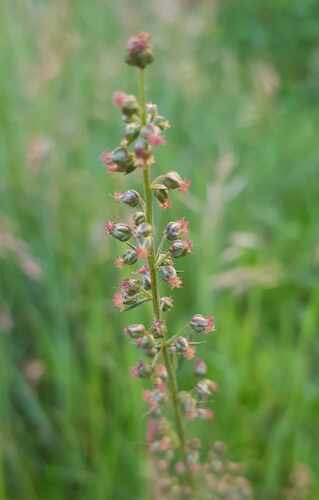

Verbatim
e0“group with fluctuated biomass, which included Stipa grandis, Achnatherum sibiricum, Artemisia commutata and Serratula centauroides, and the change patterns of their biomass were between those of the former 2 groups.”
The same questions in other papers
pruning · growth · Artemisia frigidaPositive and negative results
3 papers in the same direction as this paper · 1 in the opposite direction
- negative
- positive
- positive
1 paper more in this group
See all 5 papers →Claims are grouped by organism, treatment and what was measured or targeted. A paper counts as positive when any of its claims in the group is positive.