Abstract
Abstract Crop plant domestication can change plant resistance to herbivores leading to differences in pest pressure experienced by crop plants and their wild relatives. To compare resistance to herbivores between domesticated and wild fruit trees, we quantified direct resistance and indirect resistance to a pest insect, the florivorous apple blossom weevil Anthonomus pomorum (Coleoptera: Curculionidae), for the cultivated apple Malus domestica and two wild apple species, the European crab apple M. sylvestris and the exotic M. kirghisorum . We measured weevil infestation and performance (weight, sex ratio), and weevil parasitism by parasitoid wasps for different cultivars of M. domestica and for the two wild apple species. To explain weevil and parasitoid responses to different apple species, we quantified tree characteristics including nitrogen content, size of flower buds, bark roughness, tree size, tree phenology and tree position. We found significant differences in susceptibility to weevil infestation between apple species, with lowest infestation (highest apple resistance) in M. domestica and highest infestation in M. kirghisorum . The suitability of apple species also varied significantly: weevils emerging from M. sylvestris were significantly lighter than those from M. kirghisorum . Parasitism of A. pomorum by different parasitoid species was significantly higher in M. sylvestris than in M. domestica . Infestation, weevil weight and parasitism were positively related to tree characteristics: infestation to bud nitrogen content and bark roughness, weevil size to nitrogen content and bud size, and parasitism to tree height and bud density. Our study revealed marked differences between apple species in susceptibility and suitability for the pest herbivore, but also for antagonistic parasitoids. Whereas direct resistance appeared to be higher in cultivated apple, indirect resistance via parasitoids was apparently higher in wild apple trees. Our findings suggest that wild and cultivated apple trees possess different resistance traits that may be combined to optimize resistance in commercial apple cultivars.
Abstract from the paper’s OpenAlex record, shown for indexing and research. Copyright remains with the authors or the publisher. Read at the source ↗
The text the model read, with the source record’s inline markup (italics, sub- and superscripts) rendered and its character entities decoded; quote offsets refer to the raw text.
Claims 9
Claim · model-written summary
Weevil infestation differed significantly among apples, lowest in M. domestica and highest in M. kirghisorum.
- Taxon
- apple species
 Malus domesticae0
- Material
- M. domesticae0
- Interactor
- weevile0pest
- Outcome
- weevil infestatione0
- Direction
- lowest infestatione0
- Comparator
- M. kirghisorume0
Organisms pictured · Representative pictures of the matched species, not figures from the paper.

Verbatim
e0“We found significant differences in susceptibility to weevil infestation between apple species, with lowest infestation (highest apple resistance) in M. domestica and highest infestation in M. kirghisorum .”
Claim · model-written summary
Weevils emerging from M. sylvestris were significantly lighter than those from M. kirghisorum.
- Taxon
- M. sylvestris
 Malus sylvestrise0
- Interactor
- weevilsCurculionidaee0pest
- Outcome
- weevils emerginge0
- Direction
- lightere0
- Comparator
- M. kirghisorume0
Organisms pictured · Representative pictures of the matched species, not figures from the paper.

Verbatim
e0“weevils emerging from M. sylvestris were significantly lighter than those from M. kirghisorum”
Claim · model-written summary
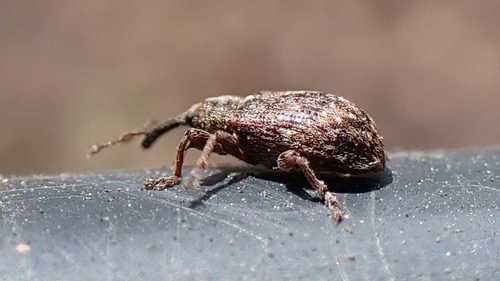
Parasitism of the weevil was significantly higher in M. sylvestris than in M. domestica.
- Taxon
- M. sylvestrisMalus sylvestrise0
- Interactor
- A. pomorum
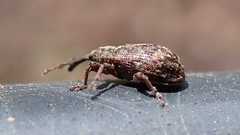 Anthonomus pomorume0pest
- Second interactor
- parasitoid speciese0biocontrol_agent
- Outcome
- Parasitism of A. pomorume0
- Direction
- highere0
- Comparator
- M. domesticae0
Organisms pictured · Representative pictures of the matched species, not figures from the paper.
Verbatim
e0“Parasitism of A. pomorum by different parasitoid species was significantly higher in M. sylvestris than in M. domestica”
Claim · model-written summary
Infestation was positively related to bud nitrogen content and bark roughness.
Verbatim
e0“infestation to bud nitrogen content and bark roughness”
e1“Infestation, weevil weight and parasitism were positively related to tree characteristics”
Claim · model-written summary
Weevil size was positively related to nitrogen content and bud size.
Verbatim
e0“weevil size to nitrogen content and bud size”
e1“Infestation, weevil weight and parasitism were positively related to tree characteristics”
Claim · model-written summary
Parasitism was positively related to tree height and bud density.
Verbatim
e0“parasitism to tree height and bud density”
e1“Infestation, weevil weight and parasitism were positively related to tree characteristics”
Claim · model-written summary
The authors infer that direct resistance is higher in cultivated apple.
- Taxon
- appleMalus domesticae0
- Material
- cultivated applee0
- Outcome
- direct resistancee0
- Direction
- highere0
Organisms pictured · Representative pictures of the matched species, not figures from the paper.
Verbatim
e0“direct resistance appeared to be higher in cultivated apple”
Claim · model-written summary
The authors infer that indirect resistance via parasitoids is higher in wild apple trees.
- Taxon
- appleMalus domesticae0
- Interactor
- parasitoidse0biocontrol_agent
- Outcome
- indirect resistancee0
- Direction
- highere0
Organisms pictured · Representative pictures of the matched species, not figures from the paper.
Verbatim
e0“indirect resistance via parasitoids was apparently higher in wild apple trees”
Claim · model-written summary
The authors suggest combining resistance traits from wild and cultivated apples for commercial cultivars.
- Taxon
- apple treesMalus domesticae0
- Outcome
- combined to optimize resistance in commercial apple cultivarse0
Organisms pictured · Representative pictures of the matched species, not figures from the paper.
Verbatim
e0“wild and cultivated apple trees possess different resistance traits that may be combined to optimize resistance in commercial apple cultivars”