Abstract
Invasive species are recognized as one of the main drivers of global environmental change. The majority of invasive species escape from their coevolved natural enemies (predators, parasitoids and parasites), but in some cases can either act as a transport vector for coevolved parasites, or encounter biotic resistance from resident competitors or enemies, in a new region. When resident enemies are unable to suppress an invasive species, specialist natural enemies from the native range can be imported and implemented to reduce its abundance in a novel environment (classical biological control). As top-down effects of natural enemies can interact with bottom-up effects from host plants, it is of increasing interest to understand how multitrophic interactions influence the suppression of invasive species. The light brown apple moth, Epiphyas postvittana (Walker) (Lepidoptera: Tortricidae), provides a unique opportunity to examine mechanisms for the suppression of an exotic species and in the context of novel multitrophic interactions. Native to Australia, E. postvittana is a highly polyphagous leafroller that was confirmed to be present in coastal California in 2006. For my dissertation research I have focused on several different aspects of the trophic interactions among E. postvittana and its natural enemies. Firstly, I investigated the occurrence and fitness consequences of infanticide for Goniozus jacintae Farrugia, a coevolved gregarious larval ectoparasitoid of E. postvittana. Bethylid parasitoids, such as G. jacintae, have long been recognized for their aggressive adult behavior and their use of infanticide to kill the offspring of competing females. In this laboratory study I investigated the clutch size and handling time of G. jacintae, compared its life history performance between primary and secondary (laid after infanticide events) broods, and estimated lipid and protein concentrations in the hemolymph of non-parasitized and parasitized hosts. I found that secondary clutches were significantly larger than primary clutches in ovicide treatments and also experienced greater brood survivorship. Lipid concentrations were consistently higher in the hemolymph of parasitized hosts and protein concentrations were also higher until egg hatch when parasitoid larvae began to consume the resources available. This study was the first to provide evidence that improved nutritional quality could be an important benefit of infanticide for an insect parasitoid, allowing for larger clutch size and improved brood survivorship among secondary broods. Subsequently, I discovered a microsporidian pathogen infecting field populations of E. postvittana in California and I investigated both its identity and pathogenicity. Using ultrastructure of different spore stages in the life cycle and phylogenetic analysis of sequences from selected genetic markers (ITS, SSU and RPB1), I was able to confirm that the microsporidian was a member of the Nosema fumiferanae species complex (N. fumiferanae postvittana subsp. n.). I was also able to confirm that this microsporidian can be vertically transmitted and that it has significant negative effects on the life-history performance of E. postvittana under laboratory conditions. To further explore the potential of this microsporidian infection to provide biotic resistance to the invasiveness of E. postvittana, I further examined its pathogenicity in the context of dose-response relationships and the latent period of infection in the laboratory, and quantified pathogen prevalence and intensity in the field using quantitative real-time PCR (qPCR) for five populations in the San Francisco Bay Area of California. In the laboratory, the median lethal dose (LD50) was estimated to be 1.8 x 10⁴ spores, the mean latent period for infection with 103 spores was 12.67 days, and compared to healthy larvae, those infected with up to 105 spores showed a reduction in intrinsic rate of natural increase from 0.18 to 0.008. From the field sampling I detected N. fumiferanae postvittana in all five populations with an overall prevalence of 5% and a mean microsporidian intensity of 226 spores. Although the laboratory results demonstrated the potential for host suppression, the field sampling indicated that the prevalence and intensity were too low to account for the continued decline in population densities of E. postvittana in coastal California. Finally, I investigated the role of multitrophic interactions among E. postvittana, its host plants, and its resident enemies in California. In a common garden experiment in the field, parasitism rates of egg masses and larvae by resident parasitoids in the field were found to vary among host plant species, with a higher probability of egg parasitism on taller plants and a higher probability of larval parasitism on shorter plants. In the laboratory, parasitoid search time for an egg mass varied among plant species, but longer search times did not necessarily correspond to lower rates of egg parasitism in the field. When controlling for plant species, the probability of a parasitoid contacting an egg mass decreased with increasing trichome density. I also found significant effects of plant diet on the fitness of both healthy and microsporidian-infected E. postvittana larvae under laboratory conditions, with evidence of synergistic effects between diet and infection for some host plant species. Overall, I demonstrated significant variation in the extent of enemy-free space for E. postvittana based on plant species, but not plant origin. My dissertation highlights the importance of biotic resistance in buffering a resident community against an exotic invader and demonstrates that this resistance is often dependent on complex multitrophic interactions.
Abstract from the paper’s OpenAlex record, shown for indexing and research. Copyright remains with the authors or the publisher. Read at the source ↗
The text the model read, with the source record’s inline markup (italics, sub- and superscripts) rendered and its character entities decoded; quote offsets refer to the raw text.
Claims 20
Claim · model-written summary
Secondary parasitoid clutches were larger than primary clutches in ovicide treatments.
- Taxon
- host plantse0
- Treatment
- ovicide treatmentse1
- Interactor
- Goniozus jacintae
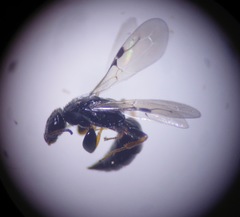 Goniozus jacintaee3biocontrol_agent
- Second interactor
- E. postvittana
 Epiphyas postvittanae3pest
- Outcome
- clutch sizee2
- Direction
- largere1
- Comparator
- primary clutchese1
Organisms pictured · Representative pictures of the matched species, not figures from the paper.
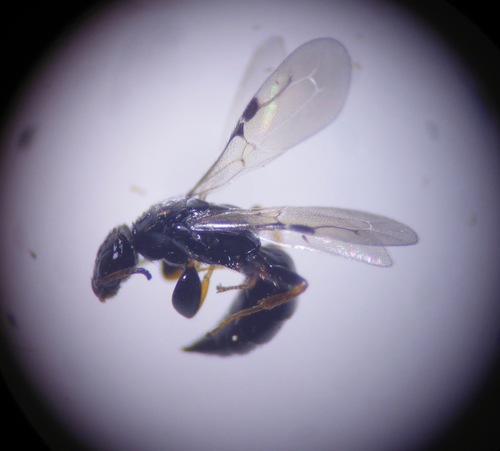

Verbatim
e0“among E. postvittana, its host plants, and its resident enemies in California”
e1“I found that secondary clutches were significantly larger than primary clutches in ovicide treatments and also experienced greater brood survivorship”
e2“I investigated the clutch size and handling time of G. jacintae”
e3“for Goniozus jacintae Farrugia, a coevolved gregarious larval ectoparasitoid of E. postvittana”
Claim · model-written summary
Lipid and protein concentrations in the hemolymph were higher in parasitized hosts; lipid was consistently higher.
Verbatim
e0“among E. postvittana, its host plants, and its resident enemies in California”
e4“Lipid concentrations were consistently higher in the hemolymph of parasitized hosts”
e5“estimated lipid and protein concentrations in the hemolymph of non-parasitized and parasitized hosts”
Claim · model-written summary
Protein concentrations in the hemolymph of parasitized hosts were higher until egg hatch.
Verbatim
e0“among E. postvittana, its host plants, and its resident enemies in California”
e4“Lipid concentrations were consistently higher in the hemolymph of parasitized hosts”
e5“estimated lipid and protein concentrations in the hemolymph of non-parasitized and parasitized hosts”
e6“protein concentrations were also higher until egg hatch when parasitoid larvae began to consume the resources available”
Claim · model-written summary
The microsporidian was identified as a member of the Nosema fumiferanae species complex.
Verbatim
e0“among E. postvittana, its host plants, and its resident enemies in California”
e1“I was able to confirm that the microsporidian was a member of the Nosema fumiferanae species complex (N. fumiferanae postvittana subsp. n.)”
Claim · model-written summary
The microsporidian can be vertically transmitted in E. postvittana.
Verbatim
e0“among E. postvittana, its host plants, and its resident enemies in California”
e1“I was also able to confirm that this microsporidian can be vertically transmitted and that it has significant negative effects on the life-history performance of E. postvittana under laboratory conditions”
Claim · model-written summary
The microsporidian has significant negative effects on the life-history performance of E. postvittana under laboratory conditions.
- Taxon
- host plantse0
- Treatment
- this microsporidiane1
- Interactor
- E. postvittanaEpiphyas postvittanae1pest
- Second interactor
- this microsporidiane1pathogen
- Outcome
- life-history performancee1
- Direction
- negative effectse1
Not reportedComparator
Organisms pictured · Representative pictures of the matched species, not figures from the paper.
Verbatim
e0“among E. postvittana, its host plants, and its resident enemies in California”
e1“I was also able to confirm that this microsporidian can be vertically transmitted and that it has significant negative effects on the life-history performance of E. postvittana under laboratory conditions”
Claim · model-written summary
The median lethal dose (LD50) of the microsporidian for larvae was 1.8 x 10⁴ spores.
Verbatim
e0“among E. postvittana, its host plants, and its resident enemies in California”
e1“In the laboratory, the median lethal dose (LD50) was estimated to be 1.8 x 10⁴ spores”
Claim · model-written summary
The mean latent period for infection with 103 spores was 12.67 days.
Verbatim
e0“among E. postvittana, its host plants, and its resident enemies in California”
e1“the mean latent period for infection with 103 spores was 12.67 days”
Claim · model-written summary
Infection with up to 105 spores reduced the intrinsic rate of natural increase from 0.18 to 0.008 compared with healthy larvae.
Verbatim
e0“among E. postvittana, its host plants, and its resident enemies in California”
e1“compared to healthy larvae, those infected with up to 105 spores showed a reduction in intrinsic rate of natural increase from 0.18 to 0.008”
Claim · model-written summary
The overall prevalence of N. fumiferanae postvittana in field populations was 5%.
Verbatim
e0“among E. postvittana, its host plants, and its resident enemies in California”
e1“From the field sampling I detected N. fumiferanae postvittana in all five populations with an overall prevalence of 5% and a mean microsporidian intensity of 226 spores”
e2“for five populations in the San Francisco Bay Area of California”
Claim · model-written summary
The mean microsporidian intensity in field populations was 226 spores.
Verbatim
e0“among E. postvittana, its host plants, and its resident enemies in California”
e1“From the field sampling I detected N. fumiferanae postvittana in all five populations with an overall prevalence of 5% and a mean microsporidian intensity of 226 spores”
e2“for five populations in the San Francisco Bay Area of California”
Claim · model-written summary
Parasitism of egg masses by resident parasitoids was higher on taller host plants.
Verbatim
e0“among E. postvittana, its host plants, and its resident enemies in California”
e1“parasitism rates of egg masses and larvae by resident parasitoids in the field were found to vary among host plant species, with a higher probability of egg parasitism on taller plants and a higher probability of larval parasitism on shorter plants”
Claim · model-written summary
Parasitism of larvae by resident parasitoids was higher on shorter host plants.
Verbatim
e0“among E. postvittana, its host plants, and its resident enemies in California”
e1“parasitism rates of egg masses and larvae by resident parasitoids in the field were found to vary among host plant species, with a higher probability of egg parasitism on taller plants and a higher probability of larval parasitism on shorter plants”
Claim · model-written summary
Longer parasitoid search times did not necessarily correspond to lower rates of egg parasitism in the field.
Not reportedDirection
Verbatim
e0“among E. postvittana, its host plants, and its resident enemies in California”
e1“longer search times did not necessarily correspond to lower rates of egg parasitism in the field”
Claim · model-written summary
The probability of a parasitoid contacting an egg mass decreased with increasing trichome density, controlling for plant species.
Verbatim
e0“among E. postvittana, its host plants, and its resident enemies in California”
e1“When controlling for plant species, the probability of a parasitoid contacting an egg mass decreased with increasing trichome density”
Claim · model-written summary
Plant diet had significant effects on the fitness of healthy and microsporidian-infected E. postvittana larvae.
- Taxon
- host plantse0
- Treatment
- plant diete1
- Interactor
- E. postvittanaEpiphyas postvittanae1pest
- Second interactor
- microsporidiane1pathogen
- Outcome
- fitnesse1
Not reportedDirection
Organisms pictured · Representative pictures of the matched species, not figures from the paper.
Verbatim
e0“among E. postvittana, its host plants, and its resident enemies in California”
e1“I also found significant effects of plant diet on the fitness of both healthy and microsporidian-infected E. postvittana larvae under laboratory conditions”
Claim · model-written summary
Plant diet and microsporidian infection showed synergistic effects on E. postvittana fitness for some host plant species.
Not reportedDirection
Verbatim
e0“among E. postvittana, its host plants, and its resident enemies in California”
e1“with evidence of synergistic effects between diet and infection for some host plant species”
Claim · model-written summary
Enemy-free space for E. postvittana varied significantly among plant species.
- Taxon
- host plantse0
- Treatment
- plant speciese1
- Interactor
- E. postvittanaEpiphyas postvittanae1pest
- Outcome
- extent of enemy-free spacee1
Not reportedDirection
Organisms pictured · Representative pictures of the matched species, not figures from the paper.
Verbatim
e0“among E. postvittana, its host plants, and its resident enemies in California”
e1“I demonstrated significant variation in the extent of enemy-free space for E. postvittana based on plant species, but not plant origin”
Claim · model-written summary
Enemy-free space for E. postvittana did not vary with plant origin.
Not reportedDirection
Verbatim
e0“among E. postvittana, its host plants, and its resident enemies in California”
e1“I demonstrated significant variation in the extent of enemy-free space for E. postvittana based on plant species, but not plant origin”
Claim · model-written summary
Secondary broods of the parasitoid had greater brood survivorship than primary broods.
Verbatim
e0“among E. postvittana, its host plants, and its resident enemies in California”
e1“I found that secondary clutches were significantly larger than primary clutches in ovicide treatments and also experienced greater brood survivorship”