Abstract
Plants associate through their roots with fungal assemblages that impact their abundance and productivity. Non-mycorrhizal endophytes constitute an important component of such fungal diversity, but their implication in ecosystem processes is little known. Using a selection of 128 root-endophytic strains, we defined functional groups based on their traits and plant interactions with potential to predict community assembly and symbiotic association processes. In vitro tests of the strains' interactions with Arabidopsis thaliana, Microthlaspi erraticum and Hordeum vulgare showed a net negative effect of fungal colonization on plant growth. The effects partly depended on the phylogenetic affiliation of strains, but also varied considerably depending on the plant-strain combination. The variation was partly explained by fungal traits shared by different lineages, like growth rates or melanization. The origin of strains also affected their symbioses, with endophytes isolated from Microthlaspi spp. populations being more detrimental to M. erraticum than strains from other sources. Our findings suggest that plant-endophyte associations are subject to local processes of selection, in which particular combinations of symbionts are favored across landscapes. We also show that different common endophytic taxa have differential sets of traits found to affect interactions, hinting to a functional complementarity that can explain their frequent co-existence in natural communities.
Abstract from the paper’s OpenAlex record, shown for indexing and research. Copyright remains with the authors or the publisher. Read at the source ↗
The text the model read, with the source record’s inline markup (italics, sub- and superscripts) rendered and its character entities decoded; quote offsets refer to the raw text.
Claims 10
Claim · model-written summary
Fungal colonization had a net negative effect on Arabidopsis thaliana growth in vitro.
- Taxon
- Arabidopsis thaliana
 Arabidopsis thalianae0
- Treatment
- fungal colonizatione0
- Interactor
- root-endophytic strainse1symbiont
- Outcome
- plant growthe0
- Direction
- negativee0
- Setting
- In vitroe0
Not reportedComparator
Organisms pictured · Representative pictures of the matched species, not figures from the paper.

Verbatim
e0“In vitro tests of the strains' interactions with Arabidopsis thaliana, Microthlaspi erraticum and Hordeum vulgare showed a net negative effect of fungal colonization on plant growth”
e1“Using a selection of 128 root-endophytic strains”
Claim · model-written summary
Fungal colonization had a net negative effect on Microthlaspi erraticum growth in vitro.
- Taxon
- Microthlaspi erraticum
 Microthlaspi erraticume0
- Treatment
- fungal colonizatione0
- Interactor
- root-endophytic strainse1symbiont
- Outcome
- plant growthe0
- Direction
- negativee0
- Setting
- In vitroe0
Not reportedComparator
Organisms pictured · Representative pictures of the matched species, not figures from the paper.
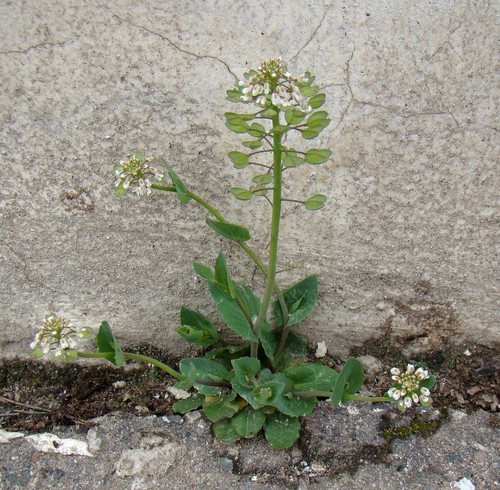
Verbatim
e0“In vitro tests of the strains' interactions with Arabidopsis thaliana, Microthlaspi erraticum and Hordeum vulgare showed a net negative effect of fungal colonization on plant growth”
e1“Using a selection of 128 root-endophytic strains”
Claim · model-written summary
Fungal colonization had a net negative effect on Hordeum vulgare growth in vitro.
- Taxon
- Hordeum vulgare
 Hordeum vulgaree0
- Treatment
- fungal colonizatione0
- Interactor
- root-endophytic strainse1symbiont
- Outcome
- plant growthe0
- Direction
- negativee0
- Setting
- In vitroe0
Not reportedComparator
Organisms pictured · Representative pictures of the matched species, not figures from the paper.

Verbatim
e0“In vitro tests of the strains' interactions with Arabidopsis thaliana, Microthlaspi erraticum and Hordeum vulgare showed a net negative effect of fungal colonization on plant growth”
e1“Using a selection of 128 root-endophytic strains”
Claim · model-written summary
The effects of endophytes on plants partly depended on the phylogenetic affiliation of the strains.
- Taxon
- Arabidopsis thaliana, Microthlaspi erraticum and Hordeum vulgareArabidopsis thalianaHordeum vulgareMicrothlaspi erraticume0
- Treatment
- phylogenetic affiliation of strainse2
- Outcome
- effectse2
Not reportedDirection
Organisms pictured · Representative pictures of the matched species, not figures from the paper.
Verbatim
e0“In vitro tests of the strains' interactions with Arabidopsis thaliana, Microthlaspi erraticum and Hordeum vulgare”
e2“The effects partly depended on the phylogenetic affiliation of strains”
Claim · model-written summary
The effects of endophytes on plants varied considerably with the plant-strain combination.
- Taxon
- Arabidopsis thaliana, Microthlaspi erraticum and Hordeum vulgareArabidopsis thalianaHordeum vulgareMicrothlaspi erraticume0
- Treatment
- plant-strain combinatione2
- Outcome
- effectse2
Not reportedDirection
Organisms pictured · Representative pictures of the matched species, not figures from the paper.
Verbatim
e0“In vitro tests of the strains' interactions with Arabidopsis thaliana, Microthlaspi erraticum and Hordeum vulgare”
e2“The effects partly depended on the phylogenetic affiliation of strains, but also varied considerably depending on the plant-strain combination”
Claim · model-written summary
Variation in the effects was partly explained by fungal traits shared by different lineages, such as growth rates or melanization.
- Taxon
- Arabidopsis thaliana, Microthlaspi erraticum and Hordeum vulgareArabidopsis thalianaHordeum vulgareMicrothlaspi erraticume0
- Treatment
- fungal traits shared by different lineagese3
- Outcome
- variatione3
- Qualifier
- growth rates or melanizatione3
Not reportedDirection
Organisms pictured · Representative pictures of the matched species, not figures from the paper.
Verbatim
e0“In vitro tests of the strains' interactions with Arabidopsis thaliana, Microthlaspi erraticum and Hordeum vulgare”
e3“The variation was partly explained by fungal traits shared by different lineages, like growth rates or melanization”
Claim · model-written summary
Endophytes isolated from Microthlaspi populations were more detrimental to M. erraticum than strains from other sources.
- Taxon
- M. erraticumMicrothlaspi erraticume4
- Treatment
- endophytes isolated from Microthlaspi spp. populationse4
- Interactor
- endophytese4symbiont
- Outcome
- symbiosese4
- Direction
- more detrimentale4
- Comparator
- strains from other sourcese4
Organisms pictured · Representative pictures of the matched species, not figures from the paper.
Verbatim
e4“The origin of strains also affected their symbioses, with endophytes isolated from Microthlaspi spp. populations being more detrimental to M. erraticum than strains from other sources”
Claim · model-written summary
Local selection processes may favour particular combinations of symbionts across landscapes, shaping plant-endophyte associations.
Verbatim
e5“Our findings suggest that plant-endophyte associations are subject to local processes of selection, in which particular combinations of symbionts are favored across landscapes”
Claim · model-written summary
Different common endophytic taxa have differential sets of traits that affect plant interactions.
- Taxon
- plantsViridiplantaet0
- Interactor
- different common endophytic taxae6symbiont
- Outcome
- differential sets of traits found to affect interactionse6
Verbatim
t0“fungal root endophytes and plants”
e6“We also show that different common endophytic taxa have differential sets of traits found to affect interactions”
Claim · model-written summary
Functional complementarity may explain the frequent co-existence of common endophytic taxa in natural communities.
- Taxon
- plantsViridiplantaet0
- Interactor
- different common endophytic taxae6symbiont
- Outcome
- frequent co-existencee6
- Qualifier
- functional complementaritye6
Verbatim
t0“fungal root endophytes and plants”
e6“We also show that different common endophytic taxa have differential sets of traits found to affect interactions, hinting to a functional complementarity that can explain their frequent co-existence in natural communities”
The same questions in other papers
infection · growth · Arabidopsis thaliana (thale cress)Positive and negative results
7 papers in the same direction as this paper · 1 in the opposite direction
- positive
- no effect
- negative
5 papers more in this group
See all 9 papers →infection · growth · Hordeum vulgare (barley)Positive and negative results
13 papers in the same direction as this paper · 2 in the opposite direction
- positive
- positive
- negative
12 papers more in this group
See all 16 papers →Claims are grouped by organism, treatment and what was measured or targeted. A paper counts as positive when any of its claims in the group is positive.