Abstract
The bacterial signal recognition particle (SRP) mediates the cotranslational targeting of membrane proteins and is a high affinity complex consisting of a SRP54 protein subunit (Ffh) and an SRP RNA. The chloroplast SRP (cpSRP) pathway has adapted throughout evolution to enable the posttranslational targeting of the light harvesting chlorophyll a/b binding proteins (LHCPs) to the thylakoid membrane. In spermatophytes (seed plants), the cpSRP lacks the SRP RNA and is instead formed by a high affinity interaction of the conserved 54-kD subunit (cpSRP54) with the chloroplast-specific cpSRP43 protein. This heterodimeric cpSRP recognizes LHCP and delivers it to the thylakoid membrane. However, in contrast to spermatophytes, plastid SRP RNAs were identified within all streptophyte lineages and in all chlorophyte branches. Furthermore, it was shown that cpSRP43 does not interact with cpSRP54 in chlorophytes (e.g., Chlamydomonas reinhardtii). In this study, we biochemically characterized the cpSRP system of the charophyte Chaetosphaeridium globosum and the bryophyte Physcomitrella patens. Interaction studies demonstrate low affinity binding of cpSRP54 to cpSRP43 (Kd ~10 μM) in Chaetosphaeridium globosum and Physcomitrella patens as well as relatively low affinity binding of cpSRP54 to cpSRP RNA (Kd ~1 μM) in Physcomitrella patens. CpSRP54/cpSRP43 complex formation in charophytes is supported by the finding that specific alterations in the second chromodomain of cpSRP43, that are conserved within charophytes and absent in land plants, do not interfere with cpSRP54 binding. Furthermore, our data show that the elongated apical loop structure of the Physcomitrella patens cpSRP RNA contributes to the low binding affinity between cpSRP54 and the cpSRP RNA.
Abstract from the paper’s OpenAlex record; open copy licensed cc-by. Read at the source ↗
The text the model read, with the source record’s inline markup (italics, sub- and superscripts) rendered and its character entities decoded; quote offsets refer to the raw text.
Claims 5
Claim · model-written summary
cpSRP54 binds cpSRP43 with low affinity in Chaetosphaeridium globosum.
- Taxon
- Chaetosphaeridium globosum
 Chaetosphaeridium globosume0
- Gene
- cpSRP54e0
- Outcome
- low affinity binding of cpSRP54 to cpSRP43e0
- Value
- Kd ~10 μMe0
Organisms pictured · Representative pictures of the matched species, not figures from the paper.

Verbatim
e0“low affinity binding of cpSRP54 to cpSRP43 (Kd ~10 μM) in Chaetosphaeridium globosum”
Claim · model-written summary
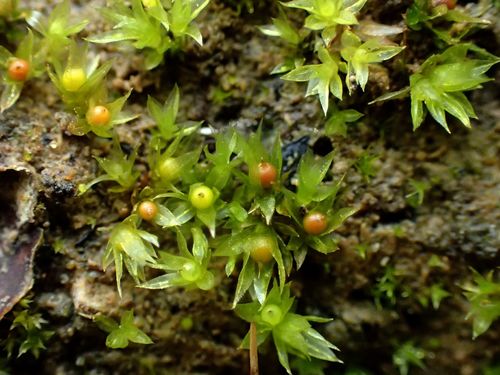
cpSRP54 binds cpSRP43 with low affinity in Physcomitrella patens.
- Taxon
- Physcomitrella patens
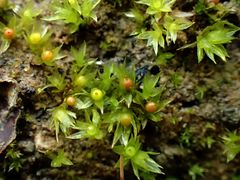 Physcomitrium patense0
- Gene
- cpSRP54e0
- Outcome
- low affinity binding of cpSRP54 to cpSRP43e0
- Value
- Kd ~10 μMe0
Organisms pictured · Representative pictures of the matched species, not figures from the paper.
Verbatim
e0“low affinity binding of cpSRP54 to cpSRP43 (Kd ~10 μM) in Chaetosphaeridium globosum and Physcomitrella patens”
Claim · model-written summary
cpSRP54 binds cpSRP RNA with relatively low affinity in Physcomitrella patens.
- Taxon
- Physcomitrella patensPhyscomitrium patense0
- Gene
- cpSRP54e0
- Outcome
- relatively low affinity binding of cpSRP54 to cpSRP RNAe0
- Value
- Kd ~1 μMe0
Organisms pictured · Representative pictures of the matched species, not figures from the paper.
Verbatim
e0“relatively low affinity binding of cpSRP54 to cpSRP RNA (Kd ~1 μM) in Physcomitrella patens”
Claim · model-written summary
Charophyte cpSRP43 second-chromodomain alterations do not interfere with cpSRP54 binding.
- Taxon
- Chaetosphaeridium globosumChaetosphaeridium globosumt0
- Gene
- cpSRP43e0
- Outcome
- do not interfere with cpSRP54 bindinge0
Organisms pictured · Representative pictures of the matched species, not figures from the paper.
Verbatim
e0“specific alterations in the second chromodomain of cpSRP43, that are conserved within charophytes and absent in land plants, do not interfere with cpSRP54 binding”
t0“Chaetosphaeridium globosum”
Claim · model-written summary
The elongated apical loop of Physcomitrella patens cpSRP RNA contributes to low affinity for cpSRP54.
- Taxon
- Physcomitrella patensPhyscomitrium patense0
- Gene
- cpSRP RNAe0
- Outcome
- low binding affinity between cpSRP54 and the cpSRP RNAe0
- Qualifier
- elongated apical loop structuree0
Organisms pictured · Representative pictures of the matched species, not figures from the paper.
Verbatim
e0“the elongated apical loop structure of the Physcomitrella patens cpSRP RNA contributes to the low binding affinity between cpSRP54 and the cpSRP RNA”