Abstract
ABSTRACT Bacterial wilt caused by Ralstonia solanacearum is one of the most destructive diseases on ginger. The aim of this study was to evaluate the potential use of five different medicinal plants extracts (Acalypha indica, Andrographis paniculata, Centella asiatica, Curcuma xanthorrhiza, and Spinosa oleracea) as sources of plant resistance inducer compounds (elicitor) against bacterial wilt disease on ginger. Salicylic acid was used as a standard synthetical compound, as well as, water as a control treatment. The study was conducted at the Indonesian Spice and Medicinal Crops Research Institute, Bogor in 2010-2011. Research was conducted in Completely Randomized Design that consisted of 7 treatments, 3 replicates, and 10 plants/ replicate. Ginger seeds were planted in a mixture of soil and manure in polybags. One-month old ginger plants were sprayed or drenched with each of the medicinal plant extract before and after R. solanacearum inoculation. This experiment indicated that the medicinal plant extracts tested were effective in reducing wilt disease incidence on ginger. Their effectiveness varied depended on the plant species and the application method used. Among those five medicinal plant extracts tested, A. indica, A. paniculata, and C. xanthorrhiza were the most stable and effective. Their effectiveness were comparable with the standard compound of salicylic acid. This finding indicated that A. indica, A. paniculata, and C. xanthorrhiza were potentially used as sources of botanical elicitor compounds. The use of those medicinal plant extracts as sources of botanical elicitor, hopefully could increase ginger resistance and rhizome production, as well as reduce the use of synthetic pesticides. Keywords: Medicinal plant extracts, elicitor compounds, induced resistance, ginger, wilt disease ABSTRAK Layu bakteri yang disebabkan oleh Ralstonia solanacearum merupakan salah satu penyakit yang merusak tanaman jahe. Penelitian ini bertujuan untuk mengevaluasi potensi lima jenis ekstrak tanaman obat (akar kucing, sambiloto, pegagan, temulawak, dan bayam duri) sebagai sumber senyawa penginduksi ketahanan (elisitor) tanaman jahe terhadap penyakit layu. Pada penelitian ini digunakan asam salisilat sebagai senyawa sintetik standard dan air sebagai perlakuan kontrol. Penelitian dilaksanakan di Balai Penelitian Tanaman Rempah dan Obat, Bogor pada tahun 2010-2011. Percobaan dilaksanakan dengan menggunakan rancangan acak lengkap yang terdiri atas 7 perlakuan, 3 ulangan, dan 10 tanaman/ ulangan. Rimpang jahe ditanam pada media campuran tanah dan pupuk kandang di dalam polibeg. Jahe umur satu bulan disemprot atau disiram dengan ekstrak tanaman obat sebelum dan setelah diinokulasi R. solanacearum. Hasil penelitian mengindikasikan bahwa ekstrak tanaman obat yang diuji efektif dapat mengurangi kejadian penyakit layu pada tanaman jahe. Efektivitas dari tanaman tersebut bervariasi tergantung dari spesies tanaman dan cara aplikasinya. Diantara kelima tanaman obat yang diuji, akar kucing, sambiloto, dan temulawak paling stabil dan efektif dalam mengurangi terjadinya penyakit layu. Efektivitas dari ketiga tanaman obat tersebut sama dengan senyawa asam salisilat. Hasil penelitian menunjukkan bahwa akar kucing, sambiloto, dan temulawak berpotensi untuk digunakan sebagai sumber senyawa elisitor botanis. Penggunaan ekstrak tanaman obat sebagai sumber elisitor botanis diharapkan dapat meningkatkan ketahanan tanaman dan produksi jahe serta mengurangi penggunaan pestisida sintetik. Kata kunci: Ekstrak tanaman, senyawa elisitor, induksi ketahanan, jahe, penyakit layu.
Abstract from the paper’s OpenAlex record, shown for indexing and research. Copyright remains with the authors or the publisher. Read at the source ↗
The text the model read, with the source record’s inline markup (italics, sub- and superscripts) rendered and its character entities decoded; quote offsets refer to the raw text.
Claims 5
Claim · model-written summary
Medicinal plant extracts reduced bacterial wilt disease incidence on ginger compared with water control.
- Taxon
- ginger
 Zingiber officinalee1
- Treatment
- medicinal plant extractse1
- Interactor
- Ralstonia solanacearum
 Ralstonia solanacearume2pathogen
- Outcome
- wilt disease incidencee1
- Direction
- reducinge1
- Comparator
- water as a control treatmente3
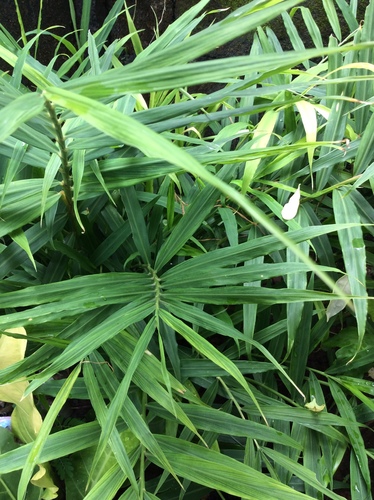
Organisms pictured · Representative pictures of the matched species, not figures from the paper.

Verbatim
e1“the medicinal plant extracts tested were effective in reducing wilt disease incidence on ginger”
e2“Bacterial wilt caused by Ralstonia solanacearum is one of the most destructive diseases on ginger”
e3“water as a control treatment”
Claim · model-written summary
The effectiveness of the medicinal plant extracts against ginger wilt varied with plant species and application method.
- Taxon
- gingerZingiber officinalee1
- Treatment
- application methode2
- Outcome
- effectivenesse2
Not reportedDirection
Organisms pictured · Representative pictures of the matched species, not figures from the paper.
Verbatim
e1“the medicinal plant extracts tested were effective in reducing wilt disease incidence on ginger”
e2“Their effectiveness varied depended on the plant species and the application method used”
Claim · model-written summary
Acalypha indica, Andrographis paniculata and Curcuma xanthorrhiza were the most stable and effective of five tested medicinal plant extracts on ginger.
- Taxon
- gingerZingiber officinalee1
- Treatment
- A. indica, A. paniculata, and C. xanthorrhizae2
- Outcome
- stable and effectivee2
- Direction
- moste2
- Comparator
- five medicinal plant extracts testede2
Organisms pictured · Representative pictures of the matched species, not figures from the paper.
Verbatim
e1“the medicinal plant extracts tested were effective in reducing wilt disease incidence on ginger”
e2“Among those five medicinal plant extracts tested, A. indica, A. paniculata, and C. xanthorrhiza were the most stable and effective”
Claim · model-written summary
The effectiveness of A. indica, A. paniculata and C. xanthorrhiza extracts was comparable to salicylic acid.
- Taxon
- gingerZingiber officinalee1
- Treatment
- A. indica, A. paniculata, and C. xanthorrhizae3
- Outcome
- effectivenesse2
- Direction
- comparablee2
- Comparator
- standard compound of salicylic acide2
Organisms pictured · Representative pictures of the matched species, not figures from the paper.
Verbatim
e1“the medicinal plant extracts tested were effective in reducing wilt disease incidence on ginger”
e2“Their effectiveness were comparable with the standard compound of salicylic acid”
e3“Among those five medicinal plant extracts tested, A. indica, A. paniculata, and C. xanthorrhiza were the most stable and effective”
Claim · model-written summary
A. indica, A. paniculata and C. xanthorrhiza are potentially usable as sources of botanical elicitor compounds for ginger.
- Taxon
- gingerZingiber officinalee1
- Outcome
- sources of botanical elicitor compoundse2
Organisms pictured · Representative pictures of the matched species, not figures from the paper.
Verbatim
e1“the medicinal plant extracts tested were effective in reducing wilt disease incidence on ginger”
e2“A. indica, A. paniculata, and C. xanthorrhiza were potentially used as sources of botanical elicitor compounds”
The same questions in other papers
botanical · Ralstonia solanacearum · Zingiber officinale (ginger)Results agree
3 papers in the same direction as this paper
- positive
- positive
- positive
Claims are grouped by organism, treatment and what was measured or targeted. A paper counts as positive when any of its claims in the group is positive.