Abstract
Medicinal plants have been used by marginal communities to treat various ailments. However, the potential of endophytes within these bio-prospective medicinal plants remains unknown. The present study elucidates the endophytic diversity of medicinal plants (Caralluma acutangula, Rhazya stricta, and Moringa peregrina) and the endophyte role in seed growth and oxidative stress. Various organs of medicinal plants yielded ten endophytes, which were identified as Phoma sp. (6 isolates), Alternaria sp. (2), Bipolaris sp. (1), and Cladosporium sp. (1) based on 18S rDNA sequencing and phylogenetic analysis. The culture filtrates (CFs; 25%, 50%, and 100% concentrations) from these endophytes were tested against the growth of normal and dwarf mutant rice lines. Endophytic CF exhibited dose-dependent growth stimulation and suppression effects. CF (100%) of Phoma sp. significantly increased rice seed germination and growth compared to controls and other endophytes. This growth-promoting effect was due to the presence of indole acetic acid in endophytic CF. The gas chromatography/mass spectrometry (GC/MS) analysis showed the highest indole acetic acid content ((54.31±0.21) µmol/L) in Bipolaris sp. In addition, the isolate of Bipolaris sp. exhibited significantly higher radical scavenging and anti-lipid peroxidation activity than the other isolates. Bipolaris sp. and Phoma sp. also exhibited significantly higher flavonoid and phenolic contents. The medicinal plants exhibited the presence of bio-prospective endophytic strains, which could be used for the improvement of crop growth and the mitigation of oxidative stresses.
Abstract from the paper’s OpenAlex record, shown for indexing and research. Copyright remains with the authors or the publisher. Read at the source ↗
The text the model read, with the source record’s inline markup (italics, sub- and superscripts) rendered and its character entities decoded; quote offsets refer to the raw text.
Claims 12
Claim · model-written summary
Medicinal-plant organs yielded six Phoma endophyte isolates.
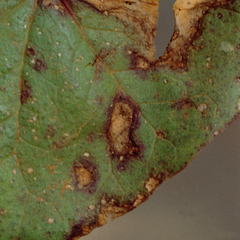 Phoma
Organisms pictured · Representative pictures of the matched species, not figures from the paper.
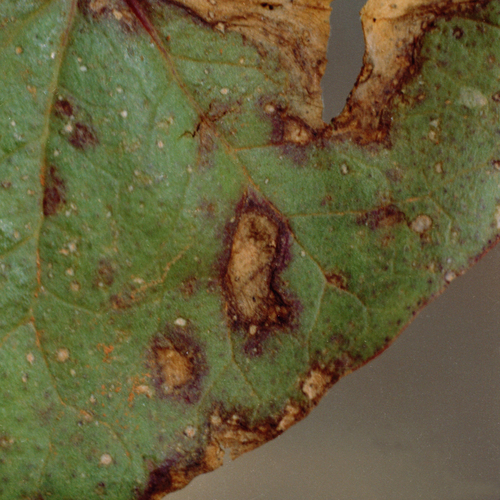
Verbatim
e0“Various organs of medicinal plants yielded ten endophytes, which were identified as Phoma sp. (6 isolates), Alternaria sp. (2), Bipolaris sp. (1), and Cladosporium sp. (1) based on 18S rDNA sequencing and phylogenetic analysis.”
Claim · model-written summary
Medicinal-plant organs yielded two Alternaria endophyte isolates.
- Taxon
- Alternaria sp.
 Alternariae0
- Interactor
- medicinal plantse0host
- Outcome
- endophytese0
- Value
- 2e0
Organisms pictured · Representative pictures of the matched species, not figures from the paper.

Verbatim
e0“Various organs of medicinal plants yielded ten endophytes, which were identified as Phoma sp. (6 isolates), Alternaria sp. (2), Bipolaris sp. (1), and Cladosporium sp. (1) based on 18S rDNA sequencing and phylogenetic analysis.”
Claim · model-written summary
Medicinal-plant organs yielded one Bipolaris endophyte isolate.
 Bipolaris
Organisms pictured · Representative pictures of the matched species, not figures from the paper.

Verbatim
e0“Various organs of medicinal plants yielded ten endophytes, which were identified as Phoma sp. (6 isolates), Alternaria sp. (2), Bipolaris sp. (1), and Cladosporium sp. (1) based on 18S rDNA sequencing and phylogenetic analysis.”
Claim · model-written summary
Medicinal-plant organs yielded one Cladosporium endophyte isolate.
- Taxon
- Cladosporium sp.
 Cladosporiume0
- Interactor
- medicinal plantse0host
- Outcome
- endophytese0
- Value
- 1e0
Organisms pictured · Representative pictures of the matched species, not figures from the paper.

Verbatim
e0“Various organs of medicinal plants yielded ten endophytes, which were identified as Phoma sp. (6 isolates), Alternaria sp. (2), Bipolaris sp. (1), and Cladosporium sp. (1) based on 18S rDNA sequencing and phylogenetic analysis.”
Claim · model-written summary
Endophytic culture filtrates produced dose-dependent rice growth stimulation and suppression.
- Taxon
- rice
 Oryza sativae1
- Material
- normal and dwarf mutant rice linese1
- Treatment
- Endophytic CFe0
- Interactor
- endophytese1symbiont
- Outcome
- growthe0
- Direction
- stimulation and suppressione0
- Qualifier
- dose-dependente0
Not reportedComparator
Organisms pictured · Representative pictures of the matched species, not figures from the paper.

Verbatim
e0“Endophytic CF exhibited dose-dependent growth stimulation and suppression effects.”
e1“The culture filtrates (CFs; 25%, 50%, and 100% concentrations) from these endophytes were tested against the growth of normal and dwarf mutant rice lines.”
Claim · model-written summary
100% Phoma culture filtrate significantly increased rice germination and growth relative to controls and other endophytes.
- Taxon
- riceOryza sativae0
- Treatment
- CF (100%) of Phoma sp.e0
- Outcome
- seed germination and growthe0
- Direction
- increasede0
- Comparator
- controls and other endophytese0
Organisms pictured · Representative pictures of the matched species, not figures from the paper.
Verbatim
e0“CF (100%) of Phoma sp. significantly increased rice seed germination and growth compared to controls and other endophytes.”
Claim · model-written summary
Indole acetic acid in endophytic culture filtrate explained the rice growth-promoting effect.
- Taxon
- riceOryza sativae1
- Compound
- indole acetic acide0
- Outcome
- growth-promoting effecte0
Organisms pictured · Representative pictures of the matched species, not figures from the paper.
Verbatim
e0“This growth-promoting effect was due to the presence of indole acetic acid in endophytic CF.”
e1“CF (100%) of Phoma sp. significantly increased rice seed germination and growth compared to controls and other endophytes.”
Claim · model-written summary
Bipolaris had the highest indole acetic acid content, 54.31±0.21 µmol/L.
Organisms pictured · Representative pictures of the matched species, not figures from the paper.
Verbatim
e0“The gas chromatography/mass spectrometry (GC/MS) analysis showed the highest indole acetic acid content ((54.31±0.21) µmol/L) in Bipolaris sp.”
Claim · model-written summary
Bipolaris had significantly higher radical scavenging and anti-lipid peroxidation activity than other isolates.
- Outcome
- radical scavenging and anti-lipid peroxidation activitye0
- Direction
- highere0
- Comparator
- other isolatese0
Organisms pictured · Representative pictures of the matched species, not figures from the paper.
Verbatim
e0“In addition, the isolate of Bipolaris sp. exhibited significantly higher radical scavenging and anti-lipid peroxidation activity than the other isolates.”
Claim · model-written summary
Bipolaris exhibited significantly higher flavonoid and phenolic contents.
Organisms pictured · Representative pictures of the matched species, not figures from the paper.
Verbatim
e0“Bipolaris sp. and Phoma sp. also exhibited significantly higher flavonoid and phenolic contents.”
Claim · model-written summary
Phoma exhibited significantly higher flavonoid and phenolic contents.
Organisms pictured · Representative pictures of the matched species, not figures from the paper.
Verbatim
e0“Bipolaris sp. and Phoma sp. also exhibited significantly higher flavonoid and phenolic contents.”
Claim · model-written summary
The authors propose medicinal-plant endophytes for improving crop growth and mitigating oxidative stresses.
Verbatim
e0“The medicinal plants exhibited the presence of bio-prospective endophytic strains, which could be used for the improvement of crop growth and the mitigation of oxidative stresses.”
The same questions in other papers
Phoma · growth · Oryza sativa (rice)Results agree
2 papers in the same direction as this paper
- positive
- positive
Claims are grouped by organism, treatment and what was measured or targeted. A paper counts as positive when any of its claims in the group is positive.