Abstract
In Sidama, agroforestry represents land-use systems with deliberate management of multipurpose trees and shrubs that grow in intimate association with annual and perennial agricultural crops and/or livestock. The interaction of microbiota with the trees, shrubs and crops make the system fertile, productive and sustainable. One of the beneficial microbiota which has symbiotic association with most of the plants in agroforestry is arbuscular mycorrhizal fungi (AMF). In November and December of 2012, root and rhizosphere soil samples of 21 plant species from nine peasant associations (PAs)(villages within districts where 300-500 families live) were collected from the agroforestry practices in Sidama of Southern Ethiopia for the determination of diversity and abundance of AMF under selected soil parameters and plant species density. Findings on the diversity of AMF based on soil properties showed that at moderate to low P and N concentrations the rate of AMF root colonization and spore density was high in comparison with the rhizosphere soils with the highest P and N concentration. The highest percentage of total AMF colonization was recorded for shade trees Millettia ferruginea (84%) and Erythrina brucei (80%) followed by intercropped perennial crops Ensete ventricosum (86%), Catha edulis (85%) and Coffea arabica (80%) and the lowest percentage AMF colonization was recorded for Rhamnus prinoides (53%) and Colocasia esculenta (52%). Though found in almost all homegarden agroforestry practices and with broad coverage in Sidama agroforestry, some crops and vegetables such Brassica integrifolia and Cucurbita pepo, grown intercropped were found to be non-mycorrrhizal as none of the AMF structures were recorded. The highest number of AM spore population was recorded in rhizosphere soils of Croton macrostachyus (1066±19.33) and Catha edulis (1054±53.12) and the lowest spore density was recorded for Dioscorea alata (100.00±2.89) spore per 100 g of dry soil. The percentage fungal colonization in any individual plant species and spore population in the rhizosphere soils of that species did not correlate to each other and percentage AM root colonization and spore density of all plants in the agroforestry of Sidama were found significantly different at P<0.05 level.
Abstract from the paper’s OpenAlex record; open copy licensed cc-by. Read at the source ↗
The text the model read, with the source record’s inline markup (italics, sub- and superscripts) rendered and its character entities decoded; quote offsets refer to the raw text.
Claims 15
Claim · model-written summary
AMF colonization and spore density were high at moderate to low P and N versus highest concentrations.
- Interactor
- AMFe0symbiont
- Outcome
- rate of AMF root colonization and spore densitye0
- Direction
- highe0
- Comparator
- highest P and N concentratione0
- Setting
- rhizosphere soilse0
Not reportedTaxon
Verbatim
e0“at moderate to low P and N concentrations the rate of AMF root colonization and spore density was high in comparison with the rhizosphere soils with the highest P and N concentration”
Claim · model-written summary
Millettia ferruginea had 84% AMF colonization.
- Taxon
- Millettia ferrugineaMillettia ferrugineae0
- Outcome
- Millettia ferrugineae0
- Value
- 84%e0
Verbatim
e0“Millettia ferruginea (84%)”
Claim · model-written summary
Erythrina brucei had 80% AMF colonization.
- Taxon
- Erythrina brucei
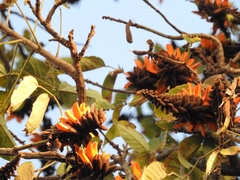 Erythrina bruceie0
- Outcome
- Erythrina bruceie0
- Value
- 80%e0
Organisms pictured · Representative pictures of the matched species, not figures from the paper.
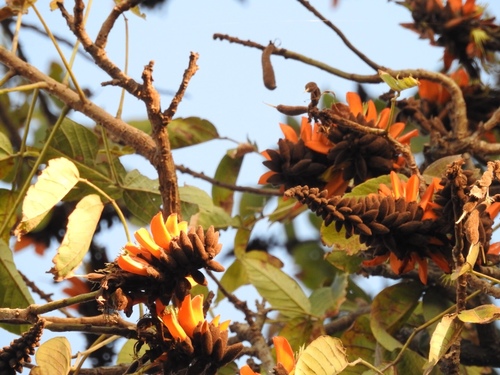
Verbatim
e0“Erythrina brucei (80%)”
Claim · model-written summary
Ensete ventricosum had 86% AMF colonization.
- Taxon
- Ensete ventricosum
 Ensete ventricosume0
- Outcome
- Ensete ventricosume0
- Value
- 86%e0
Organisms pictured · Representative pictures of the matched species, not figures from the paper.

Verbatim
e0“Ensete ventricosum (86%)”
Claim · model-written summary
Catha edulis had 85% AMF colonization.
- Taxon
- Catha edulis
 Catha edulise0
- Outcome
- Catha edulise0
- Value
- 85%e0
Organisms pictured · Representative pictures of the matched species, not figures from the paper.

Verbatim
e0“Catha edulis (85%)”
Claim · model-written summary
Coffea arabica had 80% AMF colonization.
- Taxon
- Coffea arabica
 Coffea arabicae0
- Outcome
- Coffea arabicae0
- Value
- 80%e0
Organisms pictured · Representative pictures of the matched species, not figures from the paper.

Verbatim
e0“Coffea arabica (80%)”
Claim · model-written summary
Rhamnus prinoides had 53% AMF colonization.
- Taxon
- Rhamnus prinoides
 Rhamnus prinoidese0
- Outcome
- Rhamnus prinoidese0
- Value
- 53%e0
Organisms pictured · Representative pictures of the matched species, not figures from the paper.

Verbatim
e0“Rhamnus prinoides (53%)”
Claim · model-written summary
Colocasia esculenta had 52% AMF colonization.
- Taxon
- Colocasia esculenta
 Colocasia esculentae0
- Outcome
- Colocasia esculentae0
- Value
- 52%e0
Organisms pictured · Representative pictures of the matched species, not figures from the paper.

Verbatim
e0“Colocasia esculenta (52%)”
Claim · model-written summary
Brassica integrifolia was nonmycorrhizal.
Verbatim
e0“Brassica integrifolia and Cucurbita pepo, grown intercropped were found to be non-mycorrrhizal as none of the AMF structures were recorded”
Claim · model-written summary
Cucurbita pepo was nonmycorrhizal.
- Taxon
- Cucurbita pepo
 Cucurbita pepoe0
- Interactor
- AMFe0symbiont
- Outcome
- non-mycorrrhizale0
Organisms pictured · Representative pictures of the matched species, not figures from the paper.

Verbatim
e0“Brassica integrifolia and Cucurbita pepo, grown intercropped were found to be non-mycorrrhizal as none of the AMF structures were recorded”
Claim · model-written summary
Croton macrostachyus rhizosphere had 1066±19.33 spores.
- Taxon
- Croton macrostachyus
 Croton macrostachyuse0
- Outcome
- Croton macrostachyuse0
- Value
- 1066±19.33e0
Organisms pictured · Representative pictures of the matched species, not figures from the paper.

Verbatim
e0“Croton macrostachyus (1066±19.33)”
Claim · model-written summary
Catha edulis rhizosphere had 1054±53.12 spores.
- Taxon
- Catha edulisCatha edulise0
- Outcome
- Catha edulise0
- Value
- 1054±53.12e0
Organisms pictured · Representative pictures of the matched species, not figures from the paper.
Verbatim
e0“Catha edulis (1054±53.12)”
Claim · model-written summary
Dioscorea alata rhizosphere had 100.00±2.89 spores per 100 g dry soil.
- Taxon
- Dioscorea alata
 Dioscorea alatae0
- Outcome
- sporee0
- Value
- 100.00±2.89e0
Organisms pictured · Representative pictures of the matched species, not figures from the paper.

Verbatim
e0“Dioscorea alata (100.00±2.89) spore per 100 g of dry soil”
Claim · model-written summary
AMF colonization and rhizosphere spore populations did not correlate within species.
Verbatim
e0“percentage fungal colonization in any individual plant species and spore population in the rhizosphere soils of that species did not correlate to each other”
Claim · model-written summary
AMF colonization and spore density differed significantly among agroforestry plants.
- Taxon
- plantsViridiplantaee0
- Outcome
- percentage AM root colonization and spore densitye0
- Direction
- differente0
- Setting
- Sidamae0
Verbatim
e0“percentage AM root colonization and spore density of all plants in the agroforestry of Sidama were found significantly different at P<0.05 level”