Abstract
Mutualistic and pathogenic plant-colonizing fungi use effector molecules to manipulate the host cell metabolism to allow plant tissue invasion. Some small secreted proteins (SSPs) have been identified as fungal effectors in both ectomycorrhizal and arbuscular mycorrhizal fungi, but it is currently unknown whether SSPs also play a role as effectors in other mycorrhizal associations. Ericoid mycorrhiza is a specific endomycorrhizal type that involves symbiotic fungi mostly belonging to the Leotiomycetes (Ascomycetes) and plants in the family Ericaceae. Genomic and RNASeq data from the ericoid mycorrhizal fungus Oidiodendron maius led to the identification of several symbiosis-upregulated genes encoding putative SSPs. OmSSP1, the most highly symbiosis up-regulated SSP, was found to share some features with fungal hydrophobins, even though it lacks the Pfam hydrophobin domain. Sequence alignment with other hydrophobins and hydrophobin-like fungal proteins placed OmSSP1 within Class I hydrophobins. However, the predicted features of OmSSP1 may suggest a distinct type of hydrophobin-like proteins. The presence of a predicted signal peptide and a yeast-based signal sequence trap assay demonstrate that OmSSP1 is secreted during symbiosis. OmSSP1 null-mutants showed a reduced capacity to form ericoid mycorrhiza with Vaccinium myrtillus roots, suggesting a role as effectors in the ericoid mycorrhizal interaction.
Abstract from the paper’s OpenAlex record; open copy licensed cc-by. Read at the source ↗
The text the model read, with the source record’s inline markup (italics, sub- and superscripts) rendered and its character entities decoded; quote offsets refer to the raw text.
Claims 6
Claim · model-written summary
Genomic and RNASeq data identified several symbiosis-upregulated putative SSP genes in the ericoid mycorrhizal fungus.
- Taxon
- Oidiodendron maiusOidiodendron maiuse0
- Interactor
- Oidiodendron maiusOidiodendron maiuse0symbiont
- Outcome
- several symbiosis-upregulated genes encoding putative SSPse0
Verbatim
e0“Genomic and RNASeq data from the ericoid mycorrhizal fungus Oidiodendron maius led to the identification of several symbiosis-upregulated genes encoding putative SSPs.”
Claim · model-written summary
OmSSP1 was the most highly symbiosis up-regulated SSP and shared features with fungal hydrophobins despite lacking the Pfam hydrophobin domain.
- Gene
- OmSSP1e0
- Outcome
- most highly symbiosis up-regulated SSPe0
- Qualifier
- lacks the Pfam hydrophobin domaine0
Not reportedTaxon
Verbatim
e0“OmSSP1, the most highly symbiosis up-regulated SSP, was found to share some features with fungal hydrophobins, even though it lacks the Pfam hydrophobin domain.”
Claim · model-written summary
Sequence alignment placed OmSSP1 within Class I hydrophobins.
Not reportedTaxon
Verbatim
e0“Sequence alignment with other hydrophobins and hydrophobin-like fungal proteins placed OmSSP1 within Class I hydrophobins.”
Claim · model-written summary
Predicted OmSSP1 features may indicate a distinct type of hydrophobin-like protein.
Not reportedTaxon
Verbatim
e0“the predicted features of OmSSP1 may suggest a distinct type of hydrophobin-like proteins.”
Claim · model-written summary
A predicted signal peptide and a yeast signal sequence trap assay showed OmSSP1 secretion during symbiosis.
Not reportedTaxon
Verbatim
e0“The presence of a predicted signal peptide and a yeast-based signal sequence trap assay demonstrate that OmSSP1 is secreted during symbiosis.”
Claim · model-written summary
OmSSP1 null mutants had reduced capacity to form ericoid mycorrhiza with Vaccinium myrtillus roots.
- Taxon
- Vaccinium myrtillus
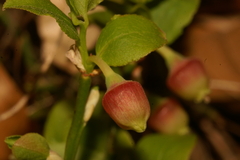 Vaccinium myrtilluse0
- Organ / stage
- rootse0
- Treatment
- OmSSP1 null-mutantse0
- Gene
- OmSSP1e0
- Outcome
- capacity to form ericoid mycorrhizae0
- Direction
- reducede0
Not reportedComparator
Organisms pictured · Representative pictures of the matched species, not figures from the paper.

Verbatim
e0“OmSSP1 null-mutants showed a reduced capacity to form ericoid mycorrhiza with Vaccinium myrtillus roots”