Abstract
Cultivars of Poa pratensis L., Festuca rubra L., subsp rubra , and Festuca arundinaceae Schreb. were subjected to simulated foot traffic and three irrigation regimes. Soil compaction was evaluated by soil bulk density measurements. Clipping yields of 16 bluegrass species and cultivars increased with increasing soil moisture. Highest yielding bluegrass cultivars were those with either upright growth habit or rapid vertical growth. The conclusion is drawn that, unless evaluated upon the percent yield change, clipping weights are not an accurate method of assessing trampling resistance of certain strongly rhizomatous, prostrate growing cultivars of Kentucky bluegrass during moderate, continuous trampling. Under the experimental conditions of this study, Poa pratensis L cultivars ‘Merion’, ‘Newport’, and ‘Windsor’ appeared to have greatest resistance to trampling; Poa ampla and Poa trivialis L. having least trample resistance. Clipping yields of seven cultivars of F. rubra also increased in most cases with increasing irrigation level. Significant yield differences, assumed to represent growth rate differences, occurred among cultivars. Interactions between cultivar and trample level were taken as measures of differential wear tolerance. Festuca rubra L. subsp. rubra ‘Pennlawn’ was significantly higher in trample resistance than all others. F. ovina L. KO-16 had better apparent trample resistance than others which had equal resistance to trampling. Festuca arundinaceae ‘Goars’ was observed to have superior trample resistance to the others studied which were equal. With a single exception, clipping yields of tall fescue decreased with decrease in irrigation levels.
Abstract from the paper’s OpenAlex record, shown for indexing and research. Copyright remains with the authors or the publisher. Read at the source ↗
The text the model read, with the source record’s inline markup (italics, sub- and superscripts) rendered and its character entities decoded; quote offsets refer to the raw text.
Claims 11
Claim · model-written summary
Clipping yields of bluegrass species and cultivars increased with increasing soil moisture.
- Taxon
- bluegrass species and cultivarse1
- Treatment
- increasing soil moisturee1
- Outcome
- Clipping yieldse1
- Direction
- increasede1
Not reportedComparator
Verbatim
e1“Clipping yields of 16 bluegrass species and cultivars increased with increasing soil moisture”
Claim · model-written summary
The highest yielding bluegrass cultivars had an upright growth habit or rapid vertical growth.
 Poa
Organisms pictured · Representative pictures of the matched species, not figures from the paper.

Verbatim
e2“Highest yielding bluegrass cultivars were those with either upright growth habit or rapid vertical growth”
Claim · model-written summary
Clipping weights are not an accurate method of assessing trampling resistance of rhizomatous, prostrate Kentucky bluegrass cultivars unless percent yield change is evaluated.
- Taxon
- Kentucky bluegrass
 Poa pratensise3
- Outcome
- an accurate method of assessing trampling resistancee3
- Qualifier
- unless evaluated upon the percent yield changee3
Organisms pictured · Representative pictures of the matched species, not figures from the paper.

Verbatim
e3“The conclusion is drawn that, unless evaluated upon the percent yield change, clipping weights are not an accurate method of assessing trampling resistance of certain strongly rhizomatous, prostrate growing cultivars of Kentucky bluegrass during moderate, continuous trampling”
Claim · model-written summary
Poa pratensis L cultivars Merion, Newport and Windsor appeared to have the greatest resistance to trampling.
- Taxon
- Poa pratensis LPoa pratensise4
- Material
- ‘Merion’, ‘Newport’, and ‘Windsor’e4
- Outcome
- resistance to tramplinge4
Organisms pictured · Representative pictures of the matched species, not figures from the paper.
Verbatim
e4“Poa pratensis L cultivars ‘Merion’, ‘Newport’, and ‘Windsor’ appeared to have greatest resistance to trampling”
Claim · model-written summary
Poa ampla and Poa trivialis L. had the least trample resistance.
- Taxon
- Poa ampla and Poa trivialis L.
 Poa trivialis
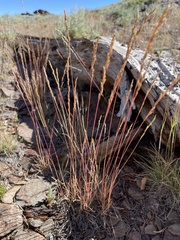 Poa secunda var. amplae5
- Outcome
- least trample resistancee5
Organisms pictured · Representative pictures of the matched species, not figures from the paper.

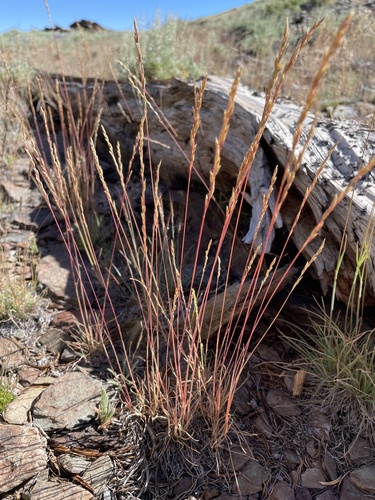
Verbatim
e5“Poa ampla and Poa trivialis L. having least trample resistance”
Claim · model-written summary
Clipping yields of seven F. rubra cultivars increased in most cases with increasing irrigation level.
- Taxon
- F. rubra
 Festuca rubrae6
- Treatment
- increasing irrigation levele6
- Outcome
- Clipping yieldse6
- Direction
- increasede6
- Qualifier
- in most casese6
Not reportedComparator
Organisms pictured · Representative pictures of the matched species, not figures from the paper.

Verbatim
e6“Clipping yields of seven cultivars of F. rubra also increased in most cases with increasing irrigation level”
Claim · model-written summary
Significant yield differences occurred among cultivars.
Verbatim
e7“Significant yield differences, assumed to represent growth rate differences, occurred among cultivars”
Claim · model-written summary
Festuca rubra subsp. rubra cultivar Pennlawn had significantly higher trample resistance than all other cultivars.
- Taxon
- Festuca rubra L. subsp. rubraFestuca rubra subsp. rubrae0
- Material
- ‘Pennlawn’e0
- Outcome
- trample resistancee0
- Direction
- highere0
- Comparator
- all otherse0
Organisms pictured · Representative pictures of the matched species, not figures from the paper.
Verbatim
e0“Festuca rubra L. subsp. rubra ‘Pennlawn’ was significantly higher in trample resistance than all others”
Claim · model-written summary
F. ovina KO-16 had better apparent trample resistance than the other cultivars.
- Taxon
- F. ovina L.
 Festuca ovinae1
- Material
- KO-16e1
- Outcome
- apparent trample resistancee1
- Direction
- bettere1
- Comparator
- otherse1
Organisms pictured · Representative pictures of the matched species, not figures from the paper.

Verbatim
e1“F. ovina L. KO-16 had better apparent trample resistance than others which had equal resistance to trampling”
Claim · model-written summary
Festuca arundinacea cultivar Goars had superior trample resistance to the other cultivars studied.
Verbatim
e2“Festuca arundinaceae ‘Goars’ was observed to have superior trample resistance to the others studied which were equal”
Claim · model-written summary
Clipping yields of tall fescue decreased with decreasing irrigation levels, with a single exception.
- Taxon
- tall fescue
 Lolium arundinaceume3
- Treatment
- decrease in irrigation levelse3
- Outcome
- clipping yieldse3
- Direction
- decreasede3
- Qualifier
- With a single exceptione3
Not reportedComparator
Organisms pictured · Representative pictures of the matched species, not figures from the paper.

Verbatim
e3“With a single exception, clipping yields of tall fescue decreased with decrease in irrigation levels”
The same questions in other papers
irrigation · yield · Lolium arundinaceum (tall fescue)Positive and negative results
1 paper in the same direction as this paper · 5 in the opposite direction
- positive
- positive
- positive
3 papers more in this group
See all 7 papers →Claims are grouped by organism, treatment and what was measured or targeted. A paper counts as positive when any of its claims in the group is positive.