Abstract
The mature zygotic embryos of the Hevea brasiliensis were cryopreserved through the use of the vitrification and encapsulation/dehydration techniques. In all the experiments, the zygotic embryos were pre-cultured for three days in the MS medium supplemented with 0.3 M sucrose before they were used for the cryopreservation technique. In the vitrification procedure, the effect of the plant vitrification solutions (PVS2 and PVS3) and exposure time were studied. The highest survival rate (88.87%) and regrowth (66.33%) were achieved when the precultured zygotic embryos were incubated in a loading solution for 20 minutes at 0C. They were subsequently exposed to PVS2 for 120 minutes at 0C and plunged directly into liquid nitrogen. Cryopreservation by the encapsulation-dehydration method was successfully done by leaving the encapsulated zygotic embryos in a laminar flow for 4 hours prior to plunging into a LN. The survival rate and regrowth of the encapsulated zygotic embryos were 37.50% and 27.98%, respectively. The cryopreserved zygotic embryos were able to develop into whole plants.
Abstract from the paper’s OpenAlex record; open copy licensed cc-by-nc. Read at the source ↗
The text the model read, with the source record’s inline markup (italics, sub- and superscripts) rendered and its character entities decoded; quote offsets refer to the raw text.
Claims 5
Claim · model-written summary
Vitrification with loading solution and PVS2 gave the highest embryo survival rate, 88.87%.
- Taxon
- Hevea brasiliensis
 Hevea brasiliensist0
- Organ / stage
- zygotic embryose0
- Treatment
- PVS2 for 120 minutes at 0Ce0
- Outcome
- survival ratee0
- Direction
- higheste0
- Value
- 88.87%e0
Organisms pictured · Representative pictures of the matched species, not figures from the paper.
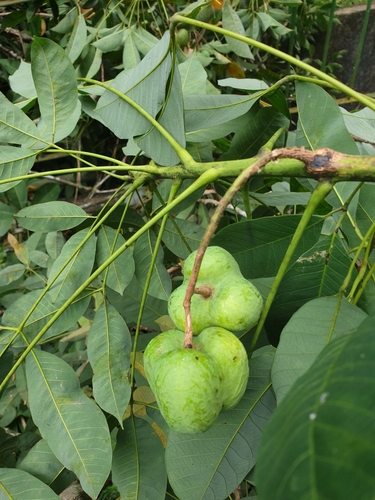
Verbatim
t0“Hevea brasiliensis”
e0“The highest survival rate (88.87%) and regrowth (66.33%) were achieved when the precultured zygotic embryos were incubated in a loading solution for 20 minutes at 0C. They were subsequently exposed to PVS2 for 120 minutes at 0C and plunged directly into liquid nitrogen”
Claim · model-written summary
The PVS2 vitrification procedure produced 66.33% embryo regrowth.
- Taxon
- Hevea brasiliensisHevea brasiliensist0
- Organ / stage
- zygotic embryose0
- Treatment
- PVS2 for 120 minutes at 0Ce0
- Outcome
- regrowthe0
- Direction
- higheste0
- Value
- 66.33%e0
Organisms pictured · Representative pictures of the matched species, not figures from the paper.
Verbatim
t0“Hevea brasiliensis”
e0“The highest survival rate (88.87%) and regrowth (66.33%) were achieved when the precultured zygotic embryos were incubated in a loading solution for 20 minutes at 0C. They were subsequently exposed to PVS2 for 120 minutes at 0C and plunged directly into liquid nitrogen”
Claim · model-written summary
Encapsulation-dehydration produced 37.50% embryo survival.
- Taxon
- Hevea brasiliensisHevea brasiliensist0
- Organ / stage
- encapsulated zygotic embryose0
- Treatment
- encapsulation-dehydration methode0
- Outcome
- survival ratee0
- Value
- 37.50%e0
Organisms pictured · Representative pictures of the matched species, not figures from the paper.
Verbatim
t0“Hevea brasiliensis”
e0“Cryopreservation by the encapsulation-dehydration method was successfully done by leaving the encapsulated zygotic embryos in a laminar flow for 4 hours prior to plunging into a LN. The survival rate and regrowth of the encapsulated zygotic embryos were 37.50% and 27.98%, respectively”
Claim · model-written summary
Encapsulation-dehydration produced 27.98% embryo regrowth.
- Taxon
- Hevea brasiliensisHevea brasiliensist0
- Organ / stage
- encapsulated zygotic embryose0
- Treatment
- encapsulation-dehydration methode0
- Outcome
- regrowthe0
- Value
- 27.98%e0
Organisms pictured · Representative pictures of the matched species, not figures from the paper.
Verbatim
t0“Hevea brasiliensis”
e0“Cryopreservation by the encapsulation-dehydration method was successfully done by leaving the encapsulated zygotic embryos in a laminar flow for 4 hours prior to plunging into a LN. The survival rate and regrowth of the encapsulated zygotic embryos were 37.50% and 27.98%, respectively”
Claim · model-written summary
Cryopreserved Hevea embryos developed into whole plants.
- Taxon
- Hevea brasiliensisHevea brasiliensist0
- Organ / stage
- zygotic embryose0
- Outcome
- develop into whole plantse0
Not reportedDirection
Organisms pictured · Representative pictures of the matched species, not figures from the paper.
Verbatim
t0“Hevea brasiliensis”
e0“The cryopreserved zygotic embryos were able to develop into whole plants”