Abstract
Urban forests are regularly managed for human safety and esthetic reasons, but they are crucial habitat for many species. Removals of undergrowth occur commonly in these forests, yet the ecological consequences of these operations are poorly understood. We sampled ground beetles (Coleoptera, Carabidae) and vascular plants along 20-m edge gradients in Finnish urban forests, in five stands treated 0.5-2.5 years earlier with undergrowth removal and in five untreated stands. We hypothesized that undergrowth removal and edge proximity would benefit opportunistic and open-habitat species, whereas shady-habitat species would be affected negatively. (1) Regarding carabids, diversity and evenness indices, open-habitat species and Carabus nemoralis responded positively, and forest species, Leistus terminatus and Pterostichus oblongopunctatus responded negatively, to the undergrowth removal. Regarding plants, generalists, Maianthemum bifolium, Rubus saxatilis and Sorbus aucuparia responded positively, and forest species, Geranium sylvaticum, Oxalis acetocella and Vaccinium myrtillus responded negatively, to the undergrowth removal. (2) Edge proximity had little effect on both plants and carabids. However, open-habitat carabids were less abundant and less speciose, and the plants Oxalis acetocella, Trientalis europaea and Rubus saxatilis had higher cover, 10-20 m from than right at the edge. (3) Plant (but not carabid) community responded to the undergrowth removal but not to the edge proximity. When managing urban forests, we recommend an avoidance of undergrowth removals at sites that host rare or threatened forest-associated flora and fauna.
Abstract from the paper’s OpenAlex record; open copy licensed cc-by. Read at the source ↗
The text the model read, with the source record’s inline markup (italics, sub- and superscripts) rendered and its character entities decoded; quote offsets refer to the raw text.
Claims 15
Claim · model-written summary
Plant generalists responded positively to undergrowth removal.
- Taxon
- plantsViridiplantaee0
- Material
- generalistse0
- Treatment
- undergrowth removale0
- Outcome
- responded positivelye0
- Direction
- positivelye0
Not reportedComparator
Verbatim
e0“Regarding plants, generalists, Maianthemum bifolium, Rubus saxatilis and Sorbus aucuparia responded positively, and forest species, Geranium sylvaticum, Oxalis acetocella and Vaccinium myrtillus responded negatively, to the undergrowth removal”
Claim · model-written summary
Maianthemum bifolium responded positively to undergrowth removal.
- Taxon
- Maianthemum bifolium
 Maianthemum bifoliume0
- Treatment
- undergrowth removale0
- Outcome
- responded positivelye0
- Direction
- positivelye0
Not reportedComparator
Organisms pictured · Representative pictures of the matched species, not figures from the paper.

Verbatim
e0“Regarding plants, generalists, Maianthemum bifolium, Rubus saxatilis and Sorbus aucuparia responded positively, and forest species, Geranium sylvaticum, Oxalis acetocella and Vaccinium myrtillus responded negatively, to the undergrowth removal”
Claim · model-written summary
Rubus saxatilis responded positively to undergrowth removal.
- Taxon
- Rubus saxatilis
 Rubus saxatilise0
- Treatment
- undergrowth removale0
- Outcome
- responded positivelye0
- Direction
- positivelye0
Not reportedComparator
Organisms pictured · Representative pictures of the matched species, not figures from the paper.

Verbatim
e0“Regarding plants, generalists, Maianthemum bifolium, Rubus saxatilis and Sorbus aucuparia responded positively, and forest species, Geranium sylvaticum, Oxalis acetocella and Vaccinium myrtillus responded negatively, to the undergrowth removal”
Claim · model-written summary
Sorbus aucuparia responded positively to undergrowth removal.
- Taxon
- Sorbus aucuparia
 Sorbus aucupariae0
- Treatment
- undergrowth removale0
- Outcome
- responded positivelye0
- Direction
- positivelye0
Not reportedComparator
Organisms pictured · Representative pictures of the matched species, not figures from the paper.

Verbatim
e0“Regarding plants, generalists, Maianthemum bifolium, Rubus saxatilis and Sorbus aucuparia responded positively, and forest species, Geranium sylvaticum, Oxalis acetocella and Vaccinium myrtillus responded negatively, to the undergrowth removal”
Claim · model-written summary
Forest plant species responded negatively to undergrowth removal.
- Taxon
- forest speciese0
- Treatment
- undergrowth removale0
- Outcome
- responded negativelye0
- Direction
- negativelye0
Not reportedComparator
Verbatim
e0“forest species, Geranium sylvaticum, Oxalis acetocella and Vaccinium myrtillus responded negatively, to the undergrowth removal”
Claim · model-written summary
Geranium sylvaticum responded negatively to undergrowth removal.
- Taxon
- Geranium sylvaticum
 Geranium sylvaticume0
- Treatment
- undergrowth removale0
- Outcome
- responded negativelye0
- Direction
- negativelye0
Not reportedComparator
Organisms pictured · Representative pictures of the matched species, not figures from the paper.

Verbatim
e0“forest species, Geranium sylvaticum, Oxalis acetocella and Vaccinium myrtillus responded negatively, to the undergrowth removal”
Claim · model-written summary
Oxalis acetocella responded negatively to undergrowth removal.
- Taxon
- Oxalis acetocellae0
- Treatment
- undergrowth removale0
- Outcome
- responded negativelye0
- Direction
- negativelye0
Not reportedComparator
Verbatim
e0“forest species, Geranium sylvaticum, Oxalis acetocella and Vaccinium myrtillus responded negatively, to the undergrowth removal”
Claim · model-written summary
Vaccinium myrtillus responded negatively to undergrowth removal.
- Taxon
- Vaccinium myrtillus
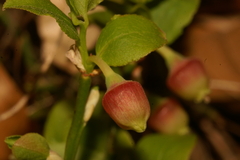 Vaccinium myrtilluse0
- Treatment
- undergrowth removale0
- Outcome
- responded negativelye0
- Direction
- negativelye0
Not reportedComparator
Organisms pictured · Representative pictures of the matched species, not figures from the paper.

Verbatim
e0“forest species, Geranium sylvaticum, Oxalis acetocella and Vaccinium myrtillus responded negatively, to the undergrowth removal”
Claim · model-written summary
Edge proximity had little effect on plants.
- Taxon
- plantsViridiplantaee0
- Outcome
- little effecte0
- Setting
- Edge proximitye0
Not reportedDirection
Verbatim
e0“Edge proximity had little effect on both plants and carabids”
Claim · model-written summary
Oxalis acetocella had greater cover 10–20 m from the edge than at the edge.
Verbatim
e0“the plants Oxalis acetocella, Trientalis europaea and Rubus saxatilis had higher cover, 10-20 m from than right at the edge”
Claim · model-written summary
Trientalis europaea had greater cover 10–20 m from the edge than at the edge.
- Taxon
- Trientalis europaea
 Lysimachia europaeae0
- Outcome
- covere0
- Direction
- highere0
- Comparator
- right at the edgee0
- Setting
- 10-20 m frome0
Organisms pictured · Representative pictures of the matched species, not figures from the paper.

Verbatim
e0“the plants Oxalis acetocella, Trientalis europaea and Rubus saxatilis had higher cover, 10-20 m from than right at the edge”
Claim · model-written summary
Rubus saxatilis had greater cover 10–20 m from the edge than at the edge.
- Taxon
- Rubus saxatilisRubus saxatilise0
- Outcome
- covere0
- Direction
- highere0
- Comparator
- right at the edgee0
- Setting
- 10-20 m frome0
Organisms pictured · Representative pictures of the matched species, not figures from the paper.
Verbatim
e0“the plants Oxalis acetocella, Trientalis europaea and Rubus saxatilis had higher cover, 10-20 m from than right at the edge”
Claim · model-written summary
The plant community responded to undergrowth removal.
Not reportedComparatorDirection
Verbatim
e0“Plant (but not carabid) community responded to the undergrowth removal but not to the edge proximity”
Claim · model-written summary
The plant community did not respond to edge proximity.
Not reportedDirection
Verbatim
e0“Plant (but not carabid) community responded to the undergrowth removal but not to the edge proximity”
Claim · model-written summary
The authors recommend avoiding undergrowth removal where rare or threatened forest flora and fauna occur.
Verbatim
e0“we recommend an avoidance of undergrowth removals at sites that host rare or threatened forest-associated flora and fauna”