Abstract
Urbanization and global climate change have constrained plant development and yield. Utilization of wild gene pool, together with the application of sustainable and eco-friendly agronomic crop improvement strategies, is being focused on to tackle mounting food insecurity issues. In this aspect, the green seaweed, Ulva flexuosa, was assessed for plant biostimulant potential on cherry tomato, in terms of seed priming effects, nutrition and yield. SEM-EDX analysis of U. flexuosa presented the occurrence of cell wall elements (O, Na, Mg, S, Cl, K and Ca). The phytochemical analyses of liquid seaweed extract (EF-LSE) revealed the presence of carbohydrates, protein, phenols, flavonoids, saponins, tannins and coumarins. The EF-LSEs were found to stimulate seed germination in a dose-dependent manner, recording higher seed germination, and biomass and growth parameters. The seedlings of treated seeds altered the biochemical profile of the fruit, in terms of TSS (93%), phenol (92%), lycopene (12%) and ascorbic acid (86.8%). The EF-LSEs positively influenced fruit yield (97%). Henceforth, this investigation brings to light the plant biostimulant potential of the under-utilized seaweed source, U. flexuosa, to be useful as a bio fertilizer in agronomic fields for a cumulative enhancement of crop vigour as well as yields to meet the growing food demands.
Abstract from the paper’s OpenAlex record; open copy licensed cc-by. Read at the source ↗
The text the model read, with the source record’s inline markup (italics, sub- and superscripts) rendered and its character entities decoded; quote offsets refer to the raw text.
Claims 10
Claim · model-written summary
SEM-EDX found O, Na, Mg, S, Cl, K and Ca in the Ulva flexuosa cell wall.
- Taxon
- Ulva flexuosa
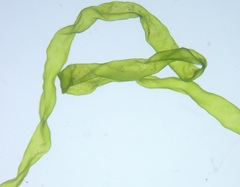 Ulva flexuosae1
- Outcome
- occurrence of cell wall elements (O, Na, Mg, S, Cl, K and Ca)e0
Organisms pictured · Representative pictures of the matched species, not figures from the paper.
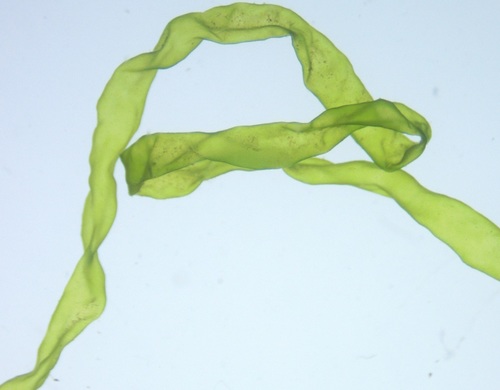
Verbatim
e0“SEM-EDX analysis of U. flexuosa presented the occurrence of cell wall elements (O, Na, Mg, S, Cl, K and Ca).”
e1“Ulva flexuosa”
Claim · model-written summary
Liquid Ulva extract contained carbohydrates, protein, phenols, flavonoids, saponins, tannins and coumarins.
- Taxon
- Ulva flexuosaUlva flexuosae1
- Outcome
- presence of carbohydrates, protein, phenols, flavonoids, saponins, tannins and coumarinse0
Organisms pictured · Representative pictures of the matched species, not figures from the paper.
Verbatim
e0“The phytochemical analyses of liquid seaweed extract (EF-LSE) revealed the presence of carbohydrates, protein, phenols, flavonoids, saponins, tannins and coumarins.”
e1“Ulva flexuosa”
Claim · model-written summary
Ulva extract stimulated cherry tomato seed germination in a dose-dependent way.
- Taxon
- cherry tomato
 Solanum lycopersicum var. cerasiformee1
- Treatment
- EF-LSEse0
- Interactor
- Ulva flexuosaUlva flexuosae2other
- Outcome
- seed germinatione0
- Direction
- highere0
- Qualifier
- dose-dependent mannere0
Not reportedComparator
Organisms pictured · Representative pictures of the matched species, not figures from the paper.

Verbatim
e0“The EF-LSEs were found to stimulate seed germination in a dose-dependent manner, recording higher seed germination, and biomass and growth parameters.”
e1“cherry tomato”
e2“Ulva flexuosa”
Claim · model-written summary
Ulva extract increased cherry tomato biomass and growth parameters.
- Taxon
- cherry tomatoSolanum lycopersicum var. cerasiformee1
- Treatment
- EF-LSEse0
- Outcome
- biomass and growth parameterse0
- Direction
- highere0
Not reportedComparator
Organisms pictured · Representative pictures of the matched species, not figures from the paper.
Verbatim
e0“The EF-LSEs were found to stimulate seed germination in a dose-dependent manner, recording higher seed germination, and biomass and growth parameters.”
e1“cherry tomato”
Claim · model-written summary
Seed treatment with Ulva extract altered fruit TSS by 93%.
- Taxon
- cherry tomatoSolanum lycopersicum var. cerasiformee1
- Treatment
- EF-LSEse2
- Outcome
- TSSe0
- Value
- 93%e0
Not reportedComparatorDirection
Organisms pictured · Representative pictures of the matched species, not figures from the paper.
Verbatim
e0“The seedlings of treated seeds altered the biochemical profile of the fruit, in terms of TSS (93%), phenol (92%), lycopene (12%) and ascorbic acid (86.8%).”
e1“cherry tomato”
e2“The EF-LSEs were found to stimulate”
Claim · model-written summary
Seed treatment with Ulva extract altered fruit phenol by 92%.
- Taxon
- cherry tomatoSolanum lycopersicum var. cerasiformee1
- Treatment
- EF-LSEse2
- Outcome
- phenole0
- Value
- 92%e0
Not reportedComparatorDirection
Organisms pictured · Representative pictures of the matched species, not figures from the paper.
Verbatim
e0“The seedlings of treated seeds altered the biochemical profile of the fruit, in terms of TSS (93%), phenol (92%), lycopene (12%) and ascorbic acid (86.8%).”
e1“cherry tomato”
e2“The EF-LSEs were found to stimulate”
Claim · model-written summary
Seed treatment with Ulva extract altered fruit lycopene by 12%.
- Taxon
- cherry tomatoSolanum lycopersicum var. cerasiformee1
- Treatment
- EF-LSEse2
- Outcome
- lycopenee0
- Value
- 12%e0
Not reportedComparatorDirection
Organisms pictured · Representative pictures of the matched species, not figures from the paper.
Verbatim
e0“The seedlings of treated seeds altered the biochemical profile of the fruit, in terms of TSS (93%), phenol (92%), lycopene (12%) and ascorbic acid (86.8%).”
e1“cherry tomato”
e2“The EF-LSEs were found to stimulate”
Claim · model-written summary
Seed treatment with Ulva extract altered fruit ascorbic acid by 86.8%.
- Taxon
- cherry tomatoSolanum lycopersicum var. cerasiformee1
- Treatment
- EF-LSEse2
- Outcome
- ascorbic acide0
- Value
- 86.8%e0
Not reportedComparatorDirection
Organisms pictured · Representative pictures of the matched species, not figures from the paper.
Verbatim
e0“The seedlings of treated seeds altered the biochemical profile of the fruit, in terms of TSS (93%), phenol (92%), lycopene (12%) and ascorbic acid (86.8%).”
e1“cherry tomato”
e2“The EF-LSEs were found to stimulate”
Claim · model-written summary
Ulva extract positively influenced cherry tomato fruit yield by 97%.
- Taxon
- cherry tomatoSolanum lycopersicum var. cerasiformee1
- Treatment
- EF-LSEse0
- Outcome
- fruit yielde0
- Direction
- positively influencede0
- Value
- 97%e0
Not reportedComparator
Organisms pictured · Representative pictures of the matched species, not figures from the paper.
Verbatim
e0“The EF-LSEs positively influenced fruit yield (97%).”
e1“cherry tomato”
Claim · model-written summary
The authors propose Ulva flexuosa extract as a biofertilizer to improve crop vigour and yields.
- Taxon
- cherry tomatoSolanum lycopersicum var. cerasiformee1
- Treatment
- U. flexuosae0
- Outcome
- enhancement of crop vigour as well as yieldse0
Organisms pictured · Representative pictures of the matched species, not figures from the paper.
Verbatim
e0“U. flexuosa, to be useful as a bio fertilizer in agronomic fields for a cumulative enhancement of crop vigour as well as yields”
e1“cherry tomato”