Abstract
Hodgsonox (1), a new insecticidal sesquiterpene, has been isolated from the New Zealand liverwort Lepidolaena hodgsoniae. The structure was elucidated on the basis of 2D NMR analysis of 1 and a synthetic epoxide derivative (2). Hodgsonox represents a new class of sesquiterpene with a cyclopenta[5,1-c]pyran ring system fused to an oxirane ring. The combination of a mono- and a 1,1 disubstituted double bond flanking the oxygenated carbon of a the pyran ring is a unique structural feature. Hodgsonox is toxic to larvae of the blowfly Lucilia cuprina.
Abstract from the paper’s OpenAlex record, shown for indexing and research. Copyright remains with the authors or the publisher. Read at the source ↗
The text the model read, with the source record’s inline markup (italics, sub- and superscripts) rendered and its character entities decoded; quote offsets refer to the raw text.
Claims 4
Claim · model-written summary
Hodgsonox was isolated as a new insecticidal sesquiterpene from Lepidolaena hodgsoniae.
- Taxon
- Lepidolaena hodgsoniae
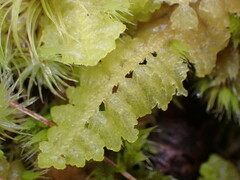 Lepidogyna hodgsoniaee0
- Outcome
- Hodgsonox (1), a new insecticidal sesquiterpenee0
- Setting
- New Zealande0
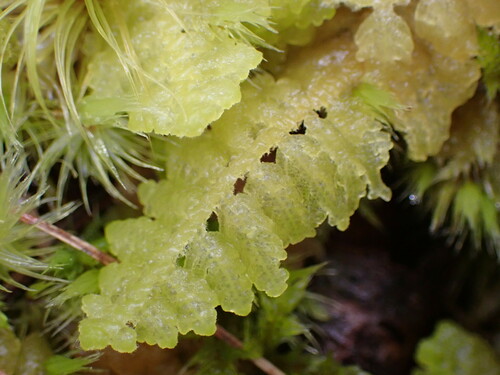
Organisms pictured · Representative pictures of the matched species, not figures from the paper.
Verbatim
e0“Hodgsonox (1), a new insecticidal sesquiterpene, has been isolated from the New Zealand liverwort Lepidolaena hodgsoniae”
Claim · model-written summary
Hodgsonox has a cyclopenta[5,1-c]pyran ring fused to oxirane.
- Taxon
- Lepidolaena hodgsoniaeLepidogyna hodgsoniaet0
- Outcome
- cyclopenta[5,1-c]pyran ring system fused to an oxirane ringe0
Organisms pictured · Representative pictures of the matched species, not figures from the paper.
Verbatim
e0“Hodgsonox represents a new class of sesquiterpene with a cyclopenta[5,1-c]pyran ring system fused to an oxirane ring”
t0“Lepidolaena hodgsoniae”
Claim · model-written summary
Its flanking double bond arrangement was reported as a unique structural feature.
- Taxon
- Lepidolaena hodgsoniaeLepidogyna hodgsoniaet0
- Outcome
- combination of a mono- and a 1,1 disubstituted double bond flanking the oxygenated carbon of a the pyran ringe0
Organisms pictured · Representative pictures of the matched species, not figures from the paper.
Verbatim
e0“The combination of a mono- and a 1,1 disubstituted double bond flanking the oxygenated carbon of a the pyran ring is a unique structural feature”
t0“Lepidolaena hodgsoniae”
Claim · model-written summary
Hodgsonox was toxic to Lucilia cuprina larvae.
- Taxon
- Lepidolaena hodgsoniaeLepidogyna hodgsoniaet0
- Outcome
- toxic to larvae of the blowfly Lucilia cuprinae0
Organisms pictured · Representative pictures of the matched species, not figures from the paper.
Verbatim
e0“Hodgsonox is toxic to larvae of the blowfly Lucilia cuprina”
t0“Lepidolaena hodgsoniae”