Abstract
Trials were conducted at Kabete and Kiboko in 1995-96 to evaluate the efficacy of some insecticides on short-, medium- and long-duration pigeon pea (Cajanus cajan) genotypes. At Kabete, endosulfan, dimethoate, pirimiphos-methyl, fluvalinate, Bacillus thuringiensis and neem extract were evaluated on short-duration genotype ICPL 87091. At Kiboko, endosulfan, dimethoate, pirimiphos-methyl, B. thuringiensis and deltamethrin were evaluated on short-duration ICPL 87091, medium-duration ICP 6927 and long-duration ICEAP 00020. The major insect pests on pigeon pea were pod borers (Helicoverpa armigera, Maruca vitrata, Etiella zinckenella and Lampides boeticus at Kiboko, and H. armigera, E. zinckenella and L. boeticus at Kabete), pod-sucking bugs (Clavigralla tomentosicollis) and pod fly (Melanagromyza chalcosoma). The results indicated that all sprays improved grain yields and seed quality at Kabete, with 57-152% grain yield gains with different insecticides. Endosulfan performed better among the high volume sprayed insecticides at Kabete. Pod fly damage was less in plots treated with dimethoate and endosulfan. Results from Kiboko showed that ultra-low-volume (ULV) spraying was more efficient than high volume sprayed insecticides. Endosulfan was also good among the high volume sprays. Spraying the short-duration genotype with ULV resulted in lower pest population than the medium- and long-duration genotypes. Neem extract and B. thuringiensis were not as effective as the synthetic insecticides at both locations.
Abstract from the paper’s OpenAlex record, shown for indexing and research. Copyright remains with the authors or the publisher. Read at the source ↗
The text the model read, with the source record’s inline markup (italics, sub- and superscripts) rendered and its character entities decoded; quote offsets refer to the raw text.
Claims 9
Claim · model-written summary
All insecticide sprays improved grain yields and seed quality of pigeon pea at Kabete.
- Taxon
- Pigeonpea
 Cajanus cajant0
- Treatment
- all sprayse0
- Outcome
- grain yields and seed qualitye0
- Direction
- improvede0
- Setting
- Kabetee0
Not reportedComparator
Organisms pictured · Representative pictures of the matched species, not figures from the paper.

Verbatim
e0“all sprays improved grain yields and seed quality at Kabete”
t0“Pigeonpea”
Claim · model-written summary
Different insecticides gave 57-152% grain yield gains in pigeon pea at Kabete.
- Taxon
- PigeonpeaCajanus cajant0
- Treatment
- different insecticidese0
- Outcome
- grain yielde0
- Direction
- gainse0
- Value
- 57-152%e0
- Setting
- Kabetee0
Not reportedComparator
Organisms pictured · Representative pictures of the matched species, not figures from the paper.
Verbatim
e0“all sprays improved grain yields and seed quality at Kabete, with 57-152% grain yield gains with different insecticides”
t0“Pigeonpea”
Claim · model-written summary
Among high-volume sprayed insecticides, endosulfan performed better at Kabete.
- Taxon
- PigeonpeaCajanus cajant0
- Treatment
- Endosulfane0
- Outcome
- performed bettere0
- Direction
- bettere0
- Comparator
- the high volume sprayed insecticidese0
- Setting
- Kabetee0
Organisms pictured · Representative pictures of the matched species, not figures from the paper.
Verbatim
e0“Endosulfan performed better among the high volume sprayed insecticides at Kabete”
t0“Pigeonpea”
Claim · model-written summary
Pod fly damage was less in plots treated with dimethoate and endosulfan.
- Taxon
- PigeonpeaCajanus cajant0
- Treatment
- dimethoate and endosulfane0
- Interactor
- Pod flye0pest
- Outcome
- Pod fly damagee0
- Direction
- lesse0
Not reportedComparator
Organisms pictured · Representative pictures of the matched species, not figures from the paper.
Verbatim
e0“Pod fly damage was less in plots treated with dimethoate and endosulfan”
t0“Pigeonpea”
Claim · model-written summary
At Kiboko, ultra-low-volume (ULV) spraying was more efficient than high volume sprayed insecticides.
- Taxon
- PigeonpeaCajanus cajant0
- Treatment
- ultra-low-volume (ULV) sprayinge0
- Outcome
- more efficiente0
- Direction
- more efficiente0
- Comparator
- high volume sprayed insecticidese0
- Setting
- Kibokoe0
Organisms pictured · Representative pictures of the matched species, not figures from the paper.
Verbatim
e0“Results from Kiboko showed that ultra-low-volume (ULV) spraying was more efficient than high volume sprayed insecticides”
t0“Pigeonpea”
Claim · model-written summary
At Kiboko, endosulfan was also good among the high volume sprays.
- Taxon
- PigeonpeaCajanus cajant0
- Treatment
- Endosulfane0
- Outcome
- goode0
- Direction
- goode0
- Comparator
- the high volume sprayse0
- Setting
- Kibokoe0
Organisms pictured · Representative pictures of the matched species, not figures from the paper.
Verbatim
e0“Results from Kiboko showed that ultra-low-volume (ULV) spraying was more efficient than high volume sprayed insecticides. Endosulfan was also good among the high volume sprays”
t0“Pigeonpea”
Claim · model-written summary
Spraying the short-duration genotype with ULV resulted in lower pest population than on the medium- and long-duration genotypes.
- Taxon
- PigeonpeaCajanus cajant0
- Material
- short-duration genotypee0
- Treatment
- ULVe0
- Outcome
- pest populatione0
- Direction
- lowere0
- Comparator
- the medium- and long-duration genotypese0
Organisms pictured · Representative pictures of the matched species, not figures from the paper.
Verbatim
e0“Spraying the short-duration genotype with ULV resulted in lower pest population than the medium- and long-duration genotypes”
t0“Pigeonpea”
Claim · model-written summary
Neem extract and B. thuringiensis were not as effective as the synthetic insecticides at both locations.
- Taxon
- PigeonpeaCajanus cajant0
- Treatment
- Neem extract and B. thuringiensise0
- Interactor
- B. thuringiensis
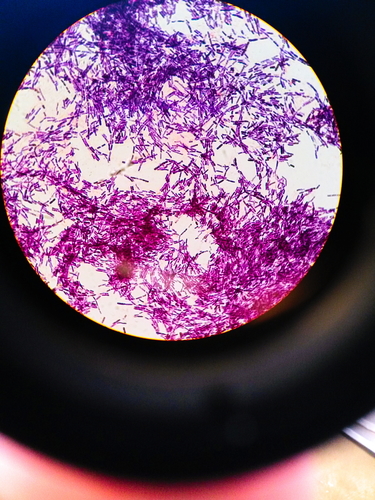
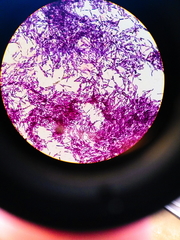 Bacillus thuringiensise0biocontrol_agent
- Outcome
- effectivee0
- Direction
- not as effectivee0
- Comparator
- synthetic insecticidese0
- Setting
- both locationse0
Organisms pictured · Representative pictures of the matched species, not figures from the paper.
Verbatim
e0“Neem extract and B. thuringiensis were not as effective as the synthetic insecticides at both locations”
t0“Pigeonpea”
Claim · model-written summary
The major insect pests on pigeon pea were pod borers, pod-sucking bugs and pod fly.
- Taxon
- pigeon peaCajanus cajane0
- Interactor
- pod borerse0pest
- Second interactor
- pod-sucking bugse0pest
- Outcome
- major insect pestse0
- Qualifier
- pod fly (Melanagromyza chalcosoma)e0
Not reportedDirection
Organisms pictured · Representative pictures of the matched species, not figures from the paper.
Verbatim
e0“The major insect pests on pigeon pea were pod borers (Helicoverpa armigera, Maruca vitrata, Etiella zinckenella and Lampides boeticus at Kiboko, and H. armigera, E. zinckenella and L. boeticus at Kabete), pod-sucking bugs (Clavigralla tomentosicollis) and pod fly (Melanagromyza chalcosoma)”
The same questions in other papers
endosulfan · pest · Cajanus cajan (pigeon pea)Results agree
2 papers in the same direction as this paper
- positive
- positive
dimethoate · pest · Cajanus cajan (pigeon pea)Results agree
5 papers in the same direction as this paper
- positive
- positive
- positive
2 papers more in this group
See all 6 papers →insecticide · yield · Cajanus cajan (pigeon pea)Positive and negative results
5 papers in the same direction as this paper · 1 in the opposite direction · 1 reporting no difference from an alternative
- no effect
- no effect
- positive
4 papers more in this group
See all 8 papers →application · quality: grain · Cajanus cajan (pigeon pea)Results agree
5 papers in the same direction as this paper
- positive
- positive
- positive
2 papers more in this group
See all 6 papers →Claims are grouped by organism, treatment and what was measured or targeted. A paper counts as positive when any of its claims in the group is positive.