Abstract
Magnaporthe oryzae, is one of the most destructive rice diseases worldwide. The aim of this study was to screen bacterial isolates to efficiently prevent the occurrence of rice blast. A total of 232 bacterial isolates were extracted from nonrhizospheric rice soil and were screened for antifungal activity against M. oryzae using a leaf segment assay. Strains S170 and S9 showed significant antagonistic activity against M. oryzae in vitro and in leaf disk assays, and controlled M. oryzae infection under greenhouse conditions. The results showed that strains S170 and S9 could effectively control rice leaf blast and panicle neck blast after five spray treatments in field. This suggested that the bacterial strains S170 and S9 were valuable and promising for the biocontrol of rice disease caused by M. oryzae. Based on 16S rDNA, and gyrA and gyrB gene sequence analyses, S170 and S9 were identified as Bacillus amyloliquefaciens and B. pumilus, respectively. The research also demonstrated that B. amyloliquefaciens S170 and B. pumilus S9 could colonize rice plants to prevent pathogenic infection and evidently suppressed plant disease caused by 11 other plant pathogenic fungi. This is the first study to demonstrate that B. amyloliquefaciens and B. pumilus isolated from nonrhizospheric rice soil are capable of recolonizing internal rice stem tissues.
Abstract from the paper’s OpenAlex record; open copy licensed cc-by-nc. Read at the source ↗
The text the model read, with the source record’s inline markup (italics, sub- and superscripts) rendered and its character entities decoded; quote offsets refer to the raw text.
Claims 8
Claim · model-written summary
S170 antagonized M. oryzae in vitro and in leaf disk assays and controlled infection in greenhouse conditions.
- Taxon
- Rice
 Oryza sativat0
- Treatment
- S170e0
- Interactor
- M. oryzae
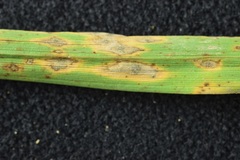 Pyricularia oryzaee0pathogen
- Second interactor
- S170e0biocontrol_agent
- Outcome
- M. oryzae infectione0
- Direction
- controllede0
Not reportedComparator
Organisms pictured · Representative pictures of the matched species, not figures from the paper.

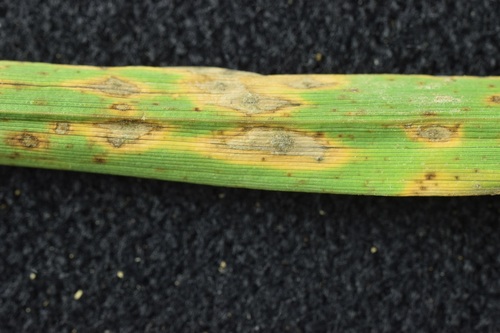
Verbatim
e0“Strains S170 and S9 showed significant antagonistic activity against M. oryzae in vitro and in leaf disk assays, and controlled M. oryzae infection under greenhouse conditions”
t0“Biocontrol of Rice Blast”
Claim · model-written summary
S9 antagonized M. oryzae in vitro and in leaf disk assays and controlled infection in greenhouse conditions.
- Taxon
- RiceOryza sativat0
- Treatment
- S9e0
- Interactor
- M. oryzaePyricularia oryzaee0pathogen
- Second interactor
- S9e0biocontrol_agent
- Outcome
- M. oryzae infectione0
- Direction
- controllede0
Not reportedComparator
Organisms pictured · Representative pictures of the matched species, not figures from the paper.
Verbatim
e0“Strains S170 and S9 showed significant antagonistic activity against M. oryzae in vitro and in leaf disk assays, and controlled M. oryzae infection under greenhouse conditions”
t0“Biocontrol of Rice Blast”
Claim · model-written summary
Five sprays of S170 controlled rice leaf blast and panicle neck blast in the field.
- Taxon
- riceOryza sativae0
- Treatment
- S170e0
- Outcome
- rice leaf blast and panicle neck blaste0
- Direction
- controle0
- Setting
- fielde0
Not reportedInteractorInteractor roleComparator
Organisms pictured · Representative pictures of the matched species, not figures from the paper.
Verbatim
e0“strains S170 and S9 could effectively control rice leaf blast and panicle neck blast after five spray treatments in field”
Claim · model-written summary
Five sprays of S9 controlled rice leaf blast and panicle neck blast in the field.
- Taxon
- riceOryza sativae0
- Treatment
- S9e0
- Outcome
- rice leaf blast and panicle neck blaste0
- Direction
- controle0
- Setting
- fielde0
Not reportedComparator
Organisms pictured · Representative pictures of the matched species, not figures from the paper.
Verbatim
e0“strains S170 and S9 could effectively control rice leaf blast and panicle neck blast after five spray treatments in field”
Claim · model-written summary
S170 was identified as Bacillus amyloliquefaciens.
- Taxon
- Bacillus amyloliquefaciens
 Bacillus amyloliquefaciense0
- Outcome
- identified as Bacillus amyloliquefaciense0
Organisms pictured · Representative pictures of the matched species, not figures from the paper.

Verbatim
e0“S170 and S9 were identified as Bacillus amyloliquefaciens and B. pumilus, respectively”
t0“Biocontrol of Rice Blast”
Claim · model-written summary
S9 was identified as B. pumilus.
- Taxon
- B. pumilusBacillus pumiluse0
- Outcome
- identified as Bacillus amyloliquefaciens and B. pumiluse0
Verbatim
e0“S170 and S9 were identified as Bacillus amyloliquefaciens and B. pumilus, respectively”
Claim · model-written summary
B. amyloliquefaciens S170 colonized rice plants and suppressed disease caused by 11 other pathogenic fungi.
- Taxon
- riceOryza sativae0
- Treatment
- B. amyloliquefaciens S170e0
- Interactor
- plant pathogenic fungie0pathogen
- Second interactor
- B. amyloliquefaciens S170Bacillus amyloliquefaciense0biocontrol_agent
- Outcome
- plant disease caused by 11 other plant pathogenic fungie0
- Direction
- suppressede0
Not reportedComparator
Organisms pictured · Representative pictures of the matched species, not figures from the paper.
Verbatim
e0“B. amyloliquefaciens S170 and B. pumilus S9 could colonize rice plants to prevent pathogenic infection and evidently suppressed plant disease caused by 11 other plant pathogenic fungi”
Claim · model-written summary
B. pumilus S9 colonized rice plants and suppressed disease caused by 11 other pathogenic fungi.
- Taxon
- riceOryza sativae0
- Treatment
- B. pumilus S9e0
- Interactor
- plant pathogenic fungie0pathogen
- Second interactor
- B. pumilus S9Bacillus pumiluse0biocontrol_agent
- Outcome
- plant disease caused by 11 other plant pathogenic fungie0
- Direction
- suppressede0
Not reportedComparator
Organisms pictured · Representative pictures of the matched species, not figures from the paper.
Verbatim
e0“B. amyloliquefaciens S170 and B. pumilus S9 could colonize rice plants to prevent pathogenic infection and evidently suppressed plant disease caused by 11 other plant pathogenic fungi”
The same questions in other papers
Bacillus pumilus · disease · Oryza sativa (rice)Positive and negative results
1 paper in the same direction as this paper · 1 in the opposite direction
- negative
- positive
Bacillus amyloliquefaciens · disease · Oryza sativa (rice)Results agree
3 papers in the same direction as this paper
- positive
- positive
- positive
Claims are grouped by organism, treatment and what was measured or targeted. A paper counts as positive when any of its claims in the group is positive.