Abstract
In order to study the growth promoting potential of endophytic bacteria from Rehmannia glutinosa Libosch, a total of 25 different bacteria belonging to 7 genera were identified by 16S rRNA gene sequencing, including Bacillus, Micrococcus, Lysinibacillus, Brevibacterium, Halomonas, Kocuria and Terribacillus. In this study, thirteen bacterial strains were found to solubilize inorganic phosphate, with the isolate Kocuria rosea (EH15) having the highest phosphorus dissolution activity (3.70 μg/mL). Twelve isolates were positive for nitrogen fixation abilities. Twenty-two strains produced indole-3-acetic acid (IAA) in the presence of L-tryptophan, and eleven of the twenty-two isolates synthesized IAA in the absence of L-tryptophan. The strain K. rosea (EH15) was capable of producing the highest IAA amount (15.36 and 7.98 mg/L) in Luria Bertani (LB) broth containing 0.2% L-tryptophan and lacking L-tryptophan, respectively. Ten isolates had siderophore production abilities with Bacillus amyloliquefacieus EH10 (0.26) and Brevibacterium frigoritolerans EH13 (0.32) showing high siderophore production characteristics. Five bacteria endogenous were selected to evaluate the growth parameters of Brassica napus L. and all isolates exhibited a significantly greater increase in seedling height, root length, fresh weight and dry weight, than the control plants. The greatest improvement appeared in the case of co-inoculation of EH10 and EH15, except in dry weight, and the biggest enhancement in dry weight occurred in the strain EH15. In general, these endophytic bacteria indicate a potential as microbial fertilizers to promote the growth of R. glutinosa Libosch.
Abstract from the paper’s OpenAlex record, shown for indexing and research. Copyright remains with the authors or the publisher. Read at the source ↗
The text the model read, with the source record’s inline markup (italics, sub- and superscripts) rendered and its character entities decoded; quote offsets refer to the raw text.
Claims 13
Claim · model-written summary
Twenty-five endophytic bacteria from seven genera were identified.
- Taxon
- Rehmannia glutinosa Libosch
 Rehmannia glutinosat0
- Outcome
- 25 different bacteria belonging to 7 generae0
- Value
- 25e0
Organisms pictured · Representative pictures of the matched species, not figures from the paper.

Verbatim
e0“a total of 25 different bacteria belonging to 7 genera were identified by 16S rRNA gene sequencing, including Bacillus, Micrococcus, Lysinibacillus, Brevibacterium, Halomonas, Kocuria and Terribacillus”
t0“Rehmannia glutinosa Libosch”
Claim · model-written summary
Thirteen isolates solubilized inorganic phosphate.
- Taxon
- Rehmannia glutinosa LiboschRehmannia glutinosat0
- Outcome
- thirteen bacterial strains were found to solubilize inorganic phosphatee0
Organisms pictured · Representative pictures of the matched species, not figures from the paper.
Verbatim
e0“thirteen bacterial strains were found to solubilize inorganic phosphate”
t0“Rehmannia glutinosa Libosch”
Claim · model-written summary
Kocuria rosea EH15 had the highest phosphate dissolution, 3.70 μg/mL.
- Taxon
- Rehmannia glutinosa LiboschRehmannia glutinosat0
- Interactor
- Kocuria rosea (EH15)
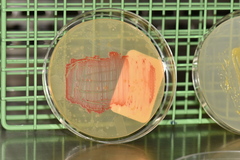 Kocuria roseae0symbiont
- Outcome
- phosphorus dissolution activitye0
- Direction
- higheste0
- Value
- 3.70 μg/mLe0
Organisms pictured · Representative pictures of the matched species, not figures from the paper.

Verbatim
e0“Kocuria rosea (EH15) having the highest phosphorus dissolution activity (3.70 μg/mL)”
t0“Rehmannia glutinosa Libosch”
Claim · model-written summary
Twelve isolates fixed nitrogen.
- Taxon
- Rehmannia glutinosa LiboschRehmannia glutinosat0
- Outcome
- nitrogen fixation abilitiese0
Organisms pictured · Representative pictures of the matched species, not figures from the paper.
Verbatim
e0“Twelve isolates were positive for nitrogen fixation abilities”
t0“Rehmannia glutinosa Libosch”
Claim · model-written summary
Twenty-two strains produced IAA with L-tryptophan.
- Taxon
- Rehmannia glutinosa LiboschRehmannia glutinosat0
- Outcome
- produced indole-3-acetic acid (IAA)e0
- Qualifier
- presence of L-tryptophane0
Organisms pictured · Representative pictures of the matched species, not figures from the paper.
Verbatim
e0“Twenty-two strains produced indole-3-acetic acid (IAA) in the presence of L-tryptophan”
t0“Rehmannia glutinosa Libosch”
Claim · model-written summary
Eleven isolates produced IAA without L-tryptophan.
- Taxon
- Rehmannia glutinosa LiboschRehmannia glutinosat0
- Outcome
- synthesized IAAe0
- Qualifier
- absence of L-tryptophane0
Organisms pictured · Representative pictures of the matched species, not figures from the paper.
Verbatim
e0“eleven of the twenty-two isolates synthesized IAA in the absence of L-tryptophan”
t0“Rehmannia glutinosa Libosch”
Claim · model-written summary
EH15 produced 15.36 mg/L IAA with L-tryptophan.
- Taxon
- Rehmannia glutinosa LiboschRehmannia glutinosat0
- Interactor
- K. rosea (EH15)Kocuria roseae0symbiont
- Outcome
- IAA amounte0
- Value
- 15.36 and 7.98 mg/Le0
Organisms pictured · Representative pictures of the matched species, not figures from the paper.
Verbatim
e0“The strain K. rosea (EH15) was capable of producing the highest IAA amount (15.36 and 7.98 mg/L) in Luria Bertani (LB) broth containing 0.2% L-tryptophan and lacking L-tryptophan, respectively”
t0“Rehmannia glutinosa Libosch”
Claim · model-written summary
Ten isolates produced siderophores.
- Taxon
- Rehmannia glutinosa LiboschRehmannia glutinosat0
- Outcome
- siderophore production abilitiese0
Organisms pictured · Representative pictures of the matched species, not figures from the paper.
Verbatim
e0“Ten isolates had siderophore production abilities”
t0“Rehmannia glutinosa Libosch”
Claim · model-written summary
EH10 had high siderophore production, 0.26.
- Taxon
- Rehmannia glutinosa LiboschRehmannia glutinosat0
- Interactor
- Bacillus amyloliquefacieus EH10e0symbiont
- Outcome
- siderophore production characteristicse0
- Value
- 0.26e0
Organisms pictured · Representative pictures of the matched species, not figures from the paper.
Verbatim
e0“Bacillus amyloliquefacieus EH10 (0.26) and Brevibacterium frigoritolerans EH13 (0.32) showing high siderophore production characteristics”
t0“Rehmannia glutinosa Libosch”
Claim · model-written summary
EH13 had high siderophore production, 0.32.
- Taxon
- Rehmannia glutinosa LiboschRehmannia glutinosat0
- Interactor
- Brevibacterium frigoritolerans EH13Peribacillus frigoritoleranse0symbiont
- Outcome
- siderophore production characteristicse0
- Value
- 0.32e0
Organisms pictured · Representative pictures of the matched species, not figures from the paper.
Verbatim
e0“Bacillus amyloliquefacieus EH10 (0.26) and Brevibacterium frigoritolerans EH13 (0.32) showing high siderophore production characteristics”
t0“Rehmannia glutinosa Libosch”
Claim · model-written summary
Each of five isolates significantly increased Brassica seedling height, root length and biomass.
- Taxon
- Brassica napus L.
 Brassica napust0
- Treatment
- all isolatese0
- Outcome
- seedling height, root length, fresh weight and dry weighte0
- Direction
- increasee0
- Comparator
- control plantse0
Organisms pictured · Representative pictures of the matched species, not figures from the paper.

Verbatim
e0“all isolates exhibited a significantly greater increase in seedling height, root length, fresh weight and dry weight, than the control plants”
t0“Brassica napus L.”
Claim · model-written summary
EH10 and EH15 co-inoculation gave the greatest improvement except in dry weight.
- Taxon
- Brassica napus L.Brassica napust0
- Treatment
- co-inoculation of EH10 and EH15e0
- Outcome
- greatest improvemente0
- Direction
- greateste0
Not reportedComparator
Organisms pictured · Representative pictures of the matched species, not figures from the paper.
Verbatim
e0“greatest improvement appeared in the case of co-inoculation of EH10 and EH15, except in dry weight”
t0“Brassica napus L.”
Claim · model-written summary
EH15 gave the greatest dry-weight enhancement.
- Taxon
- Brassica napus L.Brassica napust0
- Treatment
- strain EH15e0
- Outcome
- dry weighte0
- Direction
- biggest enhancemente0
Not reportedComparator
Organisms pictured · Representative pictures of the matched species, not figures from the paper.
Verbatim
e0“biggest enhancement in dry weight occurred in the strain EH15”
t0“Brassica napus L.”