Abstract
Field studies were conducted on cotton mealybug, Phenacoccus solenopsis Tinsley (Hemiptera: Sternorrhyncha: Coccoidea: Pseudococcidae) which infested green bean plants at Atfih distract, Giza Governorate, Egypt during two successive summer and nili seasons of 2016 and 2017. The population density, activity periods and the effects of some weather factors on P. solenopsis and its associated natural enemies were considered. The obtained results revealed that in summer season the total numbers of alive stages had one peak of activity in the 3rd of July during the first and second seasons (2016 and 2017), successively. While, in nili season the total number of alive stages had one peak of activity in the 3rd and the 17th December, during the first and second seasons (2016 and 2017), respectively. The total effects of some weather factors such as maximum and minimum air temperature (°C) and relative humidity percentage (RH%) showed significantly positive relationship with the cotton mealybug population. During this study, three hymenopterous solitary endparasitoids and four predacious species were recorded. The parasitoids were Aenasius arizonensis (Girault), Anagyrus pseudococci (Girault) and Acerophagus gutierreziae Timberlake (Encyrtidae). The predacious ones were Scymnus syriacus Mars., Coccinella undecimpunctata (L.) (Coleoptera: Coccinellidae), Chrysoperla carnea (Stephens) (Neuroptera: Chrysopidae) and Orius laevigatus (Fiber.) (Hemiptera: Anthocoridae). In an attempt to control this insect pest specie, eight insecticides namely, mineral oil, lufenuron, chlorpyrifos, malathion, deltamethrin, buprofezin, thiamethoxam and imidacloprid were tested on P. solenopsis and its natural enemies on green bean under field conditions. The obtained resultsindicated that imidacloprid was the highest efficacy against P. solenopsis recording 90.71–89.17% reduction of the insect population after 21 days of application. Also imidacloprid was the highest efficacy against parasitoids and predators of the cotton mealybug. IGRs toxicants (buprofezin and lufenuron) found to be safer to the predacious insects than other tested insecticides.
Abstract from the paper’s OpenAlex record, shown for indexing and research. Copyright remains with the authors or the publisher. Read at the source ↗
The text the model read, with the source record’s inline markup (italics, sub- and superscripts) rendered and its character entities decoded; quote offsets refer to the raw text.
Claims 10
Claim · model-written summary
Mealybug live stages peaked on 3 July in both summer seasons.
- Taxon
- green beane1
- Interactor
- Phenacoccus solenopsis
 Phenacoccus solenopsise1pest
- Outcome
- total numbers of alive stagese0
- Qualifier
- in the 3rd of July during the first and second seasons (2016 and 2017)e0
- Setting
- Atfih distract, Giza Governorate, Egypte1
Organisms pictured · Representative pictures of the matched species, not figures from the paper.

Verbatim
e0“in summer season the total numbers of alive stages had one peak of activity in the 3rd of July during the first and second seasons (2016 and 2017)”
e1“Phenacoccus solenopsis Tinsley (Hemiptera: Sternorrhyncha: Coccoidea: Pseudococcidae) which infested green bean plants at Atfih distract, Giza Governorate, Egypt”
Claim · model-written summary
Mealybug live stages peaked on 3 December in the first nili season.
- Taxon
- green beane1
- Interactor
- Phenacoccus solenopsisPhenacoccus solenopsise1pest
- Outcome
- total number of alive stagese0
- Qualifier
- the 3rd and the 17th December, during the first and second seasons (2016 and 2017), respectivelye0
Organisms pictured · Representative pictures of the matched species, not figures from the paper.
Verbatim
e0“in nili season the total number of alive stages had one peak of activity in the 3rd and the 17th December, during the first and second seasons (2016 and 2017), respectively”
e1“Phenacoccus solenopsis Tinsley (Hemiptera: Sternorrhyncha: Coccoidea: Pseudococcidae) which infested green bean plants”
Claim · model-written summary
Mealybug live stages peaked on 17 December in the second nili season.
- Taxon
- green beane1
- Interactor
- Phenacoccus solenopsisPhenacoccus solenopsise1pest
- Outcome
- total number of alive stagese0
- Qualifier
- the 3rd and the 17th December, during the first and second seasons (2016 and 2017), respectivelye0
Organisms pictured · Representative pictures of the matched species, not figures from the paper.
Verbatim
e0“in nili season the total number of alive stages had one peak of activity in the 3rd and the 17th December, during the first and second seasons (2016 and 2017), respectively”
e1“Phenacoccus solenopsis Tinsley (Hemiptera: Sternorrhyncha: Coccoidea: Pseudococcidae) which infested green bean plants”
Claim · model-written summary
Maximum and minimum temperature and relative humidity were positively related to mealybug population.
Verbatim
e0“maximum and minimum air temperature (°C) and relative humidity percentage (RH%) showed significantly positive relationship with the cotton mealybug population”
e1“green bean plants”
Claim · model-written summary
Three solitary endoparasitoid species were recorded with the mealybug.
- Taxon
- green beane2
- Interactor
- Aenasius arizonensisAenasius arizonensise0biocontrol_agent
- Second interactor
- Anagyrus pseudococciAnagyrus pseudococcie0biocontrol_agent
- Outcome
- three hymenopterous solitary endparasitoidse1
- Qualifier
- Acerophagus gutierreziaee0
Verbatim
e0“The parasitoids were Aenasius arizonensis (Girault), Anagyrus pseudococci (Girault) and Acerophagus gutierreziae Timberlake (Encyrtidae).”
e1“three hymenopterous solitary endparasitoids and four predacious species were recorded”
e2“green bean plants”
Claim · model-written summary
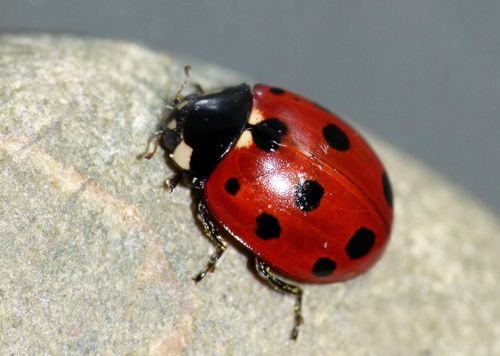
Four predatory species were recorded with the mealybug.
- Taxon
- green beane2
- Interactor
- Scymnus syriacuse0biocontrol_agent
- Second interactor
- Coccinella undecimpunctata
Coccinella undecimpunctatae0biocontrol_agent
- Outcome
- four predacious speciese1
- Qualifier
- Chrysoperla carnea (Stephens) (Neuroptera: Chrysopidae) and Orius laevigatuse0
Organisms pictured · Representative pictures of the matched species, not figures from the paper.
Verbatim
e0“The predacious ones were Scymnus syriacus Mars., Coccinella undecimpunctata (L.) (Coleoptera: Coccinellidae), Chrysoperla carnea (Stephens) (Neuroptera: Chrysopidae) and Orius laevigatus (Fiber.) (Hemiptera: Anthocoridae).”
e1“four predacious species were recorded”
e2“green bean plants”
Claim · model-written summary
Imidacloprid gave the greatest mealybug reduction, 90.71–89.17% after 21 days.
- Taxon
- green beane1
- Treatment
- imidaclopride0
- Interactor
- P. solenopsisPhenacoccus solenopsise0pest
- Outcome
- insect populatione0
- Direction
- reductione0
- Value
- 90.71–89.17%e0
- Qualifier
- after 21 days of applicatione0
- Setting
- field conditionse1
Not reportedComparator
Organisms pictured · Representative pictures of the matched species, not figures from the paper.
Verbatim
e0“imidacloprid was the highest efficacy against P. solenopsis recording 90.71–89.17% reduction of the insect population after 21 days of application”
e1“on green bean under field conditions”
Claim · model-written summary
Imidacloprid had the greatest efficacy against mealybug parasitoids and predators.
- Taxon
- green beane1
- Treatment
- imidaclopride0
- Interactor
- cotton mealybuge0pest
- Outcome
- efficacy against parasitoids and predators of the cotton mealybuge0
- Direction
- higheste0
Not reportedComparator
Verbatim
e0“imidacloprid was the highest efficacy against parasitoids and predators of the cotton mealybug”
e1“on green bean under field conditions”
Claim · model-written summary
Buprofezin was safer for predatory insects than other tested insecticides.
Verbatim
e0“IGRs toxicants (buprofezin and lufenuron) found to be safer to the predacious insects than other tested insecticides”
e1“on green bean under field conditions”
Claim · model-written summary
Lufenuron was safer for predatory insects than other tested insecticides.
Verbatim
e0“IGRs toxicants (buprofezin and lufenuron) found to be safer to the predacious insects than other tested insecticides”
e1“on green bean under field conditions”
The same questions in other papers
imidacloprid · control · Phaseolus vulgaris (common bean)Positive and negative results
1 in the opposite direction
- positive
Claims are grouped by organism, treatment and what was measured or targeted. A paper counts as positive when any of its claims in the group is positive.