Abstract
Abstract Soil nutrient management system characterized by reduced input of inorganic fertilizers integrated with organic amendments is one of the alternatives for reducing deleterious environmental impact of synthetic fertilizers, suppressing soil-borne pests and diseases, and improving soil health and crop yield. A hypothesis of the present study was that lower rates of urea mixed with higher rates of plant compost (PC) would improve nematode community structure, soil food web condition, soil biological, and physiochemical properties, and yield and quality of a processing carrot ( Daucus carota ) cultivar. Urea and PC were each applied at 135 kg nitrogen (N)/ha alone or at 3:1, 1:1, and 1:3 ratios annually during the 2012 to 2014 growing seasons. A non-amended check served as a control. Nematode community was analyzed from soil samples collected approximately 4-week intervals from planting to 133 days after planting each year. Soil respiration, as a measure of soil biological activity, and soil physiochemical properties were determined from soils collected at planting and at harvest in 2012 and 2013. Results showed that PC alone, and U1:PC1 resulted in soil food web structure significantly above 50 at harvest in 2014. Urea significantly decreased end-of-season soil pH, but increased NO 3 -N compared with the other treatments. While the herbivore population density was low, abundances of Tylenchus and Malenchus were negatively correlated with carrot fresh weight of marketable carrot. Overall, results suggest that integrating lower rates of urea and higher rates of PC are likely to increase soil biological activity, soil pH, and phosphorus content.
Abstract from the paper’s OpenAlex record; open copy licensed cc-by. Read at the source ↗
The text the model read, with the source record’s inline markup (italics, sub- and superscripts) rendered and its character entities decoded; quote offsets refer to the raw text.
Claims 9
Claim · model-written summary
Plant compost alone raised soil food web structure above 50 at harvest in 2014.
- Treatment
- PC alonee0
- Outcome
- soil food web structuree0
- Direction
- abovee0
- Value
- 50e0
- Qualifier
- at harvest in 2014e0
Not reportedTaxonComparator
Verbatim
e0“PC alone, and U1:PC1 resulted in soil food web structure significantly above 50 at harvest in 2014.”
Claim · model-written summary
The U1:PC1 mixture raised soil food web structure above 50 at harvest in 2014.
- Treatment
- U1:PC1e0
- Outcome
- soil food web structuree0
- Direction
- abovee0
- Value
- 50e0
- Qualifier
- at harvest in 2014e0
Not reportedTaxonComparator
Verbatim
e0“PC alone, and U1:PC1 resulted in soil food web structure significantly above 50 at harvest in 2014.”
Claim · model-written summary
Urea lowered end-of-season soil pH compared with other treatments.
Not reportedTaxon
Verbatim
e0“Urea significantly decreased end-of-season soil pH, but increased NO 3 -N compared with the other treatments.”
Claim · model-written summary
Urea increased soil nitrate nitrogen compared with other treatments.
Not reportedTaxon
Verbatim
e0“Urea significantly decreased end-of-season soil pH, but increased NO 3 -N compared with the other treatments.”
Claim · model-written summary
Tylenchus abundance was negatively correlated with fresh weight of marketable carrot.
- Taxon
- carrot
 Daucus carotae0
- Outcome
- carrot fresh weight of marketable carrote0
- Direction
- negatively correlatede0
Organisms pictured · Representative pictures of the matched species, not figures from the paper.

Verbatim
e0“abundances of Tylenchus and Malenchus were negatively correlated with carrot fresh weight of marketable carrot.”
Claim · model-written summary
Malenchus abundance was negatively correlated with fresh weight of marketable carrot.
- Taxon
- carrotDaucus carotae0
- Outcome
- carrot fresh weight of marketable carrote0
- Direction
- negatively correlatede0
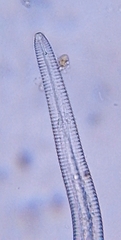 Malenchus
Organisms pictured · Representative pictures of the matched species, not figures from the paper.
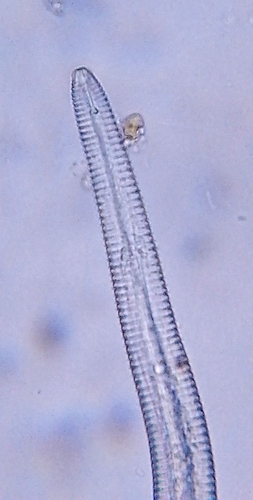
Verbatim
e0“abundances of Tylenchus and Malenchus were negatively correlated with carrot fresh weight of marketable carrot.”
Claim · model-written summary
The authors suggest lower urea and higher compost rates are likely to increase soil biological activity.
- Treatment
- integrating lower rates of urea and higher rates of PCe0
- Outcome
- increase soil biological activitye0
Not reportedTaxonDirection
Verbatim
e0“integrating lower rates of urea and higher rates of PC are likely to increase soil biological activity, soil pH, and phosphorus content.”
Claim · model-written summary
The authors suggest lower urea and higher compost rates are likely to increase soil pH.
- Outcome
- soil pHe0
Not reportedTaxonDirection
Verbatim
e0“integrating lower rates of urea and higher rates of PC are likely to increase soil biological activity, soil pH, and phosphorus content.”
Claim · model-written summary
The authors suggest lower urea and higher compost rates are likely to increase phosphorus content.
- Outcome
- phosphorus contente0
Not reportedTaxonDirection
Verbatim
e0“integrating lower rates of urea and higher rates of PC are likely to increase soil biological activity, soil pH, and phosphorus content.”
The same questions in other papers
fertilization · soil: physics · Daucus carota (carrot)Positive and negative results
3 papers in the same direction as this paper · 1 in the opposite direction
- negative
- positive
- positive
1 paper more in this group
See all 5 papers →Claims are grouped by organism, treatment and what was measured or targeted. A paper counts as positive when any of its claims in the group is positive.