Abstract
On the North China Plain, one of the most water-deficient regions in China, bare fallow has been implemented over a large-scale area to conserve water during the growth season of water-intensive winter wheat since 2015. However, the effects of this bare fallow on fungal community and the occurrence of crop diseases are poorly understood. Here we measured soil chemical properties, fungal community composition, and the occurrence of crop diseases after 15 years of long-term fallow (continuous maize or soybean) and non-fallow (maize-wheat rotation; soybean-wheat rotation) cropping systems. Bare fallow during the winter-wheat growth season significantly decreased soil organic matter, available nitrogen, and phosphorus. It also changed the composition of soil fungal communities, i.e., increased relative abundances of some potentially pathogenic species of Lectera, Fusarium, and Volutella but decreased beneficial Cladorrhium and Schizothecium. Meanwhile, the epidemic tendency of maize diseases changed correspondingly: the disease index of southern corn leaf blight and maize brown spot increased, but the incidence of stalk rot decreased compared with the non-fallow system. Soybean diseases were very mild regardless of the cropping system during the total experimental period. Network analysis demonstrated that the soil fungal diversity associated with maize diseases was affected by the decreased soil organic matter and available nitrogen and phosphorus. Our results suggest that bare fallow in the winter-wheat season affected the soil chemical properties, fungal community, and the occurrence of maize fungal diseases.
Abstract from the paper’s OpenAlex record, shown for indexing and research. Copyright remains with the authors or the publisher. Read at the source ↗
The text the model read, with the source record’s inline markup (italics, sub- and superscripts) rendered and its character entities decoded; quote offsets refer to the raw text.
Claims 7
Claim · model-written summary
Bare fallow during the winter-wheat season decreased soil organic matter, available nitrogen and available phosphorus compared with the non-fallow system.
- Treatment
- Bare fallow during the winter-wheat growth seasone0
- Outcome
- soil organic matter, available nitrogen, and phosphoruse0
- Direction
- decreasede0
- Comparator
- non-fallow systeme1
Not reportedTaxon
Verbatim
e0“Bare fallow during the winter-wheat growth season significantly decreased soil organic matter, available nitrogen, and phosphorus”
e1“the disease index of southern corn leaf blight and maize brown spot increased, but the incidence of stalk rot decreased compared with the non-fallow system”
Claim · model-written summary
Bare fallow increased relative abundances of some potentially pathogenic fungi of maize, including Fusarium and Volutella, compared with the non-fallow system.
- Treatment
- Bare fallow during the winter-wheat growth seasone0
- Second interactor
- Volutellae2pathogen
- Outcome
- relative abundances of some potentially pathogenic speciese2
- Direction
- increasede2
- Qualifier
- Lecterae2
- Comparator
- non-fallow systeme1
 Zea mays
 Fusarium
Organisms pictured · Representative pictures of the matched species, not figures from the paper.


Verbatim
e0“Bare fallow during the winter-wheat growth season significantly decreased soil organic matter, available nitrogen, and phosphorus”
e1“the disease index of southern corn leaf blight and maize brown spot increased, but the incidence of stalk rot decreased compared with the non-fallow system”
e2“It also changed the composition of soil fungal communities, i.e., increased relative abundances of some potentially pathogenic species of Lectera, Fusarium, and Volutella but decreased beneficial Cladorrhium and Schizothecium”
t0“the Occurrence of Maize Fungal Diseases”
Claim · model-written summary
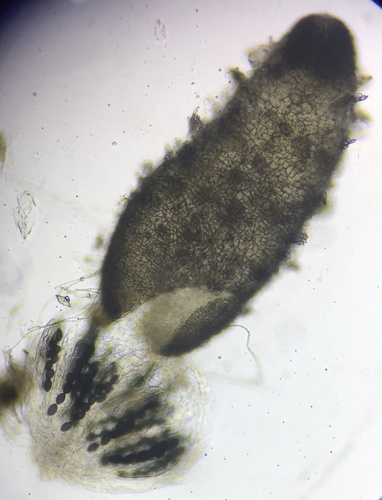
Bare fallow decreased the relative abundances of beneficial Cladorrhium and Schizothecium fungi.
- Treatment
- Bare fallow during the winter-wheat growth seasone0
- Interactor
- Cladorrhiume2other
- Second interactor
- Schizothecium
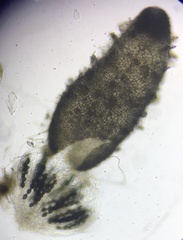 Schizotheciume2other
- Outcome
- beneficial Cladorrhium and Schizotheciume2
- Direction
- decreasede2
Not reportedComparator
Organisms pictured · Representative pictures of the matched species, not figures from the paper.
Verbatim
e0“Bare fallow during the winter-wheat growth season significantly decreased soil organic matter, available nitrogen, and phosphorus”
e2“It also changed the composition of soil fungal communities, i.e., increased relative abundances of some potentially pathogenic species of Lectera, Fusarium, and Volutella but decreased beneficial Cladorrhium and Schizothecium”
t0“the Occurrence of Maize Fungal Diseases”
Claim · model-written summary
Bare fallow increased the disease index of southern corn leaf blight and maize brown spot compared with the non-fallow system.
- Treatment
- Bare fallow during the winter-wheat growth seasone0
- Outcome
- disease index of southern corn leaf blight and maize brown spote1
- Direction
- increasede1
- Comparator
- non-fallow systeme1
Organisms pictured · Representative pictures of the matched species, not figures from the paper.
Verbatim
e0“Bare fallow during the winter-wheat growth season significantly decreased soil organic matter, available nitrogen, and phosphorus”
e1“the disease index of southern corn leaf blight and maize brown spot increased, but the incidence of stalk rot decreased compared with the non-fallow system”
t0“the Occurrence of Maize Fungal Diseases”
Claim · model-written summary
Bare fallow decreased the incidence of maize stalk rot compared with the non-fallow system.
- Treatment
- Bare fallow during the winter-wheat growth seasone0
- Outcome
- incidence of stalk rote1
- Direction
- decreasede1
- Comparator
- non-fallow systeme1
Organisms pictured · Representative pictures of the matched species, not figures from the paper.
Verbatim
e0“Bare fallow during the winter-wheat growth season significantly decreased soil organic matter, available nitrogen, and phosphorus”
e1“the disease index of southern corn leaf blight and maize brown spot increased, but the incidence of stalk rot decreased compared with the non-fallow system”
t0“the Occurrence of Maize Fungal Diseases”
Claim · model-written summary
Soybean diseases were very mild regardless of the cropping system.
- Taxon
- Soybean
 Glycine maxe3
- Outcome
- diseasese3
- Qualifier
- very mild regardless of the cropping system during the total experimental periode3
Organisms pictured · Representative pictures of the matched species, not figures from the paper.

Verbatim
e3“Soybean diseases were very mild regardless of the cropping system during the total experimental period”
Claim · model-written summary
Soil fungal diversity associated with maize diseases was affected by decreased soil organic matter and available nitrogen and phosphorus.
- Treatment
- decreased soil organic matter and available nitrogen and phosphoruse4
- Outcome
- soil fungal diversity associated with maize diseasese4
Not reportedDirection
Organisms pictured · Representative pictures of the matched species, not figures from the paper.
Verbatim
t0“the Occurrence of Maize Fungal Diseases”
e4“Network analysis demonstrated that the soil fungal diversity associated with maize diseases was affected by the decreased soil organic matter and available nitrogen and phosphorus”
The same questions in other papers
rotation · Fusarium · Zea mays (maize)Positive and negative results
1 in the opposite direction
- positive
climate site · disease · Zea mays (maize)Positive and negative results
1 paper in the same direction as this paper · 5 in the opposite direction
- negative
- negative
- negative
3 papers more in this group
See all 7 papers →climate site · organism · Zea mays (maize)Positive and negative results
5 papers in the same direction as this paper · 2 in the opposite direction
- positive
- positive
- no effect
4 papers more in this group
See all 8 papers →rotation · disease · Zea mays (maize)Positive and negative results
6 papers in the same direction as this paper · 4 in the opposite direction · 1 reporting no difference from an alternative
- negative
- negative
- no effect
8 papers more in this group
See all 12 papers →rotation · organism · Zea mays (maize)Positive and negative results
2 papers in the same direction as this paper · 11 in the opposite direction
- positive
- positive
- positive
10 papers more in this group
See all 14 papers →Claims are grouped by organism, treatment and what was measured or targeted. A paper counts as positive when any of its claims in the group is positive.