Abstract
Pterocarpus angolensis , a leguminous tree native to the dry woodlands of Southern Africa, provides valuable timber, but is threatened by land conversion and overharvesting while showing limited natural regeneration. Nitrogen-fixing root nodule symbionts that could improve establishment of young seedlings have not yet been described. Therefore, we investigated the ability of P. angolensis to form nodules with a diverse range of rhizobia. In drought-prone areas under climate change with higher temperatures, inoculants that are heat-tolerant and adapted to these conditions are likely to be of advantage. Sources of bacterial isolates were roots of P. angolensis from nurseries in the Kavango region, other shrubs from this area growing near Pterocarpus such as Indigofera rautanenii , Desmodium barbatum , Chamaecrista sp., or shrubs from drought-prone areas in Namaqualand ( Wiborgia monoptera , Leobordea digitata ) or Kalahari ( Indigofera alternans ). Only slight protrusions were observed on P. angolensis roots, from which a non-nodulating Microbacterium sp. was isolated. Rhizobia that were isolated from nodules of other shrubs were affiliated to Bradyrhizobium ripae WR4 T , Bradyrhizobium spp. (WR23/WR74/WR93/WR96), or Ensifer/Mesorhizobium (WR41/WR52). As many plant growth-promoting rhizobacteria (PGPR), nodule isolates produced siderophores and solubilized phosphate. Among them, only the Bradyrhizobium strains nodulated P. angolensis under controlled conditions in the laboratory. Isolates were further characterized by multilocus sequence analysis and were found to be distant from known Bradyrhizobium species. Among additional reference species tested for nodulation on P. angolensis , Bradyrhizobium vignae 7-2 T and Bradyrhizobium namibiense 5-10 T from the Kavango region of Namibia as well as Bradyrhizobium elkanii LMG6234 T and Bradyrhizobium yuanmingense LMG21728 T induced nitrogen-fixing nodules, while Bradyrhizobium diazoefficiens USDA110 T and Bradyrhizobium tropiciagri SEMIA6148 T did not. This suggests a broad microsymbiont range from Bradyrhizobium japonicum and B. elkanii lineages. Phylogenetic analysis of nodC genes indicated that nodulating bradyrhizobia did not belong to a specific symbiovar. Also, for I. rautanenii and Wiborgia , nodule isolates B. ripae WR4 T or Mesorhizobium sp. WR52, respectively, were authenticated. Characterization of symbionts inducing effective root nodules in P. angolensis and other shrubs from Subsahara Africa (SSA) give insights in their symbiotic partners for the first time and might help in future to develop bioinoculants for young seedlings in nurseries, and for reforestation efforts in Southern Africa.
Abstract from the paper’s OpenAlex record; open copy licensed cc-by. Read at the source ↗
The text the model read, with the source record’s inline markup (italics, sub- and superscripts) rendered and its character entities decoded; quote offsets refer to the raw text.
Claims 11
Claim · model-written summary
P. angolensis roots had only slight protrusions and yielded a non-nodulating Microbacterium sp.
- Taxon
- P. angolensis
 Pterocarpus angolensise0
- Interactor
- Microbacterium sp.
 Microbacteriume0symbiont
- Outcome
- slight protrusionse0
Organisms pictured · Representative pictures of the matched species, not figures from the paper.


Verbatim
e0“Only slight protrusions were observed on P. angolensis roots, from which a non-nodulating Microbacterium sp. was isolated”
Claim · model-written summary
Only Bradyrhizobium strains among the shrub isolates nodulated P. angolensis in the laboratory.
- Taxon
- P. angolensisPterocarpus angolensise0
- Treatment
- Bradyrhizobium strainse0
- Interactor
- Bradyrhizobium strainse0symbiont
- Outcome
- nodulated P. angolensise0
- Setting
- laboratorye0
Not reportedComparatorDirection
Organisms pictured · Representative pictures of the matched species, not figures from the paper.
Verbatim
e0“only the Bradyrhizobium strains nodulated P. angolensis under controlled conditions in the laboratory”
Claim · model-written summary
Bradyrhizobium vignae 7-2 T induced nitrogen-fixing nodules on P. angolensis.
- Taxon
- Pterocarpus angolensisPterocarpus angolensist0
- Treatment
- Bradyrhizobium vignae 7-2 Te0
- Interactor
- Bradyrhizobium vignae 7-2 TBradyrhizobium vignaee0symbiont
- Outcome
- nitrogen-fixing nodulese0
Not reportedComparatorDirection
Organisms pictured · Representative pictures of the matched species, not figures from the paper.
Verbatim
e0“Bradyrhizobium vignae 7-2 T and Bradyrhizobium namibiense 5-10 T from the Kavango region of Namibia as well as Bradyrhizobium elkanii LMG6234 T and Bradyrhizobium yuanmingense LMG21728 T induced nitrogen-fixing nodules”
t0“Pterocarpus angolensis”
Claim · model-written summary
Bradyrhizobium namibiense 5-10 T induced nitrogen-fixing nodules.
- Taxon
- Pterocarpus angolensisPterocarpus angolensist0
- Treatment
- Bradyrhizobium namibiense 5-10 Te0
- Interactor
- Bradyrhizobium namibiense 5-10 TBradyrhizobium namibiensee0symbiont
- Outcome
- nitrogen-fixing nodulese0
- Setting
- Kavango region of Namibiae0
Not reportedComparatorDirection
Organisms pictured · Representative pictures of the matched species, not figures from the paper.
Verbatim
e0“Bradyrhizobium vignae 7-2 T and Bradyrhizobium namibiense 5-10 T from the Kavango region of Namibia as well as Bradyrhizobium elkanii LMG6234 T and Bradyrhizobium yuanmingense LMG21728 T induced nitrogen-fixing nodules”
t0“Pterocarpus angolensis”
Claim · model-written summary
Bradyrhizobium elkanii LMG6234 T induced nitrogen-fixing nodules.
- Taxon
- Pterocarpus angolensisPterocarpus angolensist0
- Treatment
- Bradyrhizobium elkanii LMG6234 Te0
- Interactor
- Bradyrhizobium elkanii LMG6234 TBradyrhizobium elkaniie0symbiont
- Outcome
- nitrogen-fixing nodulese0
Not reportedComparatorDirection
Organisms pictured · Representative pictures of the matched species, not figures from the paper.
Verbatim
e0“Bradyrhizobium vignae 7-2 T and Bradyrhizobium namibiense 5-10 T from the Kavango region of Namibia as well as Bradyrhizobium elkanii LMG6234 T and Bradyrhizobium yuanmingense LMG21728 T induced nitrogen-fixing nodules”
t0“Pterocarpus angolensis”
Claim · model-written summary
Bradyrhizobium yuanmingense LMG21728 T induced nitrogen-fixing nodules.
- Taxon
- Pterocarpus angolensisPterocarpus angolensist0
- Treatment
- Bradyrhizobium yuanmingense LMG21728 Te0
- Interactor
- Bradyrhizobium yuanmingense LMG21728 TBradyrhizobium yuanmingensee0symbiont
- Outcome
- nitrogen-fixing nodulese0
Not reportedComparatorDirection
Organisms pictured · Representative pictures of the matched species, not figures from the paper.
Verbatim
e0“Bradyrhizobium vignae 7-2 T and Bradyrhizobium namibiense 5-10 T from the Kavango region of Namibia as well as Bradyrhizobium elkanii LMG6234 T and Bradyrhizobium yuanmingense LMG21728 T induced nitrogen-fixing nodules”
t0“Pterocarpus angolensis”
Claim · model-written summary
Bradyrhizobium diazoefficiens USDA110 T failed to induce nodules.
- Taxon
- Pterocarpus angolensisPterocarpus angolensist0
- Treatment
- Bradyrhizobium diazoefficiens USDA110 Te0
- Interactor
- Bradyrhizobium diazoefficiens USDA110 T
 Bradyrhizobium diazoefficiense0symbiont
- Outcome
- did note0
Not reportedComparatorDirection
Organisms pictured · Representative pictures of the matched species, not figures from the paper.

Verbatim
e0“Bradyrhizobium diazoefficiens USDA110 T and Bradyrhizobium tropiciagri SEMIA6148 T did not”
t0“Pterocarpus angolensis”
Claim · model-written summary
Bradyrhizobium tropiciagri SEMIA6148 T failed to induce nodules.
- Taxon
- Pterocarpus angolensisPterocarpus angolensist0
- Treatment
- Bradyrhizobium tropiciagri SEMIA6148 Te0
- Interactor
- Bradyrhizobium tropiciagri SEMIA6148 TBradyrhizobium tropiciagrie0symbiont
- Outcome
- did note0
Not reportedComparatorDirection
Organisms pictured · Representative pictures of the matched species, not figures from the paper.
Verbatim
e0“Bradyrhizobium diazoefficiens USDA110 T and Bradyrhizobium tropiciagri SEMIA6148 T did not”
t0“Pterocarpus angolensis”
Claim · model-written summary
Nodulating bradyrhizobia did not belong to a specific symbiovar.
- Taxon
- Pterocarpus angolensisPterocarpus angolensist0
- Interactor
- bradyrhizobiae0symbiont
- Gene
- nodC genese0
- Outcome
- did not belong to a specific symbiovare0
Organisms pictured · Representative pictures of the matched species, not figures from the paper.
Verbatim
e0“Phylogenetic analysis of nodC genes indicated that nodulating bradyrhizobia did not belong to a specific symbiovar”
t0“Pterocarpus angolensis”
Claim · model-written summary
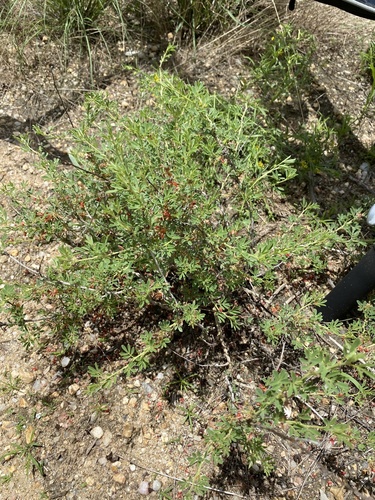
B. ripae WR4 T was authenticated as a nodule isolate for I. rautanenii.
- Taxon
- I. rautanenii
 Indigofera rautaneniie0
- Interactor
- B. ripae WR4 TBradyrhizobium ripaee0symbiont
- Outcome
- nodule isolatese0
Organisms pictured · Representative pictures of the matched species, not figures from the paper.
Verbatim
e0“for I. rautanenii and Wiborgia , nodule isolates B. ripae WR4 T or Mesorhizobium sp. WR52, respectively, were authenticated”
Claim · model-written summary
Mesorhizobium sp. WR52 was authenticated as a nodule isolate for Wiborgia.
 Wiborgia
Organisms pictured · Representative pictures of the matched species, not figures from the paper.

Verbatim
e0“for I. rautanenii and Wiborgia , nodule isolates B. ripae WR4 T or Mesorhizobium sp. WR52, respectively, were authenticated”