Abstract
Although spittlebugs were first confirmed as vectors of Xylella fastidiosa in the 1950s, their role in epidemics of Pierce’s disease of grapevine in the California North Coast remains unknown. The goal of this dissertation was to assess the biology and ecology of spittlebug vectors, Philaenus spumarius and Aphrophora nr. permutata, in California North Coast vineyards in relation to Pierce’s disease and to characterize differences in X. fastidiosa transmission following acquisition by spittlebug and sharpshooter leafhopper vectors.In chapter 1, I provide a brief background on the plant pathogenic bacterium, X. fastidiosa, its associated diseases, and its relationship with plant hosts and insect vectors. I also contextualize and summarize the subsequent chapters of my dissertation. Chapter 2 explores the seasonal abundance and infectivity of P. spumarius in California North Coast vineyards. Analysis of sweep and trap data revealed significant effects of survey month, vineyard site, and year on adult abundance in sweep and trap surveys. Analysis of X. fastidiosa natural infectivity in groups of field-collected spittlebug adults showed significant difference in transmission rates among months. I propose hypotheses on how to contextualize P. spumarius infectivity within the established framework of Pierce’s disease winter recovery. In chapter 3, I present results from a four-year field study analyzing the effects of site characteristics and host plant community on the abundance and development of A. nr. permutata nymphs. Woodland and riparian sites hosted larger nymphal populations than sites surrounded by vineyards. Among plant cover taxa surveyed in 2020, A. nr. permutata nymph abundance was positively associated with Helminthotheca echoides, Vicia sativa, and Daucus carota cover and negatively associated with Taraxacum officinale cover. Analysis of the development surveys found a significant effect of site, year, and plant taxa on first detection of nymphs as well as a significant effect of site and year on the estimated development time between 1st and 5th instars. In chapter 4, I assess differences in X. fastidiosa transmission efficiency over time between P. spumarius and the blue green sharpshooter, Graphocephala atropunctata. There was a significant effect of days post-acquisition on the proportion of plants infected by P. spumarius but the effect of days post-acquisition on G. atropunctata transmission efficiency was not significant. I consider species specific feeding behaviors and mouthpart fluid dynamics to explain the observed transmission patterns.
Abstract from the paper’s OpenAlex record, shown for indexing and research. Copyright remains with the authors or the publisher. Read at the source ↗
The text the model read, with the source record’s inline markup (italics, sub- and superscripts) rendered and its character entities decoded; quote offsets refer to the raw text.
Claims 11
Claim · model-written summary
Adult Philaenus spumarius abundance varied significantly by survey month, site and year.
 Vitis
Not reportedInteractorDirection
Organisms pictured · Representative pictures of the matched species, not figures from the paper.

Verbatim
e0“significant effects of survey month, vineyard site, and year on adult abundance in sweep and trap surveys”
e1“Pierce’s disease of grapevine”
Claim · model-written summary
Field-collected spittlebug groups differed significantly in Xylella transmission rates among months.
Not reportedDirection
Organisms pictured · Representative pictures of the matched species, not figures from the paper.
Verbatim
e0“significant difference in transmission rates among months”
e1“Pierce’s disease of grapevine”
Claim · model-written summary
Woodland and riparian sites hosted larger Aphrophora nymphal populations than vineyard-surrounded sites.
- Outcome
- nymphal populationse0
- Direction
- largere0
- Comparator
- sites surrounded by vineyardse0
- Setting
- Woodland and riparian sitese0
Organisms pictured · Representative pictures of the matched species, not figures from the paper.
Verbatim
e0“Woodland and riparian sites hosted larger nymphal populations than sites surrounded by vineyards.”
e1“Pierce’s disease of grapevine”
Claim · model-written summary
Aphrophora nymph abundance was positively associated with Helminthotheca echoides cover.
- Taxon
- Helminthotheca echoidese0
- Interactor
- A. nr. permutatae0pest
- Outcome
- A. nr. permutata nymph abundancee0
- Direction
- positively associatede0
Not reportedMaterialSetting
Verbatim
e0“A. nr. permutata nymph abundance was positively associated with Helminthotheca echoides, Vicia sativa, and Daucus carota cover”
Claim · model-written summary
Aphrophora nymph abundance was positively associated with Vicia sativa cover.
- Taxon
- Vicia sativa
 Vicia sativae0
- Interactor
- A. nr. permutatae0pest
- Outcome
- A. nr. permutata nymph abundancee0
- Direction
- positively associatede0
Not reportedMaterialSetting
Organisms pictured · Representative pictures of the matched species, not figures from the paper.

Verbatim
e0“A. nr. permutata nymph abundance was positively associated with Helminthotheca echoides, Vicia sativa, and Daucus carota cover”
Claim · model-written summary
Aphrophora nymph abundance was positively associated with Daucus carota cover.
- Taxon
- Daucus carota
 Daucus carotae0
- Interactor
- A. nr. permutatae0pest
- Outcome
- A. nr. permutata nymph abundancee0
- Direction
- positively associatede0
Not reportedMaterialSetting
Organisms pictured · Representative pictures of the matched species, not figures from the paper.

Verbatim
e0“A. nr. permutata nymph abundance was positively associated with Helminthotheca echoides, Vicia sativa, and Daucus carota cover”
Claim · model-written summary
Aphrophora nymph abundance was negatively associated with Taraxacum officinale cover.
- Taxon
- Taraxacum officinale
 Taraxacum officinalee0
- Interactor
- A. nr. permutatae0pest
- Outcome
- A. nr. permutata nymph abundancee0
- Direction
- negatively associatede0
Organisms pictured · Representative pictures of the matched species, not figures from the paper.
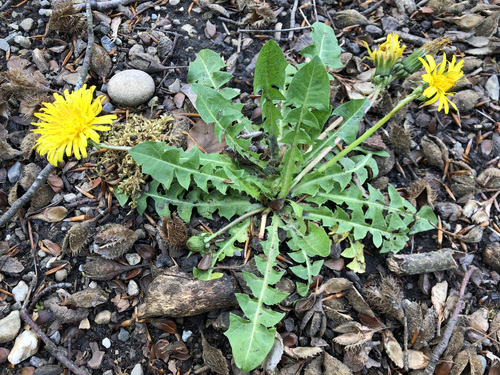
Verbatim
e0“A. nr. permutata nymph abundance was positively associated with Helminthotheca echoides, Vicia sativa, and Daucus carota cover and negatively associated with Taraxacum officinale cover”
Claim · model-written summary
Site, year and plant taxa significantly affected first nymph detection.
Not reportedDirection
Organisms pictured · Representative pictures of the matched species, not figures from the paper.
Verbatim
e0“significant effect of site, year, and plant taxa on first detection of nymphs”
e1“Pierce’s disease of grapevine”
Claim · model-written summary
Site and year significantly affected estimated nymph development time.
Not reportedDirection
Organisms pictured · Representative pictures of the matched species, not figures from the paper.
Verbatim
e0“significant effect of site and year on the estimated development time between 1st and 5th instars”
e1“Pierce’s disease of grapevine”
Claim · model-written summary
Days after acquisition significantly affected plant infection by Philaenus spumarius.
- Interactor
- P. spumarius
 Philaenus spumariuse0pest
- Outcome
- proportion of plants infected by P. spumariuse0
- Qualifier
- days post-acquisitione0
Not reportedSettingDirection
Organisms pictured · Representative pictures of the matched species, not figures from the paper.

Verbatim
e0“significant effect of days post-acquisition on the proportion of plants infected by P. spumarius”
e1“Pierce’s disease of grapevine”
Claim · model-written summary
Days after acquisition had no statistically significant effect on Graphocephala atropunctata transmission efficiency.
- Interactor
- G. atropunctata
 Graphocephala atropunctatae0pest
- Outcome
- G. atropunctata transmission efficiencye0
- Qualifier
- days post-acquisitione0
Not reportedSettingDirection
Organisms pictured · Representative pictures of the matched species, not figures from the paper.

Verbatim
e0“effect of days post-acquisition on G. atropunctata transmission efficiency was not significant”
e1“Pierce’s disease of grapevine”