Abstract
Although Aphrophora nr. permutata (Hemiptera: Aphrophoridae) is a reported vector of the plant pathogen Xylella fastidiosa (Wells) (Xanthomonadales: Xanthomonadaceae), its ecology and role in Pierce's disease dynamics in coastal California vineyards are poorly understood. From 2016 to 2020, we surveyed the abundance of A. nr. permutata nymphs among potential host plants along the vineyard floor, the vineyard edges, and adjacent vegetation in vineyards in Napa and Sonoma county. In 2019 and 2020, vineyards adjacent to woodland habitat hosted larger A. nr. permutata populations than those next to riparian habitat, while in 2017 and 2018, the nymphal populations were similar among riparian and woodland sites. Among 2020 plant cover taxa, nymph abundance was positively associated with Helminthotheca echioides, Vicia sativa, and Daucus carota cover and negatively associated with Taraxacum officinale cover. In 2018 and 2019, we also tracked early-season occurrence and development of A. nr. permutata nymphs among potential host plants. Analyses showed a significant effect of site, year, and plant taxa on the first detection of nymphs and a significant effect of site and year on the estimated development time between first and fifth instars. In 2019, we conducted grapevine to grapevine X. fastidiosa transmission experiments with individuals and groups of five A. nr. permutata adults. In the transmission experiment, 5% (3 of 60) individual A. nr. permutata and 7.7% (1 of 13) of groups successfully transmitted X. fastidiosa. This study provides preliminary evidence of potential host plant associations with A. nr. permutata abundance and phenology that should be explored further with field and greenhouse-based approaches.
Abstract from the paper’s OpenAlex record, shown for indexing and research. Copyright remains with the authors or the publisher. Read at the source ↗
The text the model read, with the source record’s inline markup (italics, sub- and superscripts) rendered and its character entities decoded; quote offsets refer to the raw text.
Claims 10
Claim · model-written summary
Woodland-adjacent vineyards had larger spittlebug populations than riparian-adjacent vineyards in 2019 and 2020.
Verbatim
e0“In 2019 and 2020, vineyards adjacent to woodland habitat hosted larger A. nr. permutata populations than those next to riparian habitat”
Claim · model-written summary
Spittlebug nymphal populations were similar at riparian and woodland sites in 2017 and 2018.
Verbatim
e0“while in 2017 and 2018, the nymphal populations were similar among riparian and woodland sites”
t0“California Vineyards”
t1“Aphrophoranr.permutata”
Claim · model-written summary
Nymph abundance was positively associated with Helminthotheca echioides cover.
- Taxon
- Helminthotheca echioides
 Helminthotheca echioidese0
- Interactor
- Aphrophoranr.permutatat0pest
- Outcome
- nymph abundancee0
- Direction
- positively associatede0
Organisms pictured · Representative pictures of the matched species, not figures from the paper.

Verbatim
e0“nymph abundance was positively associated with Helminthotheca echioides, Vicia sativa, and Daucus carota cover”
t0“Aphrophoranr.permutata”
Claim · model-written summary
Nymph abundance was positively associated with Vicia sativa cover.
- Taxon
- Vicia sativa
 Vicia sativae0
- Interactor
- Aphrophoranr.permutatat0pest
- Outcome
- nymph abundancee0
- Direction
- positively associatede0
Organisms pictured · Representative pictures of the matched species, not figures from the paper.

Verbatim
e0“nymph abundance was positively associated with Helminthotheca echioides, Vicia sativa, and Daucus carota cover”
t0“Aphrophoranr.permutata”
Claim · model-written summary
Nymph abundance was positively associated with Daucus carota cover.
- Taxon
- Daucus carota
 Daucus carotae0
- Interactor
- Aphrophoranr.permutatat0pest
- Outcome
- nymph abundancee0
- Direction
- positively associatede0
Organisms pictured · Representative pictures of the matched species, not figures from the paper.

Verbatim
e0“nymph abundance was positively associated with Helminthotheca echioides, Vicia sativa, and Daucus carota cover”
t0“Aphrophoranr.permutata”
Claim · model-written summary
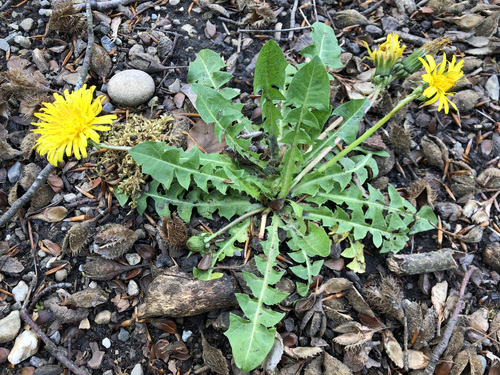
Nymph abundance was negatively associated with Taraxacum officinale cover.
- Taxon
- Taraxacum officinale
 Taraxacum officinalee0
- Interactor
- Aphrophoranr.permutatat0pest
- Outcome
- nymph abundancee1
- Direction
- negatively associatede0
Organisms pictured · Representative pictures of the matched species, not figures from the paper.
Verbatim
e0“negatively associated with Taraxacum officinale cover”
t0“Aphrophoranr.permutata”
e1“Among 2020 plant cover taxa, nymph abundance was positively associated with Helminthotheca echioides, Vicia sativa, and Daucus carota cover”
Claim · model-written summary
Site, year, and plant taxon significantly affected first nymph detection.
- Taxon
- plant taxae0
- Interactor
- Aphrophoranr.permutatat0pest
- Outcome
- first detection of nymphse0
- Setting
- sitee0
Not reportedDirection
Verbatim
e0“Analyses showed a significant effect of site, year, and plant taxa on the first detection of nymphs”
t0“Aphrophoranr.permutata”
Claim · model-written summary
Site and year significantly affected estimated development time between first and fifth instars.
- Taxon
- Vineyardst0
- Interactor
- A. nr. permutatae1pest
- Outcome
- estimated development time between first and fifth instarse0
- Setting
- sitee0
Not reportedDirection
Verbatim
e0“a significant effect of site and year on the estimated development time between first and fifth instars”
t0“Vineyards”
e1“In 2019 and 2020, vineyards adjacent to woodland habitat hosted larger A. nr. permutata populations than those next to riparian habitat”
Claim · model-written summary
Three of 60 individual adults transmitted Xylella fastidiosa between grapevines.
- Interactor
- X. fastidiosa
 Xylella fastidiosae0pathogen
- Second interactor
- A. nr. permutatae0pest
- Outcome
- individual A. nr. permutatae0
- Value
- 5%e0
 Vitis
Organisms pictured · Representative pictures of the matched species, not figures from the paper.


Verbatim
e0“5% (3 of 60) individual A. nr. permutata and 7.7% (1 of 13) of groups successfully transmitted X. fastidiosa”
e1“grapevine to grapevine X. fastidiosa transmission experiments”
Claim · model-written summary
One of 13 groups of five adults transmitted Xylella fastidiosa between grapevines.
- Interactor
- X. fastidiosaXylella fastidiosae0pathogen
- Second interactor
- Aphrophoranr.permutatat0pest
- Outcome
- groups successfully transmitted X. fastidiosae0
- Value
- 7.7%e0
Organisms pictured · Representative pictures of the matched species, not figures from the paper.
Verbatim
e0“7.7% (1 of 13) of groups successfully transmitted X. fastidiosa”
t0“Aphrophoranr.permutata”
e1“grapevine to grapevine X. fastidiosa transmission experiments”