Abstract
I investigated the systematics, phylogeny and biogeographical history of Juncaginaceae, a small family of the early-diverging monocot order Alismatales which comprises about 30 species of annual and perennial herbs. A wide range of methods from classical taxonomy to molecular systematic and biogeographic approaches was used. rnrnIn Chapter 1, a phylogenetic analysis of the family and members of Alismatales was conducted to clarify the circumscription of Juncaginaceae and intrafamilial relationships. For the first time, all accepted genera and those associated with the family in the past were analysed together. Phylogenetic analysis of three molecular markers (rbcL, matK, and atpA) showed that Juncaginaceae are not monophyletic. As a consequence the family is re-circumscribed to exclude Maundia which is pro-posed to belong to a separate family Maundiaceae, reducing Juncaginaceae to include Tetroncium, Cycnogeton and Triglochin. Tetroncium is weakly supported as sister to the rest of the family. The reinstated Cycnogeton (formerly included in Triglochin) is highly supported as sister to Triglochin s.str. Lilaea is nested within Triglochin s. str. and highly supported as sister to the T. bulbosa complex. The results of the molecular analysis are discussed in combination with morphological characters, a key to the genera of the family is given, and several new combinations are made.rnrnIn Chapter 2, phylogenetic relationships in Triglochin were investigated. A species-level phylogeny was constructed based on molecular data obtained from nuclear (ITS, internal transcribed spacer) and chloroplast sequence data (psbA-trnH, matK). Based on the phylogeny of the group, divergence times were estimated and ancestral distribution areas reconstructed. The monophyly of Triglochin is confirmed and relationships between the major lineages of the genus were resolved. A clade comprising the Mediterranean/African T. bulbosa complex and the American T. scilloides (= Lilaea s.) is sister to the rest of the genus which contains two main clades. In the first, the widespread T. striata is sister to a clade comprising annual Triglochin species from Australia. The second clade comprises T. palustris as sister to the T. maritima complex, of which the latter is further divided into a Eurasian and an American subclade. Diversification in Triglochin began in the Miocene or Oligocene, and most disjunctions in Triglochin were dated to the Miocene. Taxonomic diversity in some clades is strongly linked to habitat shifts and can not be observed in old but ecologically invariable lineages such as the non-monophyletic T. maritima.rnrnChapter 3 is a collaborative revision of the Triglochin bulbosa complex, a monophyletic group from the Mediterranean region and Africa. One new species, Triglochin buchenaui, and two new subspecies, T. bulbosa subsp. calcicola and subsp. quarcicola, from South Africa were described. Furthermore, two taxa were elevated to species rank and two reinstated. Altogether, seven species and four subspecies are recognised. An…
Abstract from the paper’s OpenAlex record, shown for indexing and research. Copyright remains with the authors or the publisher. Read at the source ↗
The text the model read, with the source record’s inline markup (italics, sub- and superscripts) rendered and its character entities decoded; quote offsets refer to the raw text.
Claims 20
Claim · model-written summary
Juncaginaceae is not monophyletic.
- Taxon
- JuncaginaceaeJuncaginaceaee0
- Gene
- rbcLe0
- Outcome
- not monophyletice0
Verbatim
e0“Phylogenetic analysis of three molecular markers (rbcL, matK, and atpA) showed that Juncaginaceae are not monophyletic.”
Claim · model-written summary
Maundia is excluded from Juncaginaceae and proposed as a separate family.
- Outcome
- pro-posed to belong to a separate family Maundiaceaee0
 Maundia
Organisms pictured · Representative pictures of the matched species, not figures from the paper.

Verbatim
e0“the family is re-circumscribed to exclude Maundia which is pro-posed to belong to a separate family Maundiaceae”
Claim · model-written summary
Juncaginaceae is limited to three genera.
- Taxon
- JuncaginaceaeJuncaginaceaee0
- Outcome
- include Tetroncium, Cycnogeton and Triglochine0
Verbatim
e0“reducing Juncaginaceae to include Tetroncium, Cycnogeton and Triglochin.”
Claim · model-written summary
Tetroncium is weakly supported as sister to the rest of Juncaginaceae.
- Taxon
- Tetroncium
 Tetronciume0
- Outcome
- sister to the rest of the familye0
- Qualifier
- weakly supportede0
Organisms pictured · Representative pictures of the matched species, not figures from the paper.

Verbatim
e0“Tetroncium is weakly supported as sister to the rest of the family.”
Claim · model-written summary
Cycnogeton is strongly supported as sister to Triglochin s.str.
- Taxon
- Cycnogeton
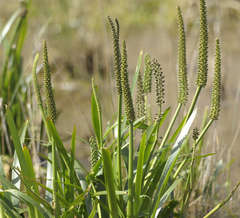 Cycnogetone0
- Outcome
- sister to Triglochin s.str.e0
- Qualifier
- highly supportede0
Organisms pictured · Representative pictures of the matched species, not figures from the paper.
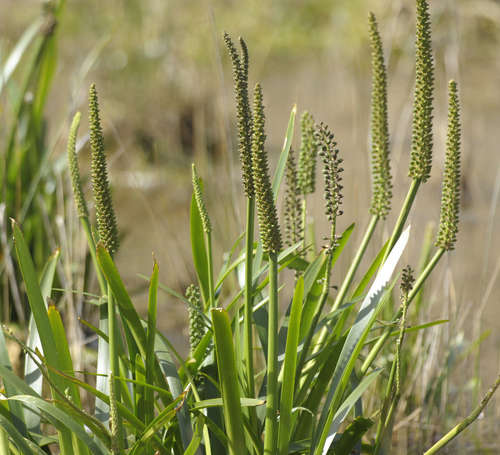
Verbatim
e0“The reinstated Cycnogeton (formerly included in Triglochin) is highly supported as sister to Triglochin s.str.”
Claim · model-written summary
Lilaea is nested within Triglochin s. str. and sister to the T. bulbosa complex.
- Outcome
- nested within Triglochin s. str. and highly supported as sister to the T. bulbosa complexe0
Verbatim
e0“Lilaea is nested within Triglochin s. str. and highly supported as sister to the T. bulbosa complex.”
Claim · model-written summary
Triglochin monophyly is confirmed.
- Taxon
- Triglochin
 Triglochine0
- Outcome
- monophylye0
Not reportedDirection
Organisms pictured · Representative pictures of the matched species, not figures from the paper.

Verbatim
e0“The monophyly of Triglochin is confirmed”
Claim · model-written summary
Major lineages of Triglochin were resolved.
- Taxon
- TriglochinTriglochine1
- Outcome
- relationships between the major lineages of the genus were resolvede0
Organisms pictured · Representative pictures of the matched species, not figures from the paper.
Verbatim
e0“relationships between the major lineages of the genus were resolved”
e1“reducing Juncaginaceae to include Tetroncium, Cycnogeton and Triglochin.”
Claim · model-written summary
The T. bulbosa and T. scilloides clade is sister to the remaining genus.
- Taxon
- T. bulbosa
 Triglochin bulbosae0
- Outcome
- is sister to the rest of the genuse0
- Setting
- Mediterranean/Africane0
Organisms pictured · Representative pictures of the matched species, not figures from the paper.

Verbatim
e0“A clade comprising the Mediterranean/African T. bulbosa complex and the American T. scilloides (= Lilaea s.) is sister to the rest of the genus”
Claim · model-written summary
T. striata is sister to Australian annual Triglochin species.
- Taxon
- T. striata
 Triglochin striatae0
- Outcome
- is sister to a clade comprising annual Triglochin speciese0
- Setting
- Australiae0
Organisms pictured · Representative pictures of the matched species, not figures from the paper.

Verbatim
e0“the widespread T. striata is sister to a clade comprising annual Triglochin species from Australia”
Claim · model-written summary
T. palustris is sister to the T. maritima complex.
- Taxon
- T. palustris
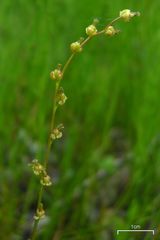 Triglochin palustrise0
- Outcome
- as sister to the T. maritima complexe0
Organisms pictured · Representative pictures of the matched species, not figures from the paper.
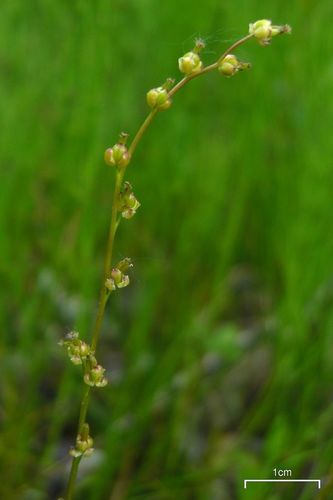
Verbatim
e0“The second clade comprises T. palustris as sister to the T. maritima complex”
Claim · model-written summary
The T. maritima complex has Eurasian and American subclades.
- Taxon
- TriglochinTriglochine1
- Outcome
- divided into a Eurasian and an American subcladee0
Organisms pictured · Representative pictures of the matched species, not figures from the paper.
Verbatim
e0“the latter is further divided into a Eurasian and an American subclade”
e1“reducing Juncaginaceae to include Tetroncium, Cycnogeton and Triglochin.”
Claim · model-written summary
Triglochin diversification began in the Miocene or Oligocene.
- Taxon
- TriglochinTriglochine0
- Outcome
- Diversificatione0
- Value
- Miocene or Oligocenee0
Organisms pictured · Representative pictures of the matched species, not figures from the paper.
Verbatim
e0“Diversification in Triglochin began in the Miocene or Oligocene”
Claim · model-written summary
Most Triglochin disjunctions were dated to the Miocene.
- Taxon
- TriglochinTriglochine0
- Outcome
- most disjunctionse0
- Value
- Miocenee0
Organisms pictured · Representative pictures of the matched species, not figures from the paper.
Verbatim
e0“most disjunctions in Triglochin were dated to the Miocene”
Claim · model-written summary
Taxonomic diversity in some Triglochin clades is strongly linked to habitat shifts.
- Taxon
- TriglochinTriglochine1
- Outcome
- Taxonomic diversitye0
- Setting
- habitat shiftse0
Not reportedDirection
Organisms pictured · Representative pictures of the matched species, not figures from the paper.
Verbatim
e0“Taxonomic diversity in some clades is strongly linked to habitat shifts”
e1“reducing Juncaginaceae to include Tetroncium, Cycnogeton and Triglochin.”
Claim · model-written summary
T. maritima is nonmonophyletic and ecologically invariable.
- Taxon
- T. maritima
 Triglochin maritimae0
- Outcome
- non-monophyletice0
- Qualifier
- ecologically invariablee0
Organisms pictured · Representative pictures of the matched species, not figures from the paper.

Verbatim
e0“old but ecologically invariable lineages such as the non-monophyletic T. maritima”
Claim · model-written summary
Triglochin buchenaui was described as a new species.
- Taxon
- Triglochin buchenaui
 Triglochin buchenauie0
- Outcome
- new speciese0
Organisms pictured · Representative pictures of the matched species, not figures from the paper.
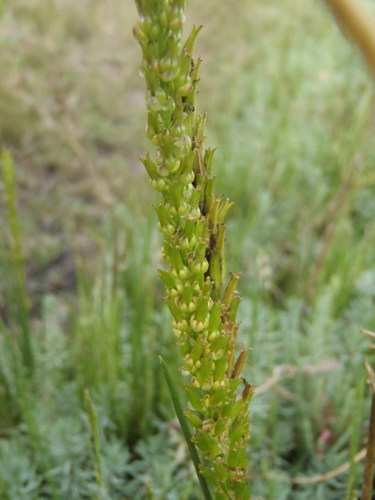
Verbatim
e0“One new species, Triglochin buchenaui, and two new subspecies, T. bulbosa subsp. calcicola and subsp. quarcicola, from South Africa were described.”
Claim · model-written summary
T. bulbosa subsp. calcicola was described as a new South African subspecies.
- Taxon
- T. bulbosa subsp. calcicolaTriglochin bulbosa subsp. calcicolae0
- Outcome
- new subspeciese0
- Setting
- South Africae0
Organisms pictured · Representative pictures of the matched species, not figures from the paper.
Verbatim
e0“two new subspecies, T. bulbosa subsp. calcicola and subsp. quarcicola, from South Africa were described.”
Claim · model-written summary
T. bulbosa subsp. quarcicola was described as a new South African subspecies.
Verbatim
e0“subsp. quarcicola, from South Africa were described.”
Claim · model-written summary
Seven species and four subspecies are recognized in the complex.
- Taxon
- TriglochinTriglochine1
- Outcome
- seven species and four subspecies are recognisede0
Organisms pictured · Representative pictures of the matched species, not figures from the paper.
Verbatim
e0“Altogether, seven species and four subspecies are recognised.”
e1“reducing Juncaginaceae to include Tetroncium, Cycnogeton and Triglochin.”