Claim · model-written summary
T. palustris is sister to the T. maritima complex.
- Taxon
- T. palustris
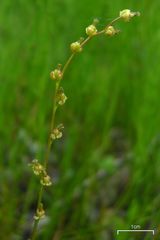 Triglochin palustrise0
- Outcome
- as sister to the T. maritima complexe0
Not reportedMaterialGeneCompoundOrgan / stageInteractorInteractor roleSecond interactorSecond interactor roleTreatmentComparatorSettingDirectionValueQualifier
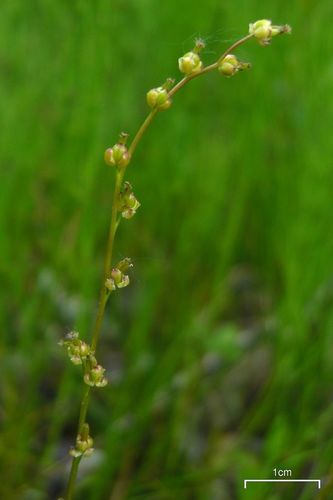
Organisms pictured · Representative pictures of the matched species, not figures from the paper.
Verbatim
e0“The second clade comprises T. palustris as sister to the T. maritima complex”
Title
Systematics, phylogeny and biogeography of Juncaginaceae
Sabine von Mering 2013
Other claims from this paper (19)
- Observation Juncaginaceae is not monophyletic.
- Observation Maundia is excluded from Juncaginaceae and proposed as a separate family.
- Observation Juncaginaceae is limited to three genera.
- Observation Tetroncium is weakly supported as sister to the rest of Juncaginaceae.
- Observation Cycnogeton is strongly supported as sister to Triglochin s.str.
- Observation Lilaea is nested within Triglochin s. str. and sister to the T. bulbosa complex.
- Observation Triglochin monophyly is confirmed.
- Observation Major lineages of Triglochin were resolved.
- Observation The T. bulbosa and T. scilloides clade is sister to the remaining genus.
- Observation T. striata is sister to Australian annual Triglochin species.
- Observation The T. maritima complex has Eurasian and American subclades.
- Observation Triglochin diversification began in the Miocene or Oligocene.
- Observation Most Triglochin disjunctions were dated to the Miocene.
- Association Taxonomic diversity in some Triglochin clades is strongly linked to habitat shifts.
- Observation T. maritima is nonmonophyletic and ecologically invariable.
- Observation Triglochin buchenaui was described as a new species.
- Observation T. bulbosa subsp. calcicola was described as a new South African subspecies.
- Observation T. bulbosa subsp. quarcicola was described as a new South African subspecies.
- Observation Seven species and four subspecies are recognized in the complex.