Abstract
This paper deals with the results of the karyological studies on fifteen moss species. In order to obtain vivid plants, a new method of culture was employed. In the cultures of these mosses, innovations were rarely produced. The regenrated young shoots from the fragments of stem or from the removed leaves were used for the karyological studies. In these karyological studies, metaphase and heteropycnotic chromosomes in the mitotic cellsof gametophyte were observed. The chromosome numbers and karyotypes were determined as follows:Bryoxiphium japonicum K(n)=14=V(H)+2V+2J+8(4v+4j)+v(h)Blindia japonica K(n)=14=2V(H)+2V+2J+6(4v+2j)+2m(h)Dicranella heteromalla K(n)=14=2V(H)+2V+2J+6(4v+2j)+2m(h)Brothera leana K(n)=12=2V(H)+2V+2J+4(2v+2j)+2v(h)Oncophorus crispifolius K(n)=14=2V(H)+2V+2J+6(4v+2j)+2m(h)Trachypus humilis K(n)=11=V(H)+2J+7(5v+2j)+m(h)Pseudospiridentopsis horrida K(n)=11=V(H)+2J+7(5v+2j)+m(h)Dolichomitra cymbifolia K(n)=11=V(H)+2V+J+6(4v+2j)+v(h)Dolichomitriopsis diversiformis K(n)=11=V(H)+2V+J+6(4v+2j)+m(h)Isothecium subdiversiforme K(n)=11=V(H)+2V+J+6(4v+2j)+m(h)Fauriella tenuis K(n)=11=V(H)+V+2J+6(5v+j)+m(h)Fabronia matsumurae K(n)=11=V(H)+V+J+7(5v+2j)+m(h)Schwetschkeopsis japonica K(n)=11=V(H)+2V+7(5v+2j)+m(h)Okamuraea brachydictyon K(n)=11=2V(H)+J+7(5v+2j)+m(h)O. hakoniensis K(n)=11=2V(H)+J+7(5v+2j)+m(h).
Abstract from the paper’s OpenAlex record, shown for indexing and research. Copyright remains with the authors or the publisher. Read at the source ↗
The text the model read, with the source record’s inline markup (italics, sub- and superscripts) rendered and its character entities decoded; quote offsets refer to the raw text.
Claims 16
Claim · model-written summary
Cultured mosses rarely produced innovations.
- Outcome
- innovations were rarely producede0
Verbatim
e0“In the cultures of these mosses, innovations were rarely produced.”
Claim · model-written summary
Bryoxiphium japonicum has chromosome number 14 and the reported karyotype.
- Taxon
- Bryoxiphium japonicumBryoxiphium japonicume0
- Outcome
- K(n)=14=V(H)+2V+2J+8(4v+4j)+v(h)e0
- Value
- 14e0
Verbatim
e0“Bryoxiphium japonicum K(n)=14=V(H)+2V+2J+8(4v+4j)+v(h)”
Claim · model-written summary
Blindia japonica has chromosome number 14 and the reported karyotype.
- Taxon
- Blindia japonicaBlindia japonicae0
- Outcome
- K(n)=14=2V(H)+2V+2J+6(4v+2j)+2m(h)e0
- Value
- 14e0
Verbatim
e0“Blindia japonica K(n)=14=2V(H)+2V+2J+6(4v+2j)+2m(h)”
Claim · model-written summary
Dicranella heteromalla has chromosome number 14 and the reported karyotype.
- Taxon
- Dicranella heteromalla
 Dicranella heteromallae0
- Outcome
- K(n)=14=2V(H)+2V+2J+6(4v+2j)+2m(h)e0
- Value
- 14e0
Organisms pictured · Representative pictures of the matched species, not figures from the paper.

Verbatim
e0“Dicranella heteromalla K(n)=14=2V(H)+2V+2J+6(4v+2j)+2m(h)”
Claim · model-written summary
Brothera leana has chromosome number 12 and the reported karyotype.
- Taxon
- Brothera leana
 Brothera leanae0
- Outcome
- K(n)=12=2V(H)+2V+2J+4(2v+2j)+2v(h)e0
- Value
- 12e0
Organisms pictured · Representative pictures of the matched species, not figures from the paper.

Verbatim
e0“Brothera leana K(n)=12=2V(H)+2V+2J+4(2v+2j)+2v(h)”
Claim · model-written summary
Oncophorus crispifolius has chromosome number 14 and the reported karyotype.
- Taxon
- Oncophorus crispifoliusSymblepharis crispifoliae0
- Outcome
- K(n)=14=2V(H)+2V+2J+6(4v+2j)+2m(h)e0
- Value
- 14e0
Verbatim
e0“Oncophorus crispifolius K(n)=14=2V(H)+2V+2J+6(4v+2j)+2m(h)”
Claim · model-written summary
Trachypus humilis has chromosome number 11 and the reported karyotype.
Verbatim
e0“Trachypus humilis K(n)=11=V(H)+2J+7(5v+2j)+m(h)”
Claim · model-written summary
Pseudospiridentopsis horrida has chromosome number 11 and the reported karyotype.
- Taxon
- Pseudospiridentopsis horridaPseudospiridentopsis horridae0
- Outcome
- K(n)=11=V(H)+2J+7(5v+2j)+m(h)e0
- Value
- 11e0
Verbatim
e0“Pseudospiridentopsis horrida K(n)=11=V(H)+2J+7(5v+2j)+m(h)”
Claim · model-written summary
Dolichomitra cymbifolia has chromosome number 11 and the reported karyotype.
- Taxon
- Dolichomitra cymbifoliaDolichomitra cymbifoliae0
- Outcome
- K(n)=11=V(H)+2V+J+6(4v+2j)+v(h)e0
- Value
- 11e0
Verbatim
e0“Dolichomitra cymbifolia K(n)=11=V(H)+2V+J+6(4v+2j)+v(h)”
Claim · model-written summary
Dolichomitriopsis diversiformis has chromosome number 11 and the reported karyotype.
- Taxon
- Dolichomitriopsis diversiformisDolichomitriopsis diversiformise0
- Outcome
- K(n)=11=V(H)+2V+J+6(4v+2j)+m(h)e0
- Value
- 11e0
Verbatim
e0“Dolichomitriopsis diversiformis K(n)=11=V(H)+2V+J+6(4v+2j)+m(h)”
Claim · model-written summary
Isothecium subdiversiforme has chromosome number 11 and the reported karyotype.
- Taxon
- Isothecium subdiversiformeIsotheciastrum subdiversiformee0
- Outcome
- K(n)=11=V(H)+2V+J+6(4v+2j)+m(h)e0
- Value
- 11e0
Verbatim
e0“Isothecium subdiversiforme K(n)=11=V(H)+2V+J+6(4v+2j)+m(h)”
Claim · model-written summary
Fauriella tenuis has chromosome number 11 and the reported karyotype.
- Taxon
- Fauriella tenuisFauriella tenuise0
- Outcome
- K(n)=11=V(H)+V+2J+6(5v+j)+m(h)e0
- Value
- 11e0
Verbatim
e0“Fauriella tenuis K(n)=11=V(H)+V+2J+6(5v+j)+m(h)”
Claim · model-written summary
Fabronia matsumurae has chromosome number 11 and the reported karyotype.
- Taxon
- Fabronia matsumurae
 Fabronia matsumuraee0
- Outcome
- K(n)=11=V(H)+V+J+7(5v+2j)+m(h)e0
- Value
- 11e0
Organisms pictured · Representative pictures of the matched species, not figures from the paper.
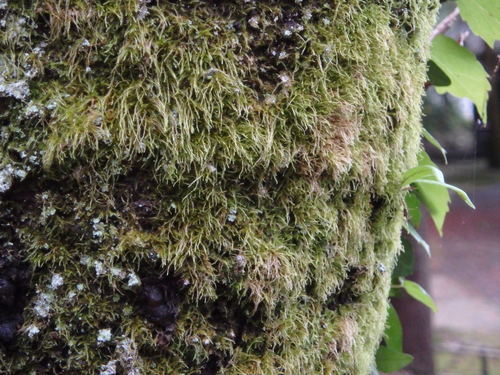
Verbatim
e0“Fabronia matsumurae K(n)=11=V(H)+V+J+7(5v+2j)+m(h)”
Claim · model-written summary
Schwetschkeopsis japonica has chromosome number 11 and the reported karyotype.
Verbatim
e0“Schwetschkeopsis japonica K(n)=11=V(H)+2V+7(5v+2j)+m(h)”
Claim · model-written summary
Okamuraea brachydictyon has chromosome number 11 and the reported karyotype.
- Taxon
- Okamuraea brachydictyonOkamuraea brachydictyone0
- Outcome
- K(n)=11=2V(H)+J+7(5v+2j)+m(h)e0
- Value
- 11e0
Verbatim
e0“Okamuraea brachydictyon K(n)=11=2V(H)+J+7(5v+2j)+m(h)”
Claim · model-written summary
O. hakoniensis has chromosome number 11 and the reported karyotype.
- Taxon
- O. hakoniensisOkamuraea hakoniensise0
- Outcome
- K(n)=11=2V(H)+J+7(5v+2j)+m(h)e0
- Value
- 11e0
Verbatim
e0“O. hakoniensis K(n)=11=2V(H)+J+7(5v+2j)+m(h)”