Abstract
Abstract Background Leaf spot disease of Telfairia occidentalis , caused by Phoma sorghina , represents one of the major biotic constraints to T. occidentalis production under small scale farming systems in West Africa including Cameroon. Currently this critically important seed and leaf vegetable is cultivated under varying altitudinal levels at different planting dates. In this framework, a field study was conducted in 2019 and 2020 cropping seasons between March and July in the localities of Dschang and Santchou to determine the influence of altitude and planting date on the prevalence and severity the disease. Material and methods A 2 by 4 factorial randomized complete block design (RCBD) with three replications and four planting dates were used. Data for disease prevalence and severity documented fortnightly, were submitted to general linear model for analysis using SPSS version 23, and the means were separated by least significant difference (LSD) at a 95% confidence interval. Results Statistical analysis revealed that, the low altitude recorded a significantly ( p < 0.05) lower prevalence than high altitude while disease severities between both altitudes were not significantly different. Moreover, the initial three planting dates at low altitude and planting date three in Dschang recorded significantly lower prevalence than other planting dates investigated in the study. Conclusion We established that, the initial three planting dates at low altitude and planting date three at high altitude could be helpful in reducing leaf spot prevalence and severity of T. occidentalis.
Abstract from the paper’s OpenAlex record; open copy licensed cc-by. Read at the source ↗
The text the model read, with the source record’s inline markup (italics, sub- and superscripts) rendered and its character entities decoded; quote offsets refer to the raw text.
Claims 5
Claim · model-written summary
Leaf spot prevalence was significantly lower at low altitude than at high altitude.
- Taxon
- Telfairia occidentalis
 Telfairia occidentalist0
- Treatment
- low altitudee1
- Interactor
- Phoma sorghina
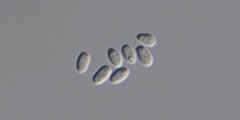 Epicoccum sorghinume0pathogen
- Outcome
- prevalencee1
- Direction
- lowere1
- Qualifier
- p < 0.05e1
- Comparator
- high altitudee1
- Setting
- West Region of Cameroont0
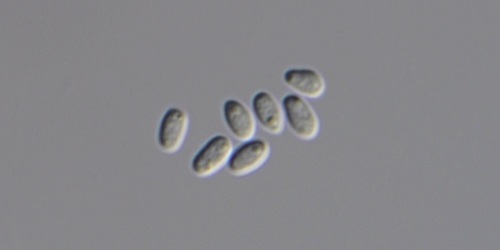
Organisms pictured · Representative pictures of the matched species, not figures from the paper.

Verbatim
e0“caused by Phoma sorghina”
e1“the low altitude recorded a significantly ( p < 0.05) lower prevalence than high altitude”
t0“Leaf spot of Telfairia occidentalis incidence and severity influenced by altitude and planting date in the West Region of Cameroon”
Claim · model-written summary
Leaf spot severity did not differ significantly between low and high altitude.
- Taxon
- Telfairia occidentalisTelfairia occidentalist0
- Treatment
- altitudese2
- Interactor
- Phoma sorghinaEpicoccum sorghinume0pathogen
- Outcome
- disease severitiese2
- Direction
- not significantly differente2
Not reportedComparator
Organisms pictured · Representative pictures of the matched species, not figures from the paper.
Verbatim
e0“caused by Phoma sorghina”
e2“disease severities between both altitudes were not significantly different”
t0“Leaf spot of Telfairia occidentalis incidence and severity influenced by altitude and planting date in the West Region of Cameroon”
Claim · model-written summary
Leaf spot prevalence was significantly lower on the initial three planting dates at low altitude than on other planting dates.
- Taxon
- Telfairia occidentalisTelfairia occidentalist0
- Treatment
- initial three planting dates at low altitudee3
- Interactor
- Phoma sorghinaEpicoccum sorghinume0pathogen
- Outcome
- prevalencee3
- Direction
- lowere3
- Comparator
- other planting dates investigated in the studye3
Organisms pictured · Representative pictures of the matched species, not figures from the paper.
Verbatim
e0“caused by Phoma sorghina”
e3“the initial three planting dates at low altitude and planting date three in Dschang recorded significantly lower prevalence than other planting dates investigated in the study”
t0“Leaf spot of Telfairia occidentalis incidence and severity influenced by altitude and planting date in the West Region of Cameroon”
Claim · model-written summary
Leaf spot prevalence was significantly lower on planting date three in Dschang than on other planting dates.
- Taxon
- Telfairia occidentalisTelfairia occidentalist0
- Treatment
- planting date three in Dschange3
- Interactor
- Phoma sorghinaEpicoccum sorghinume0pathogen
- Outcome
- prevalencee3
- Direction
- lowere3
- Comparator
- other planting dates investigated in the studye3
- Setting
- Dschange3
Organisms pictured · Representative pictures of the matched species, not figures from the paper.
Verbatim
e0“caused by Phoma sorghina”
e3“the initial three planting dates at low altitude and planting date three in Dschang recorded significantly lower prevalence than other planting dates investigated in the study”
t0“Leaf spot of Telfairia occidentalis incidence and severity influenced by altitude and planting date in the West Region of Cameroon”
Claim · model-written summary
Planting the initial three dates at low altitude and planting date three at high altitude could help reduce leaf spot prevalence and severity.
- Taxon
- Telfairia occidentalisTelfairia occidentalist0
- Outcome
- reducing leaf spot prevalence and severitye4
Organisms pictured · Representative pictures of the matched species, not figures from the paper.
Verbatim
e4“the initial three planting dates at low altitude and planting date three at high altitude could be helpful in reducing leaf spot prevalence and severity”
t0“Leaf spot of Telfairia occidentalis incidence and severity influenced by altitude and planting date in the West Region of Cameroon”
The same questions in other papers
sowing time · Epicoccum sorghinum · Telfairia occidentalisResults agree
1 paper in the same direction as this paper
- positive
Claims are grouped by organism, treatment and what was measured or targeted. A paper counts as positive when any of its claims in the group is positive.